Get Full Government Meeting Transcripts, Videos, & Alerts Forever!
Get email alerts on the City Plan Draft topic
No spam. Unsubscribe anytime.
Planning commission reviews draft Wheat Ridge City Plan; staff outlines implementation steps
Summary
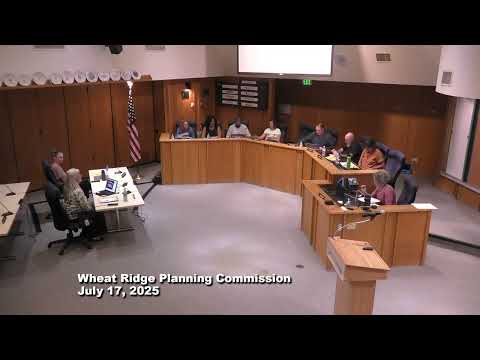
City planners presented the draft 15‑year City Plan to the Planning Commission on July 17, 2025. Commissioners discussed plan goals, place‑type mapping, rezoning guidance, code updates and implementation timing; staff said the public draft is open through July 22 and adoption is targeted for late August/early September.
City of Wheat Ridge planning staff presented a public draft of the city plan and implementation approach to the Planning Commission on July 17, 2025, and invited commissioners’ feedback before the plan returns for adoption.
Ella Stevie, senior neighborhood planner, said the draft plan—intended to guide the city for roughly 15 years—frames core values (independent‑minded, inclusive, forward‑looking), planning principles (serve a mix of incomes; preserve the city’s “patchwork quilt”; focus on sustainability; strengthen fiscal position) and planning priorities (improving retail and business environments, a pedestrian/bicycle network and proactive infrastructure management). “The plan establishes our core values, our planning principles, and our planning priorities,” Stevie said, noting the plan organizes implementation into three goals: modern infrastructure, thoughtful placemaking and thriving businesses and neighborhoods.
Stevie told the commission the plan translates policy into a character and development vision using place types and street types so staff can apply different form and use tools based on context. She used the Blue Columbine rezoning example (WZ2309) to illustrate the plan’s rezoning checklist: core values and principles, place type, adjacent street type, any special cases (the site qualifies as a “large site / institutional / agricultural reuse” special case) and relevant implementation actions in chapter 5. Stevie said the public draft would remain open for comments through Tuesday, July 22, and staff planned to return for adoption later in August and to City Council in early September.
Commissioners praised the plan’s level of detail but raised questions about interpretation and implementation. Several commissioners worried that the plan’s flexibility could be read as overly permissive: Commissioner Dan (last name on file) said the plan’s language could allow varied interpretations and asked whether the plan leaves room for “weasel” interpretations; Stevie replied that the plan intentionally pairs flexible tools with explicit intent statements to guide site‑by‑site discretion and guard against misuse. Commissioners also asked about the pace of implementation, funding and how the plan ties into other ongoing efforts such as the stormwater master plan, sustainability actions and mobility projects. Staff said they intend to pursue “quick wins” (near‑term code changes that are straightforward) while budgeting for a full code audit and alignment work that will take longer.
Other topics raised included stormwater and resilience planning and how large embedded sites (schools, churches, agricultural parcels) will be handled when redevelopment proposals occur. Commissioners asked how immediate neighbors will be heard in individual rezoning cases; Stevie said the plan’s “peaceful coexistence” language and intent statements provide a foundation for site‑specific mitigation (lighting, sound, buffers) and that staff could require additional, earlier review in cases with heightened neighborhood concern.
Commissioners also pointed to the plan’s place‑type map and suggested highlighting important gathering places and opportunity areas across the city. Staff noted that work on supporting plans—such as sustainability and stormwater—was happening concurrently and that the city plan intentionally links to those documents. As one commissioner observed, the plan is designed to be a practical tool to be used over time rather than a purely aspirational statement.
Staff said the next steps are to collect public comments through July 22, incorporate edits and return for Planning Commission action in August followed by City Council review. Implementation will include short‑term code tweaks, a longer‑term audit of the zoning code and targeted capital planning to fund mobility, stormwater and other infrastructure priorities.