Get Full Government Meeting Transcripts, Videos, & Alerts Forever!
Get email alerts on the Tenant Buyout Policy topic
No spam. Unsubscribe anytime.
Richmond Rent Board affirms strict tenant buyout policy, directs staff to seek city ordinance
Summary
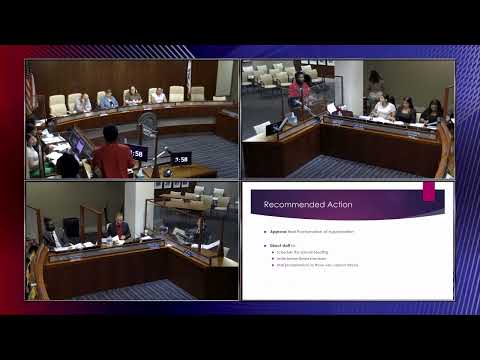
The Rent Board unanimously affirmed its previously adopted high-oversight tenant buyout policy (Option 3), directing staff to present the policy at a City Council study session in September 2025 and to work with the city attorney to draft an ordinance for consideration in October/November 2025.
The Richmond Rent Board on July 16 unanimously affirmed the board's previously adopted high-oversight tenant buyout agreement policy (Option 3) and directed staff to present that policy at a Richmond City Council study session in September 2025 and to work with the city attorney to draft a buyout agreement ordinance for consideration in October or November 2025.
Board members voted unanimously to advance the policy after staff described Option 3 as the most comprehensive regulatory approach the board considered. The board's action directs program staff to present the board-approved policy to the City Council in September and to return with a draft ordinance later in the fall.
Why it matters: The policy would regulate private "buyout" agreements—cases in which a landlord offers a payment for a tenant to voluntarily vacate—to reduce coercion, require language accessibility and rescission rights, and create transparency and enforcement mechanisms. Staff and board members said a formal ordinance would make minimum protections enforceable and help the city track displacement and the effect of buyouts on affordable housing.
Under Option 3, described by staff, key elements include: a longer rescission (cooling-off) period (45 days in the policy option), minimum payout levels tied to the city's relocation ordinance for withdrawals from the rental market, proactive outreach by the Rent Program to tenants when buyouts are filed, a public database of filed agreements, civil penalties (up to $1,000 per violation in the proposal), and a private right of action for tenants. Staff characterized the approach as a floor: parties could negotiate larger payments but not less than the minimum amount set by relocation rules.
Executive Director Nicholas Traylor and General Counsel Charles Oshunaga responded to detailed questions from board members about how the minimum amounts are calculated, timing of payments, rescission mechanics and the potential need for escrow or other payment sequencing. Traylor said the minimum payout amounts the board discussed would mirror relocation amounts already set by the city for evictions tied to market withdrawal, and Oshunaga explained procedural steps and legal distinctions between buyout agreements (private contracts) and evictions under the rent ordinance.
Board discussion focused on several operational and fairness concerns: whether a rescission period should be symmetric for landlords and tenants (several board members said an identical rescission right for landlords could create financial harm to tenants), how payment timing should interact with the rescission period so tenants receive funds in time to secure replacement housing, and whether the Rent Program should hold funds in escrow (staff cautioned escrow would require additional program accounting and potentially higher fees). Members also discussed risks of predatory actors on both sides and the need for clear contract language about vacate dates and rescission consequences.
Traylor told the board the recommended next steps are a City Council study session in September 2025 followed by ordinance drafting with the city attorney and expected return for council consideration in October or November 2025. The board's vote at the close of the item was unanimous.
Ending: By affirming Option 3 and instructing staff to seek a City Council ordinance, the Rent Board set a path to move the proposed buyout protections from board policy into enforceable city law if the council approves the draft ordinance.