Get Full Government Meeting Transcripts, Videos, & Alerts Forever!
Get email alerts on the Demographics Population Growth topic
No spam. Unsubscribe anytime.
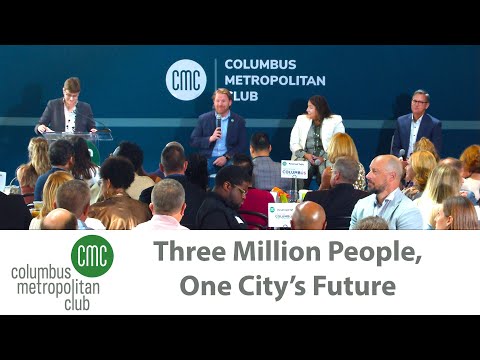
Panel: Central Ohio growth has shifted toward international arrivals; leaders warn of housing strain
Summary
Speakers at a Columbus Metro Club panel said most recent population growth in Central Ohio comes from international arrivals and urged planning now to avoid housing and workforce shortfalls as the region grows.
Michael Wilkos, United Way—s community speaker, told a Columbus Metro Club audience that population growth in Central Ohio has a new makeup and urgent implications.
"Between 2010 and 2024, we have added 323,000 people, while the rest of the state has added just 20,000," Wilkos said, adding that the region averaged about 16,000 new residents a year during the decade. "We are now 71% of our growth is the arrival of people from other countries."
Why it matters: Panelists said the shift toward international immigration affects housing demand, workforce availability and where new housing will need to be built. Without coordinated planning, they warned, growth could outpace housing supply and push low- and moderate-income households out of many neighborhoods.
At the panel, moderated by Jordan Layard and introduced by Columbus City Council President Shannon Harden, Wilkos reviewed recent demographic patterns and raised a caution about future economic dependence on immigration. "My concern for the economy and our ability to not just produce jobs, but fill them, is what if that flow of people to Central Ohio stops or reverses itself," he said.
Wilkos and other speakers pointed to specific figures: Franklin County added 17,400 people in a single recent year and, over the 2010—1024 span, roughly half of growth reflected births outnumbering deaths while 26% came from international arrivals in that earlier decade. The panel also noted the region has lost American-born residents recently: "We are now a metropolitan region that is losing American born residents for the first time in history. We've actually lost 3,000 American born residents," Wilkos said.
Panelists emphasized the geographic distribution of future population increases. Wilkos said growth has been moving inward toward job centers and some inner-ring suburbs such as Whitehall and Northland, rather than solely onto the urban fringe. He warned that large numbers of lower-income residents arriving with continued growth would strain neighborhoods not prepared to absorb them.
Panelists framed the demographic shift as a planning problem that interacts with housing, transportation and workforce policy. "Growth comes with a soft white underbelly, and that is not enough people in this region are able to take access to that growth and prosperity," Wilkos said. Council President Shannon Harden and others said the region must coordinate housing, transit and workforce investments to ensure broad participation in economic gains.
The panel included discussion of specific programs and tools elsewhere on the agenda (transit modernization, zoning reform and an affordable housing bond), which speakers said must align with changing demographics to keep the region economically resilient.
Looking ahead, speakers urged continued monitoring of migration trends and cross-jurisdictional planning to match housing, jobs and transit. No formal vote or policy decision was made at the event.