Get Full Government Meeting Transcripts, Videos, & Alerts Forever!
Get email alerts on the Ev Chargers Hoa Insurance topic
No spam. Unsubscribe anytime.
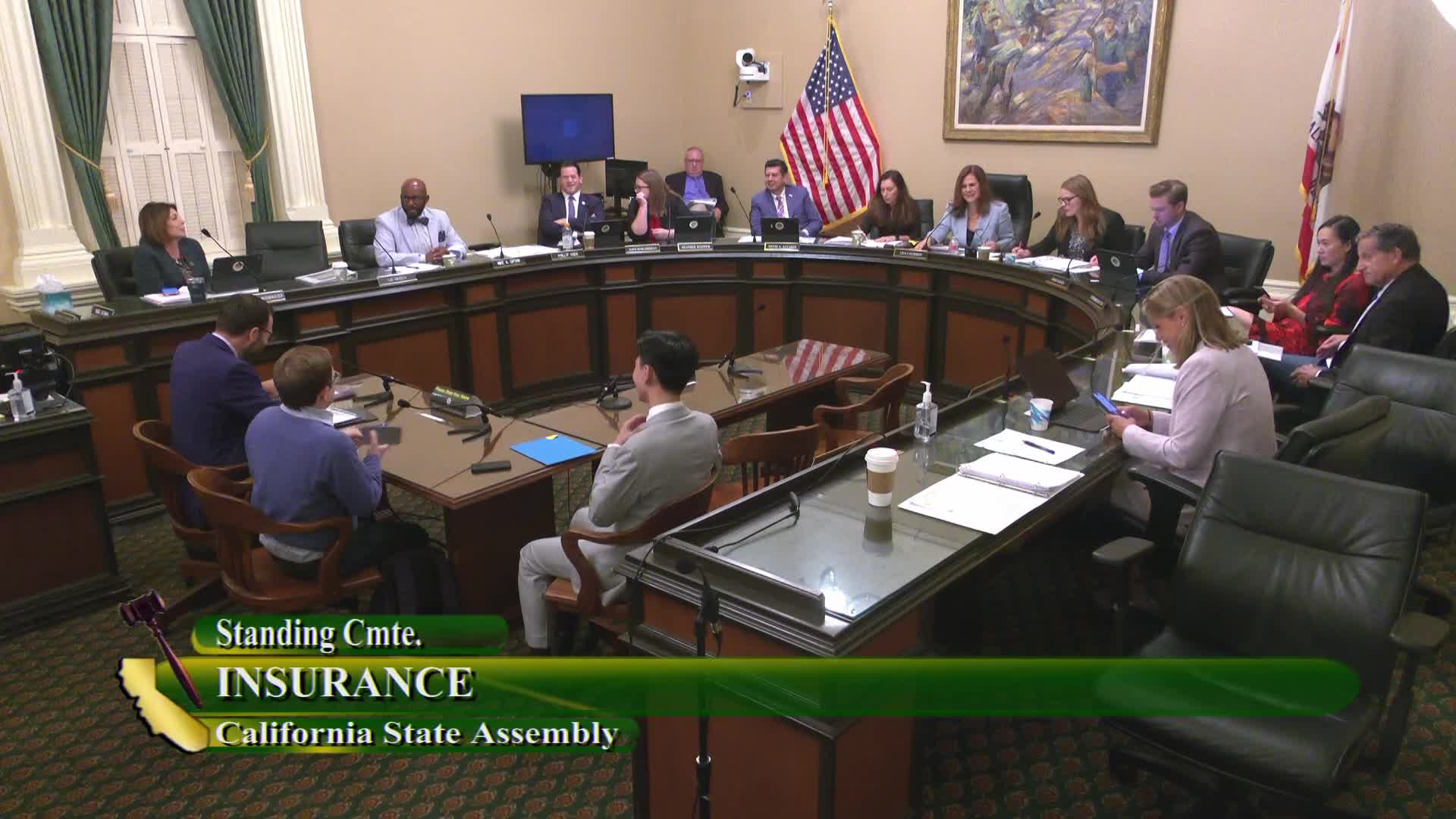
Committee advances bill to ease insurance barrier for EV chargers in HOAs; opposition urges more safeguards
Summary
SB 770 would remove the requirement that homeowners obtain an insurance policy naming a homeowners association (HOA) as additional insured before installing EV chargers in shared parking; supporters say the requirement blocks EV adoption, while HOA groups warn of insurance and rate impacts.
SB 770, authored by Sen. Anthony Allen, would remove the requirement for an HOA to be named as an additional insured on a homeowner’s policy as a precondition for installing electric vehicle (EV) chargers in shared parking at common‑interest developments.
The author described repeated examples of residents unable to secure the required certificates and of some homeowners facing substantially higher premiums to obtain bespoke policies that name the HOA. Charlie Carrier, a co‑op owner from San Francisco, told the committee he ultimately paid about $500 more per year and accepted a higher deductible to secure a policy that satisfied his HOA, after mainstream insurers would not provide a certificate naming the association.
Brandon Wong of Calstart and Beth Frankel of the California Electric Transportation Coalition testified the provision removes an unintended barrier to EV adoption in multifamily housing, where at‑home charging will account for the bulk of future EV charging needs. Calstart said roughly a third of new chargers over the next decade will need to be in multifamily buildings.
Opposition came from the Community Associations Institute, which represents HOAs. Louis Brown said certificates of additional insured are standard risk‑management practice and warned that when insurers learn an association has EV chargers on site, the association’s master policy could see premium increases, cancellations or other market impacts that would be borne by all unit owners. Brown urged either delaying action to continue negotiations or narrowing the bill to avoid shifting costs to other residents.
Committee members pressed the author for amendments that would limit risk to associations, including narrower liability language and replacement‑cost clarifications. The author said he was open to further changes and emphasized the core goal — enabling residents in shared‑parking developments to charge at home. The committee passed SB 770 to the Assembly floor; members said they expect continued conversations with association and insurer stakeholders before final floor action. Roll call recorded multiple ayes and several no votes and not‑voting members (recorded tallies: yes 9; no 3; not voting 1).