Get Full Government Meeting Transcripts, Videos, & Alerts Forever!
Get email alerts on the Public Safety Subrogation topic
No spam. Unsubscribe anytime.
Committee advances bill to guarantee portion of third‑party recoveries to injured peace officers and firefighters
Summary
SB 487 would change how recovery from third‑party liability is divided between public employers and injured officers or firefighters; sponsors said the change addresses cases where available third‑party insurance is insufficient to cover both employer and employee losses.
SB 487, introduced by Sen. Scott Grayson, would limit employer subrogation in certain third‑party liability settlements so that injured peace officers and firefighters receive a guaranteed portion of a recovery when available third‑party insurance limits are insufficient to make both the employer whole and fully compensate the injured employee.
Megan Bartlett, an attorney who represents public safety officers and firefighters, described cases in which third‑party settlements were exhausted by employers’ subrogation claims, leaving injured officers with little or no compensation for losses such as lost overtime, promotion opportunities and pain and suffering. “These damages are not speculative. They're real, calculable, and often unrecoverable with current law,” Bartlett said, adding the proposed language is modeled on existing legal frameworks such as CCP 3040 and government code section 20252.
Deputy Sheriff Keanu Lewis described his personal injury after being struck and pinned by a patrol vehicle and told the committee of surgeries, lost overtime and a continuing professional stigma that affected promotions. Law enforcement and firefighter organizations — including the Fraternal Order of Police, the California Professional Firefighters and the Association for Los Angeles Deputy Sheriffs — testified in support.
Opposition came primarily from employer, self‑insured and insurance industry groups including the California Coalition on Workers’ Compensation/PRISM and the California Association of Joint Powers Authorities. Jason Schmelzer on behalf of PRISM said employers and local governments face large workers’ compensation costs for public safety benefits (noting Labor Code 4850 salary continuation and industrial disability retirement rules) and argued the state needs more data and narrow application (e.g., only where insurance is limited) or a sunset and study before changing public agency subrogation rights.
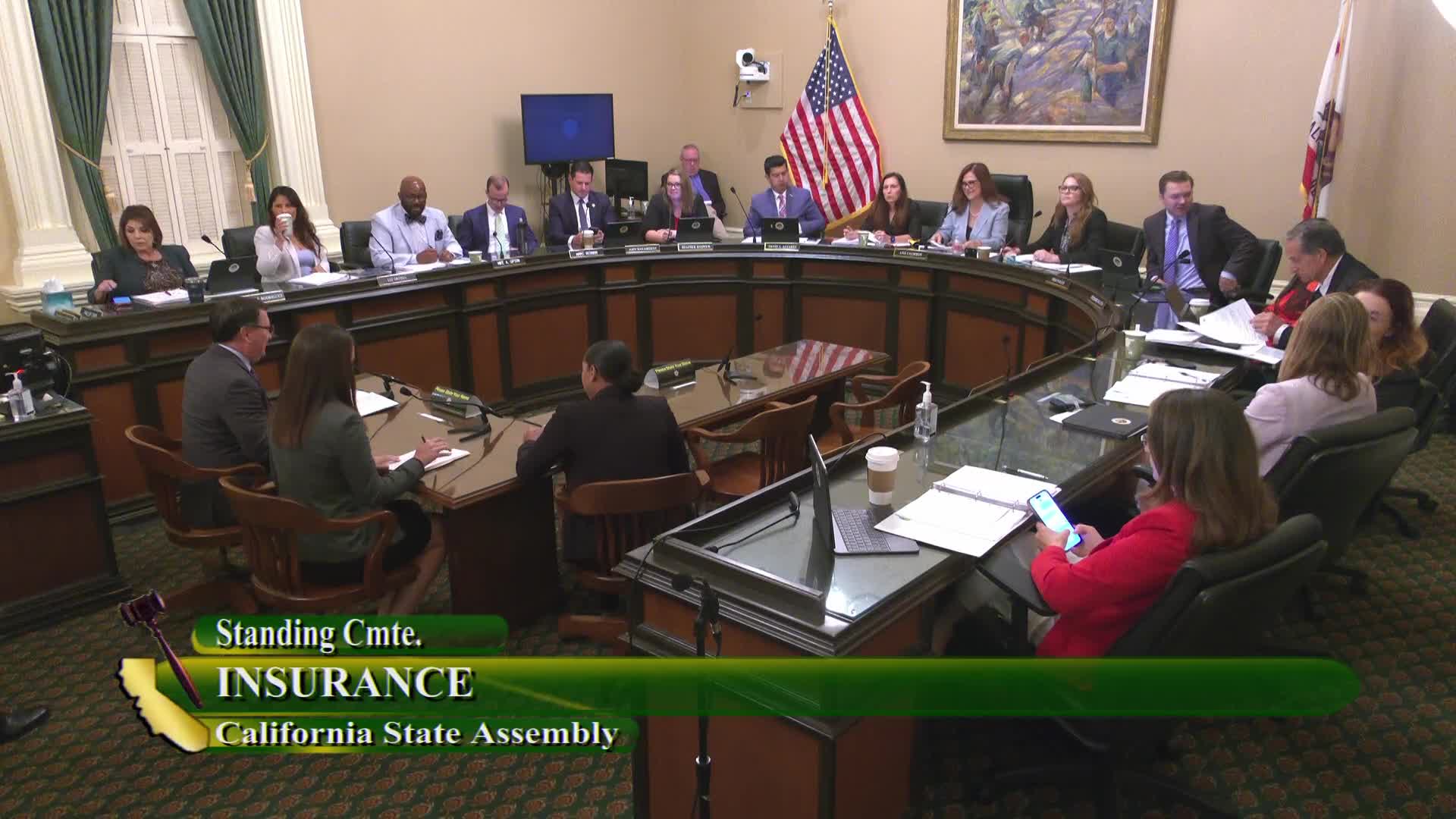
Committee members acknowledged competing interests: protecting injured employees while preserving employers’ ability to recover taxpayer‑funded costs that fund public services. Several members voiced support for the bill; Assemblymember Rodriguez asked to be added as a coauthor. The author asked for an aye vote and the committee passed SB 487 as amended to the Appropriations Committee. Roll call recorded multiple ayes with Hadwick not voting; the committee left the roll open for absent members. (Committee roll: Calderon, Wallace, Addis, Alvarez, Avila Farias, Berman, Chen, Ellis, Gibson, Haribedian, Krell, Nguyen, Rodriguez, Valencia recorded as voting aye; Hadwick not voting.)
If enacted, the bill would apply only in cases where third‑party limits are insufficient to satisfy both an employer’s subrogation claim and the injured employee’s proven damages, preserving employer recovery when adequate third‑party insurance exists. Sponsors said the measure is narrowly tailored and modeled on existing statutory frameworks for health‑insurer and retirement‑benefit reimbursements.