Get Full Government Meeting Transcripts, Videos, & Alerts Forever!
Get email alerts on the Rideshare Insurance topic
No spam. Unsubscribe anytime.
Assembly panel approves bill cutting uninsured/underinsured motorist requirement for rideshare
Summary
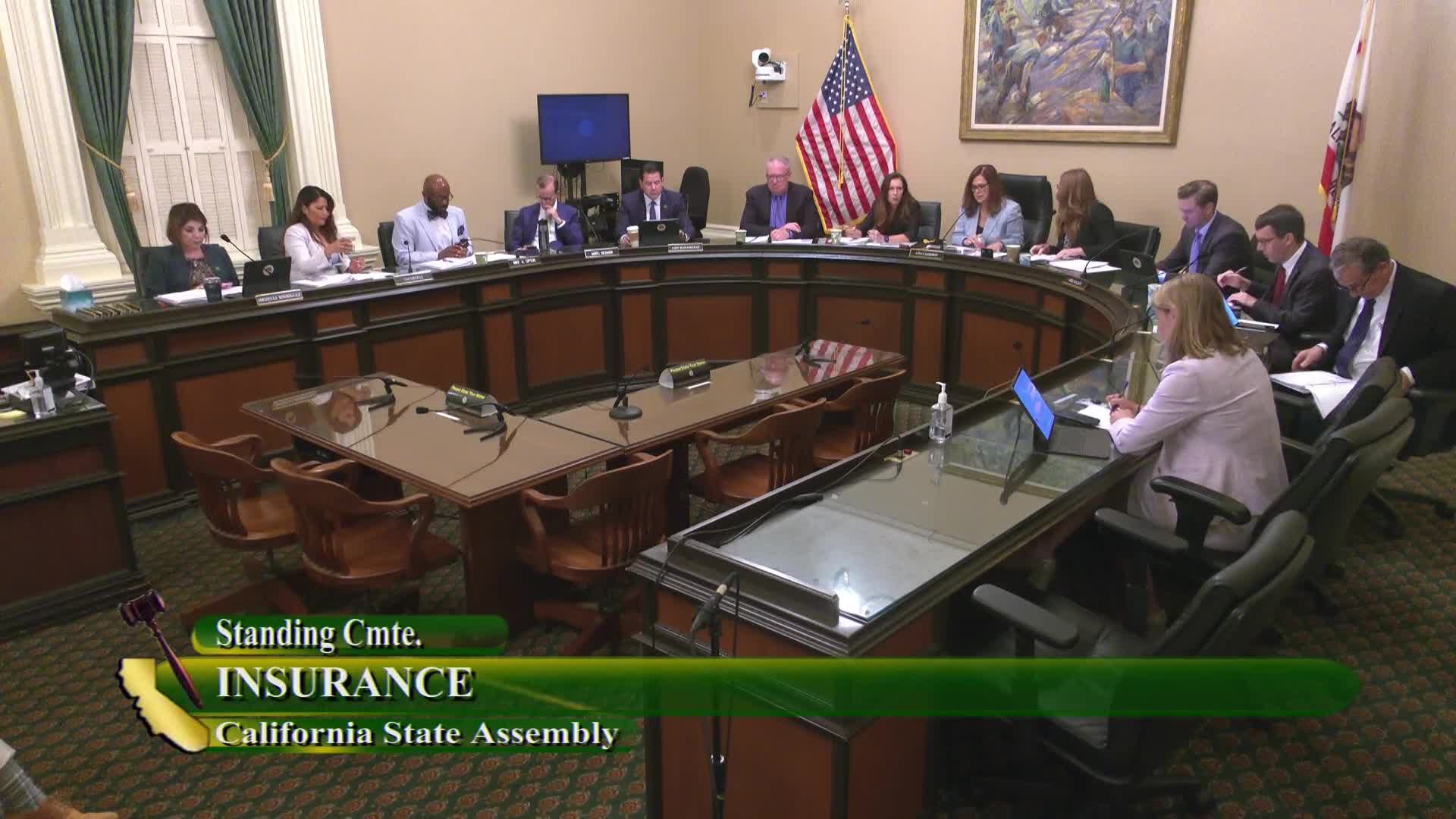
The Assembly Insurance Committee on a bipartisan vote approved SB 371, which would reduce required uninsured/underinsured motorist (UIM) coverage for transportation network companies and require data and reporting to track the impact on fares and drivers.
SB 371, authored by Sen. Steve Cabaldon, passed the Assembly Insurance Committee after a robust hearing that pitted rideshare companies and business groups in support against consumer, labor and trial attorney groups opposed.
Cabaldon said the limits set a decade ago were a provisional response to a then-novel industry and urged the committee to modernize the UIM requirement to reflect current data. “Rideshare is now one of the most significant parts of the transportation ecosystem in California,” Cabaldon said during his opening remarks (transcript excerpt).
The bill would replace the current UIM threshold for TNCs with new limits of $100,000 per person and $300,000 per incident, while preserving other insurance coverages the companies provide. Ramona Prieto, director of public policy for Uber, told the committee those UIM requirements are the single biggest mandated cost driver for fares, saying in Los Angeles County “up to 45% of every fare goes to government mandated insurance, around 33% for the state of California.” Nick Johnson, Lyft’s public policy director, said the proposal would leave California above many other states’ requirements and would not change the companies’ $1,000,000 liability coverage for at-fault drivers.
Opponents argued the proposal would sharply cut protections for injured riders and drivers. Casey Johnson of the Consumer Attorneys of California said SB 371 would cut UIM protection from $1,000,000 to $100,000 per person — “a 90% cut in protection for passengers and drivers who are injured by uninsured or underinsured motorists.” Labor and consumer groups raised concerns that drivers, who lack typical employee benefits following Proposition 22, would be left with insufficient coverage; Sarah Flock of the California Federation of Labor urged the committee to require any insurer savings be guaranteed to flow to drivers and riders.
Committee members asked for more data and accountability provisions. Several members, including Assemblymembers Alvarez and Berman, urged the author and the companies to provide studies and transparent receipts showing how any insurance savings would affect driver earnings and rider booking fees. The author and company witnesses said the booking fee line item on receipts would reflect mandated-insurance costs and that look‑back reporting language in the committee amendment would allow review of whether savings were passed through.
After debate, the committee adopted the motion to pass SB 371 as amended to the Committee on Appropriations. Roll call during committee showed Calderon, Wallace, Addis, Alvarez, Avila Farias, Berman, Ellis, Gibson, Hadwick, Haribedian, Krell, Nguyen, Rodriguez and Valencia voting aye; Ortega not voting. The committee left the roll open for absent members. (Vote recorded in committee; tally from roll call: yes 14; not voting 1.)
The bill includes look‑back and reporting language intended to track fare and driver‑earnings outcomes and directs further study and data collection on UIM claims. Supporters emphasized affordability for riders and increased opportunities for drivers; opponents said the change would reduce protections and urged amendments to guarantee that any insurer savings reach drivers and riders.