Get Full Government Meeting Transcripts, Videos, & Alerts Forever!
Get email alerts on the Trade Tariffs topic
No spam. Unsubscribe anytime.
California Senate urges White House to rescind sweeping tariffs, citing higher costs for families and farms
Summary
The California State Senate passed Senate Joint Resolution 7 urging the president to rescind broad tariffs imposed under the International Emergency Economic Powers Act, with senators arguing the levies act as a hidden tax that raises prices for consumers and harms exporters and supply chains.
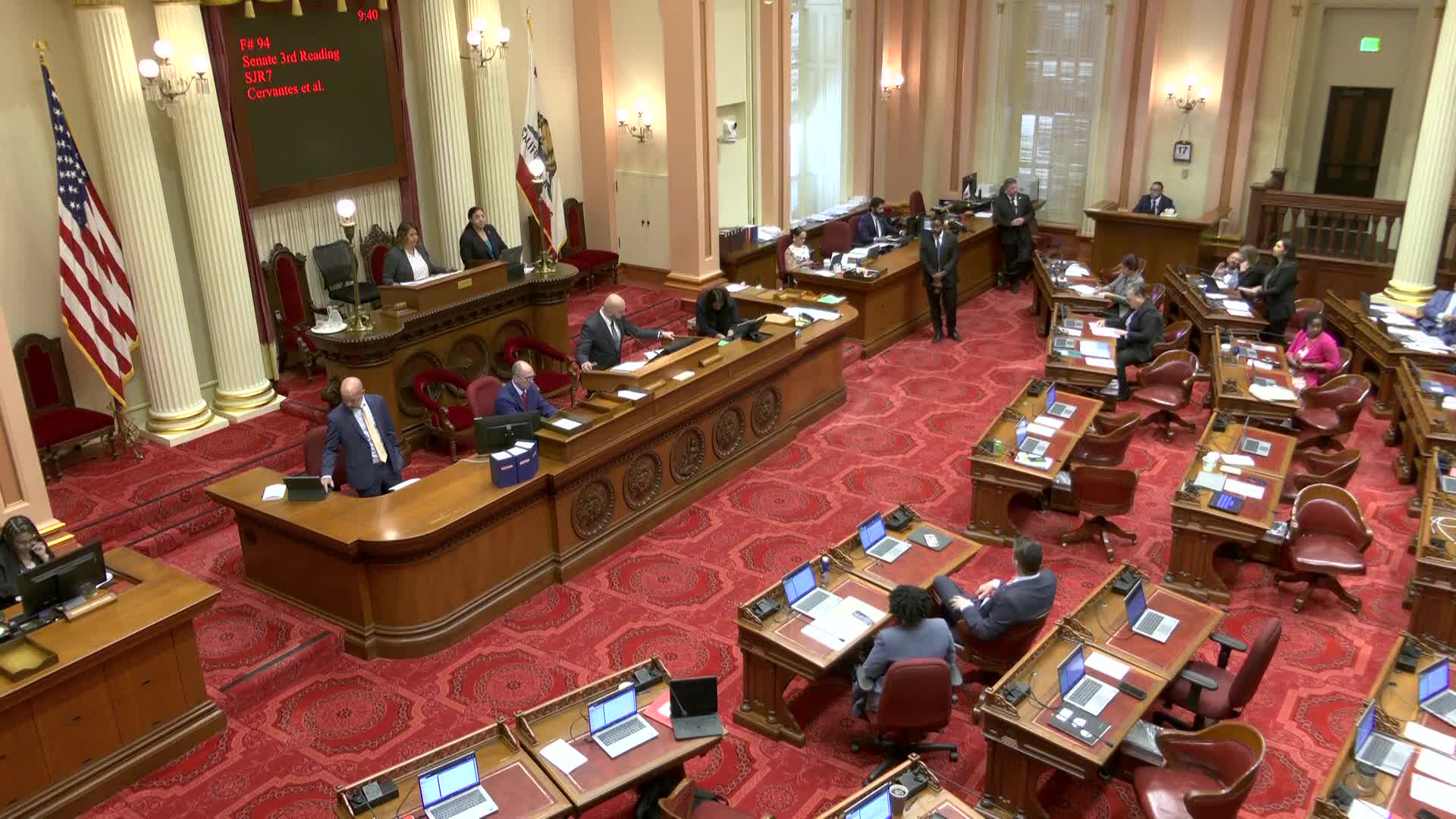
The California State Senate on July 17 adopted Senate Joint Resolution 7 (SJR 7), urging the president to rescind sweeping tariffs imposed this spring and warning that the levies increase costs for households, farmers and small businesses.
The resolution, introduced by Senator María Cervantes (D–Riverside), passed on a recorded vote of Ayes 26, Nos 8. Cervantes said the tariffs—imposed under the International Emergency Economic Powers Act—are “a tax on the consumers here in this country” and warned they are causing immediate harm to sectors that depend on international trade.
Cervantes told colleagues that the tariffs have already driven up prices for everyday essentials and disrupted ports and farm exports. “These tariffs are not just hurting our families and small businesses, they are weakening our position in the world,” she said on the floor.
Why it matters: Senators from both parties debated whether the tariffs are the right tool to rebuild U.S. manufacturing or, as opponents say, an indiscriminate tax that falls hardest on low- and middle-income households and export-oriented industries in California. Multiple senators cited analyses projecting higher household costs and reported declines in export volumes at West Coast ports.
Supporters of the resolution cited analyses and industry testimony. Senator Blake Spear (D–Santa Monica) said the Yale Budget Lab projects the tariffs could cost the average household nearly $3,000 annually and urged colleagues to consider those impacts on families already facing affordability pressures. Senator Josh Casey (D–San Diego), a coauthor, described the resolution as targeted: it opposes tariffs that harm California families, businesses and the middle class rather than condemning tariffs categorically.
Opponents argued the resolution is political posturing that could foreclose leverage in trade negotiations. Senator Serrato (R–Rancho Murrieta) and others said recent tariff-driven investment pledges and monthly revenue to the federal treasury suggest the picture is mixed, and urged caution before adopting a nonbinding statement that might limit California’s ability to respond to changing federal policy.
Industry and regional impacts were central to the debate. Senators from agricultural and port districts warned about immediate market disruptions: Senator Caballero (D–Fresno) and Senator Rubio (D–Central Valley) emphasized declines in export sales, the time‑sensitive nature of perishable products, and the ripple effects on trucking and refrigerated cargo operations. Senator Haddigan (D–Oakland) said truck and port operators reported reduced activity and rising costs.
The resolution documents concerns including reduced shipment volumes at the ports of Los Angeles and Long Beach and retaliation by trading partners that can restrict California exports. Supporters argued the state's food and wine industries face concrete short‑term harms—citing cork shortages for bottles and reports of shelved shipments—while opponents warned of uncertain long‑term outcomes and possible new investment onshoring.
Votes at a glance: the resolution passed—Ayes 26, Nos 8. The Senate record shows the roll call and a full debate spanning multiple senators from agricultural, coastal and inland districts.
Looking ahead: SJR 7 is nonbinding and asks federal officials to rescind tariffs it says harm California consumers and exporters. The resolution does not create state policy but signals the legislature’s position heading into further federal trade and supply‑chain discussions.
Speakers quoted in this article are senators recorded on the Senate floor during debate on SJR 7.