Get Full Government Meeting Transcripts, Videos, & Alerts Forever!
Get email alerts on the Recreation Trail Management topic
No spam. Unsubscribe anytime.
Grand County trims 2025 budget but approves OHV grant and health MOU; trail ambassador funding reduced to keep program running through year-end
Summary
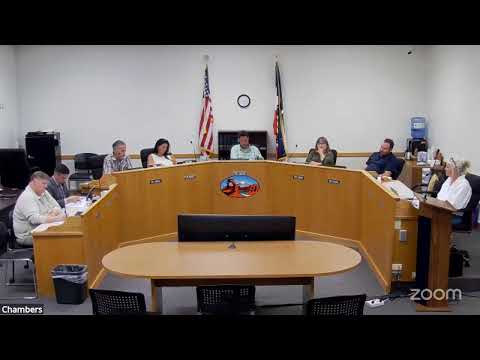
Grand County commissioners approved a 2025 budget amendment on July 15 that trims county spending yet preserves limited funding for trail ambassador work through the end of the year, while separately approving an OHV grant application and a public-health memorandum of understanding to support recreation and human-waste response work.
Grand County commissioners approved a 2025 budget amendment on July 15 that trims county spending yet preserves limited funding for trail ambassador work through the end of the year, while separately approving an OHV grant application and a public-health memorandum of understanding to support recreation and human-waste response work.
The action followed more than an hour of public comment urging the county to maintain funding for the Grand County Trail Ambassador program, which county staff and public-health officials say has materially reduced human-waste incidents, prevented search-and-rescue calls and improved visitor interactions. Public speakers included volunteers, outdoor-business owners and professionals who described the program as “award-winning” and an essential part of the county’s visitor-management toolkit.
Commissioners voted to adopt the budget amendment after a long discussion of options. County staff said the amendment would draw roughly $1.86 million from the general-fund reserve to balance 2025, including a $340,791 general-fund contribution to replace some previously planned TRT (tourism tax) support for Grand County Active Transportation (GCAT). Finance staff said the county still faced an overall shortfall of about $1.9 million entering the amendment process.
The public hearing and email record included many appeals to save trail ambassador positions. "Cutting the funding for the program would be shortsighted and a disservice to our local community, our visitors, our public land, and the reputation that we have built," said Noel Genoux, a community recreation planner who told the commission that other communities look to Grand County’s model. Jonathan Dutchero of the Southeast Utah Health Department called the program a successful public-health intervention, saying, "The impact they have had cannot really be understated."
At the meeting the commission unanimously approved a grant application to the Utah Division of OHV Recreation (OHVR) to fund an OHV coordinator and three part-time motorized trail staff. The board also unanimously approved a memorandum of understanding with the Southeast Utah Health Department for Healthy Trails coordination for the remainder of the current contract year; that MOU will provide $38,652 to the county to staff a portion of the Healthy Trails coordinator role.
County residents and volunteer leaders urged specific funding measures during the public comment period. Tony Mantuso, a public-lands patrol employee and volunteer, told commissioners that the proposed amendment would cut the Responsible Recreation line by roughly 84 percent and that the reduction would represent a very targeted savings of about 3 percent for the Active Trails and Transportation department. "That targeted cut is extremely focused on one individual program," Mantuso said.
Commissioners described the approved amendment and the other votes as a compromise intended to keep key public-safety and visitor-education services operating while giving staff and the commission time to pursue partner funding and grants for longer-term support. County staff said they will continue to pursue federal and state grants and to meet with partner agencies, including the National Park Service and BLM, on shared solutions for visitor management and emergency response.
What the commission approved - Budget amendment (motion carried): Adds a $1,857,464 draw from the general fund reserve in the proposal as presented to balance 2025; includes a $340,791 general-fund substitute for planned TRT support to GCAT. Commissioners debated alternative service reductions and targeted cuts before voting. Tally: approved (yes:6, no:1). Names of individual votes were not provided in the official tally at the meeting record. The amended budget keeps a reduced level of funding for Responsible Recreation/Trail Ambassador work for the rest of 2025 (described by county staff as an "option 3" continuation). - OHVR grant application (action): Motion to approve county support/letter for an OHVR application to fund a full-time OHV coordinator and three part-time motorized-trail positions; motion passed unanimously. - Southeast Utah Health Department MOU (action): Motion to approve a 2025 memorandum of understanding to receive $38,652 to fund 50% of a Healthy Trails coordinator position; motion passed unanimously.
Why this matters: Trail ambassadors work directly at trailheads and high-use sites to educate visitors, hand out water and WAG bags, route users to appropriate trails and reduce demand for emergency response. County and health-agency presenters told the commission that the program has enabled collection and safe disposal of tens of thousands of WAG bags and reduced contamination of solid-waste trucks and facilities. Commissioners said the county will continue to seek partner and grant funds for the program and will include further review during preparation of the 2026 county budget.
What’s next: County staff will record the budget amendment and implement the staffing changes approved for the remainder of 2025; grant paperwork for the OHVR application and the MOU with the health department will be finalized and executed. Commissioners asked staff to return with additional options and a clearer 2026 plan at upcoming meetings so the full commission can review longer-term funding strategies and possible partnerships.