Get Full Government Meeting Transcripts, Videos, & Alerts Forever!
Get email alerts on the Mental Health Response topic
No spam. Unsubscribe anytime.
Co‑responder teams pair deputies and clinicians to handle mental‑health crises across Washington County
Summary
Washington County’s co‑responder unit — four teams pairing a deputy with a clinician — reported serving about 550 new people between 2024 and 2025, offering follow‑up, crisis negotiation support and victim assistance while operating 7 a.m.–10 p.m. daily.
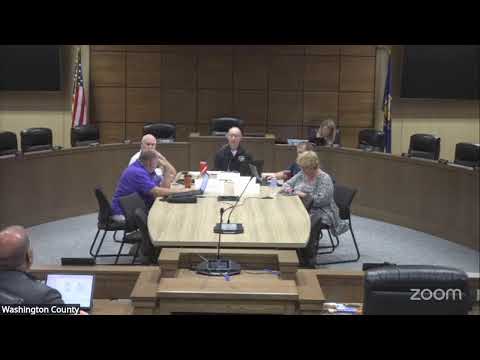
Deputy Blake DeMonk and clinicians Dave Arndt and Abigail Rebecchi told the Public Safety Committee June 26 that Washington County’s co‑responder unit pairs deputies with clinicians to respond to mental‑health crises, provide follow‑up and reduce unnecessary emergency responses.
The unit comprises four teams, each made up of one deputy and one master’s‑level mental‑health clinician. Teams operate on overlapping rotations that provide coverage from 7 a.m. to 10 p.m. daily; the unit does not routinely operate an overnight third shift. The teams are embedded with the sheriff’s office and respond together to appropriate calls, with clinicians having read‑only access to law‑enforcement records and deputies having read‑only access to county clinical records to aid coordination.
Deputy DeMonk said the unit works by referral from municipal police departments in the county; clinicians described building rapport through repeated voluntary contacts to keep individuals “under the radar” and reduce repeated emergency responses. The presenters reported about 550 new people served between 2024 and 2025 (the presenters said the number has increased since that slide was prepared and that total unique people served is likely closer to 900). The unit averages many more contacts when follow‑ups are included: one case described involved 27 contacts with a single client.
Presenters gave four case examples: a death‑notification handled with sensitivity after an out‑of‑state homicide; an elderly couple held at gunpoint following two break‑ins in 24 hours, where the unit provided on‑scene and victim‑impact support; a long‑term case of a man with schizophrenia who had 22 prior law‑enforcement contacts and no subsequent contacts after intensive follow‑up; and a multi‑county hostage/standoff in which the unit assisted Ozaukee County’s negotiation team and offered on‑scene support to an evacuated neighbor.
The unit emphasized crisis‑negotiation training (FBI week‑long course for all unit members), active‑listening skills and the role of clinicians in high‑stress scenes. Presenters said their services are voluntary and that the unit frequently provides follow‑up through longer‑term case management and referral to psychiatry, therapy and other resources. The presenters said the unit has served people from municipalities across the county and that they often participate in victim‑impact proceedings to support survivors.
Committee members and the sheriff thanked the team; the committee noted the co‑responder model addresses key county needs identified in the annual report, including jail mental‑health pressures.