Get Full Government Meeting Transcripts, Videos, & Alerts Forever!
Get email alerts on the Outdoor Recreation topic
No spam. Unsubscribe anytime.
Snow Hill holds public workshop on outdoor recreation, grant opportunities through Chesapeake Gateway initiative
Summary
Local officials and National Park Service representatives led an interactive public session in Snow Hill to gather ideas for outdoor recreation, explain a Chesapeake Gateways designation and grant process (up to $50,000, no local match), and discuss town projects including the Royal Port Passage, bikeways and flood mitigation for Bird Park.
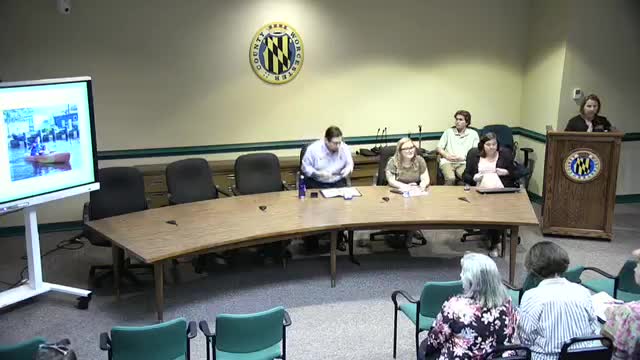
An interactive public session in Snow Hill, organized by Worcester County Tourism & Economic Development and the National Park Service’s Chesapeake Gateways office, aimed to gather community input on expanding outdoor recreation and tourism while outlining grant and designation opportunities for local sites.
Melanie Purcell, director of tourism and economic development for Worcester County, opened the meeting by saying, “Basically, we were here tonight for an interactive session focused on the future of outdoor recreation in the Snow Hill region,” and asked attendees for ideas on events, activities, businesses and infrastructure that could boost the town as a destination.
The meeting’s purpose, organizers said, is to build a community-driven plan that can position Snow Hill as a destination for families, weekend getaways and outdoor adventure while tapping available technical and financial assistance. Eddie Gonzales, director of partnerships and grants for the Chesapeake Gateways office, described the office as part of the National Park Service and said it was created by the Chesapeake Bay Initiative Act in 1998 to provide technical and financial support across the Chesapeake Bay watershed. “We kind of call ourselves the the new park of the future,” Gonzales said, noting the office emphasizes partnerships and community storytelling rather than operating traditional national-park facilities.
Gonzales outlined two core resources: (1) the Chesapeake Gateway “places” designation, a self-nomination process that lets museums, outfitters and other community sites appear on the National Park Service map; and (2) a competitive grant program under the Gateways initiative. He said communities that become designated “places” will be eligible to apply for grants, and previewed a forthcoming Department of the Interior grant round offering awards up to $50,000 to support infrastructure, upgrades or events. Gonzales emphasized that “there is no match requirement” for the grants but that applicants must be an eligible place to apply.
Larissa McAllister, director of economic development for the town of Snow Hill, described projects already underway or planned to support the town’s river-focused strategy. She read an excerpt from Snow Hill’s 2010 comprehensive plan noting the town’s origins along the Pocomoke River and said outdoor recreation is central to ongoing strategy. McAllister highlighted the Royal Port Passage (also described as the Bank Street Promenade), a connector between the downtown shopping district and the Pocomoke Riverfront at Sturgis Park that would include stormwater improvements, pedestrian and ADA accessibility upgrades and new restrooms at Sturgis Park.
McAllister also discussed a proposed three-mile bikeway loop identified in a recent feasibility study and noted Bird Park’s flooding problems. The town has completed a flood mitigation study for Bird Park and is seeking funding to implement staged improvements; McAllister said addressing flooding would enable enhancements such as playground and court renovations and make the park usable again for events that had to relocate.
Worcester County staff facilitated an interactive exercise (digital word clouds and written index cards) to collect public preferences on activities and amenities. Attendees suggested fishing, birding, improved signage, better access points and wayfinding, trails and visitor services. Brianna Dix, marketing manager for Worcester County Tourism & Economic Development, explained the digital tools and encouraged participants to submit additional feedback via a follow-up survey and printed questionnaires.
Organizers said all input will be recorded and compiled into a report to help prioritize actions and pursue funding. Gonzales and his colleague Kate Marks Hardy offered to follow up with community members about eligibility for the Chesapeake Gateway places map and grant opportunities.
The event closed with staff inviting participants to complete a more detailed survey after the meeting; printed copies and a QR code were made available for those who wanted to respond later.
Snow Hill’s officials framed the session as community-driven planning rather than automatic expansion of tourism: Gonzales said the initiative is “not about being overrun with tourists” but about helping the community “define itself the way it wants.”