Get Full Government Meeting Transcripts, Videos, & Alerts Forever!
Get email alerts on the Operating Levy Referendum topic
No spam. Unsubscribe anytime.
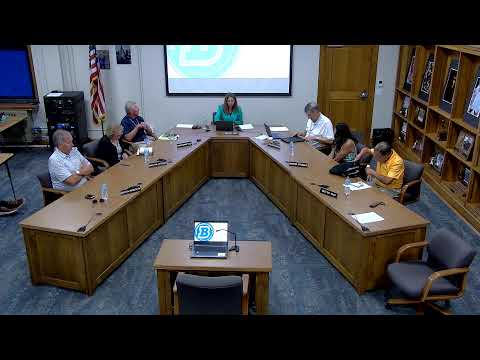
Brainerd board declines to advance operating-levy referendum after hours of public comment and finance briefing
Summary
Public comment at a Brainerd Public Schools board meeting focused on whether the board should allow voters to decide an operating‑levy referendum to shore up district finances; after discussion and a finance briefing, a motion to advance a November 2025 referendum failed on a 3–3 vote.
Public comment at a Brainerd Public Schools board meeting focused on one issue: whether the board should allow voters to decide an operating-levy referendum to shore up district finances. Dozens of parents, teachers, former administrators and business owners urged the board to put an operating levy on the November 2025 ballot. School officials presented comparative state data and a district financial briefing showing a multi‑million dollar shortfall, driven in part by the district’s high share of special‑education costs, and urged the board to seek local voter input.
“Letting the community vote on a levy gives everyone a voice,” parent Jessica Gangel said during the public‑comment period, asking the board to “trust the community to make the choice on an operating levy this November.” Other speakers — parents, teachers and business owners from Brainerd, Baxter, Nisswa and surrounding communities — made similar pleas, saying cuts already underway have reduced electives, intervention staff and class supports and asking the board to place the question on the ballot so taxpayers can accept or reject additional local funding.
The board heard a financial presentation from Marcy Lord (finance materials provided to the board and public) and a longer policy and context presentation from Superintendent Peter Grant. Lord compared Brainerd’s revenue and spending to state peers and showed the district receiving less local revenue per pupil than many comparable districts while carrying a higher share of special‑education costs. Grant said the district has covered millions of dollars of special‑education costs from the general fund in recent years and described a projected shortfall the board is discussing as a structural funding issue statewide as well as locally.
Grant told the board that, over four years, the district has used roughly $6 million of general‑fund dollars to cover the gap between special‑education expenses and state/federal reimbursements. He said the gap is widening because state aid and average‑per‑pupil revenue in other districts are growing faster than in Brainerd, and because roughly 25% of the district’s students receive special‑education services — a higher share than the state average. The superintendent and finance staff did not forecast a precise set of program restorations that would be funded under a levy in the event of a successful vote; they said specifics would be developed and communicated before any public vote.
Board discussion after public comment ranged from the procedural — whether a levy campaign should be launched before a full plan is finalized — to broader disagreements about budget choices, class size, and long‑term enrollment trends. Several directors said they wanted a clearer, detailed plan showing how any levy dollars would be used and how the district would right‑size expenses before asking taxpayers for new permanent operating authority. Others argued that the community should decide and that a referendum is the democratic mechanism to do so.
A motion to advance an operating‑levy referendum for November 2025 was made by Director Shel Brecken and seconded by Director John Ward. The board took a roll‑call vote: three directors voted yes and three voted no; the motion failed on a tie. The board did not adopt a plan authorizing a referendum at that meeting.
Votes at a glance: - Motion to approve agenda as presented — passed (voice) - Approval of minutes (regular meeting June 9) — passed (voice) - Approval of June 27 special meeting minutes — passed (voice) - Approval of consent calendar (including property sale disclosure) — passed (voice) - Motion to move forward with an operating‑levy referendum for November 2025 (motion text: “move forward with the operating levy in November of 2025”): mover — Director Shel Brecken; second — Director John Ward; roll‑call result — yes 3, no 3; outcome — failed - Approval of an administration recommendation correction to minutes (administrative correction) — passed - Approval of the district’s comprehensive literacy plan (annual) — passed - Approval of the long‑term facilities maintenance (LTFM) 10‑year plan (administrative forms to MDE) — passed - Final adoption, third reading, of policy 5.12 (MSBA model language adoption and appendices) — passed
What speakers and advocates said - Parents and students: Multiple parents urged the board to “let the people vote” and to permit a referendum so voters can decide whether to provide additional operating funds. Izzy Bjerkovich, an elementary student, described being unable to access accelerated reading offerings because of reduced sectioning and larger class sizes. - Teachers and staff: Several teachers and staff said they and colleagues are burned out, that interventionists and EAs (education assistants) have been cut, and that class sizes in some primary grades exceed recommended levels. - Business and community leaders: Local business owners and a retired superintendent urged the board to place a levy decision before voters, arguing invested communities retain families and jobs. Others in the audience expressed concern about taxes and questioned whether previous spending decisions contributed to the district’s current condition.
What administrators presented - Financial snapshot: The finance presentation showed Brainerd’s per‑pupil general‑fund revenue below the state median for comparable districts, higher net special‑education costs per pupil, and a pattern of using general‑fund dollars to cover special‑education shortfalls. Lord said the district’s overall revenue mix (local/state/federal) ranks below the state median on local tax revenue, and special‑education costs have risen in recent years. - Enrollment and trends: The presentations referenced historical and current enrollment trends discussed during the meeting, and administrators noted net open‑enrollment losses in recent years. Board members and public commenters discussed enrollment losses and open enrollment both as causes of and responses to perceived declines in program offerings.
Board decision and next steps The motion to put an operating levy before voters in November 2025 failed on a 3–3 vote. Directors who opposed the motion said they wanted a concrete plan showing how levy proceeds would be spent and what cuts would be avoided, and they asked for more detailed options to be developed. Directors who supported the motion said the community should have the right to decide.
Board members agreed during discussion to continue budget work in committee and at work sessions: administrators and the finance director said they will provide further detailed budget options and recommendations to the board, to be discussed at upcoming work sessions. Several board members requested additional, itemized plans showing scenarios of cuts versus levy revenue and asked for clearer communications for voters if a future referendum is proposed.
The meeting proceeded after the levy vote to several routine approvals (minutes, consent calendar), to the formal approval of the district’s comprehensive literacy plan and the long‑term facilities maintenance plan, and to adoption of the MSBA model policy language included on the agenda.
Reporting note: This article summarizes public comments, board discussion and recorded roll‑call actions captured in the official meeting transcript. It does not attribute claims beyond what speakers stated in the meeting. When a precise numeric figure or plan detail was not stated by district staff in the transcript, the article notes that the district said specifics would be developed and communicated before any public vote.
Ending: The board did not place an operating levy before voters at this meeting. Board members directed staff to return with more detailed budget scenarios and implementation options as the district continues work on next year’s budget and community engagement.