Get Full Government Meeting Transcripts, Videos, & Alerts Forever!
Get email alerts on the Pet Licensing topic
No spam. Unsubscribe anytime.
Tulsa Animal Services to study pet‑licensing models after officials say revenue didn’t justify workload in some cities
Summary
Animal Services staff told commissioners they are researching pet‑licensing programs in peer cities after finding that licensing can require more administrative work than revenue returns; staff emphasized outreach and low‑cost services rather than enforcement-only approaches.
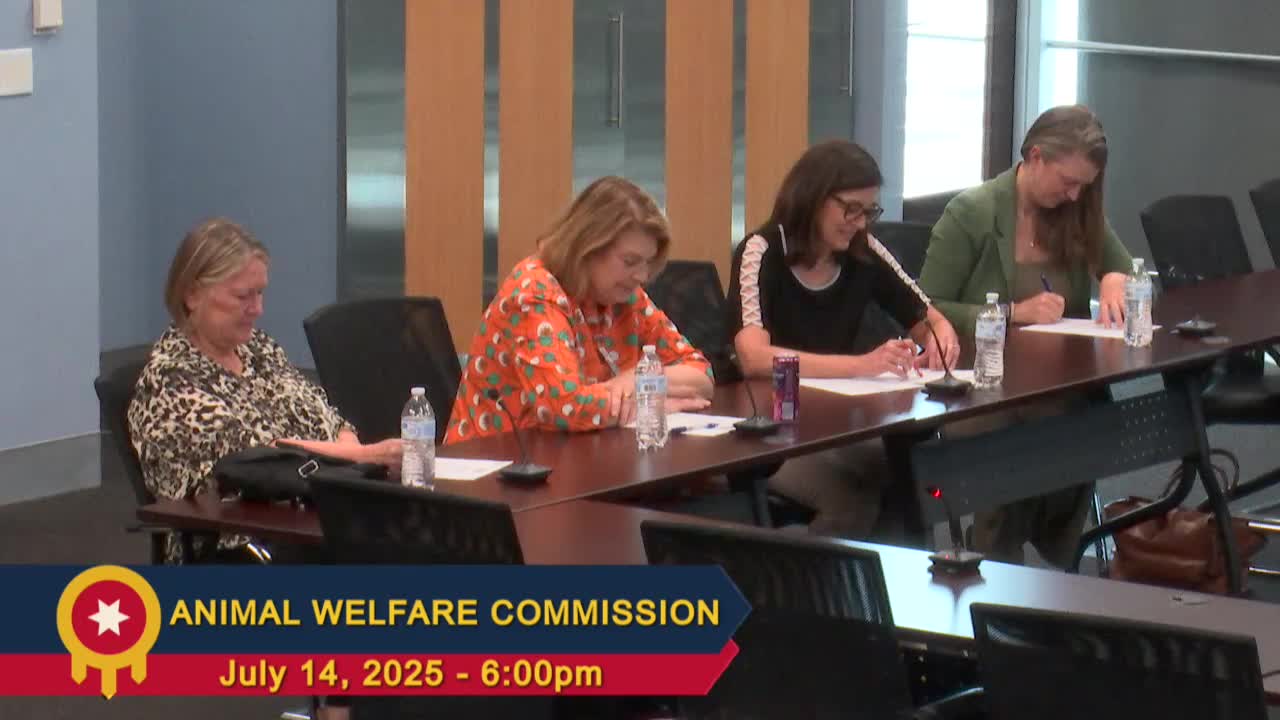
Tulsa Animal Services told the commission it is researching whether a city‑issued pet license program is the best approach for Tulsa after speaking with staff in other cities and assessing local costs and benefits.
Director Sherry Carrier said staff compared practices in Oklahoma and out‑of‑state peers and found mixed results. She cited Norman (Oklahoma) as an example of a jurisdiction that stopped licensing because the administrative work outweighed revenue and compliance benefits. Carrier said the primary public‑health purpose of licensing is to help ensure rabies vaccination, but that many residents obtain vaccinations at free or low‑cost clinics without completing license paperwork.
“We're not gonna willy nilly this. I mean, we're gonna put some research in it and then make the best decision for the citizens of Tulsa and, the city of Tulsa,” Carrier told the commission. She said staff have identified practical barriers — for example, the department currently lacks a mechanism for veterinarians to issue a license electronically at the point of vaccination — and that the department will pursue collaborative options and grant opportunities before recommending any ordinance change.
Commissioners discussed enforcement concerns and equity: requiring licenses can pose financial burdens for households that cannot afford spay/neuter or licensing fees, Carrier said, and the department’s priority is to expand free or low‑cost vaccination and spay/neuter services rather than rely solely on citations. Carrier added staff will return with formal research and proposals before any change to an ordinance or enforcement approach.
Background: Item 5 on the commission agenda listed pet licensing research and possible future decisions. The discussion focused on weighing administrative cost, public‑health benefit and equity implications of licensing programs.