Get Full Government Meeting Transcripts, Videos, & Alerts Forever!
Get email alerts on the Streets Infrastructure topic
No spam. Unsubscribe anytime.
Staff recommends $203,920 micro‑surface award to Aztec Corp. for Sheridan streets
Summary
City staff recommended the council award Aztec Corporation a $203,920.10 contract to micro‑surface about 57,000 square yards of Sheridan streets, covering portions of Canby/Carlin and South Sheridan Avenue. Staff said the work is funded by local capital taxes and GPET bonds and emphasized traffic control plans for the railroad crossings.
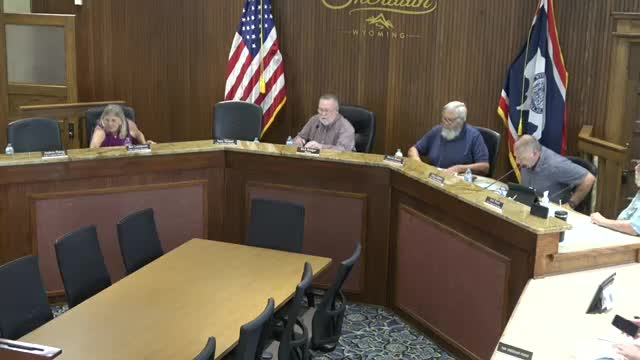
City staff recommended at the July 14 study session that the council award a $203,920.10 contract to Aztec Corporation for the 2025 Sheridan micro‑surface pavement preservation project.
Project manager David Ford told the council the work would micro‑surface about 57,000 square yards in the Canby/Carlin area and along South Sheridan Avenue from the railroad bridge south to Wyoming Avenue. "What our microservice project is is it's one of our methods of pavement preservation," Ford said, explaining the treatment is intended to extend pavement life and delay more costly repairs.
Ford said the city advertised three times, held a pre‑bid conference on June 18 and received two sealed bids on July 2 — the low bid of about $203,920 and a second bid of about $301,000 — with an engineer's estimate described in the meeting as "right about $2.60." Staff recommended the council award the project to the lowest qualified bidder and asked that Public Works Director Hans Mercer be authorized to act on behalf of the mayor and council on project matters.
Ford described the sequence of work: crack sealing ahead of the micro‑surface application, curb and gutter repairs as needed, and machine application of the micro‑surface material. He said the city moved from chip seal to micro‑surfacing because it produces less dust and generally draws fewer complaints.
Council members raised public‑access and scheduling concerns. Councilman Lightnam said residents on Carrington contacted him asking why a short unpaved block had not been included; Ford replied that the city will not apply micro‑surface to gravel streets and suggested those residents contact City Engineer Tom Murdo to discuss paving options. Councilman Brads noted the area for this project is among the older parts of town where infrastructure was not installed by newer developments.
Several council members asked about traffic control at the railroad crossing on Sheridan Avenue. Ford said contractors must submit a traffic control plan before work begins and staff expects some short closures: "Sheridan Avenue is probably close for an hour for that chunk," he said, and promised public outreach and door hangers once the schedule is final. He said the contractor will coordinate with emergency services.
Funding and procurement: Ford said the project will be paid from capital tax and GPET bond funds earmarked for streets and infrastructure. No formal council vote or award was recorded in the transcript of the study session; staff presented the recommendation for a future council action.
Ending: Staff said they will publish a project schedule and do direct outreach to affected residents after the contract is awarded. Council members requested follow‑up on the one unpaved Carrington block and confirmation of traffic control plans to ensure emergency vehicle access across the railroad.