Get Full Government Meeting Transcripts, Videos, & Alerts Forever!
Get email alerts on the Shaker Square Revitalization topic
No spam. Unsubscribe anytime.
Cleveland Neighborhood Progress presents Shaker Square vision plan to Shaker Heights City Council, seeks private partners and funding
Summary
Cleveland Neighborhood Progress outlined a multi-part vision for revitalizing Shaker Square—focusing on retail mix, second-floor activation, programming and housing—emphasizing that private investment and targeted fundraising will be necessary to implement the plan.
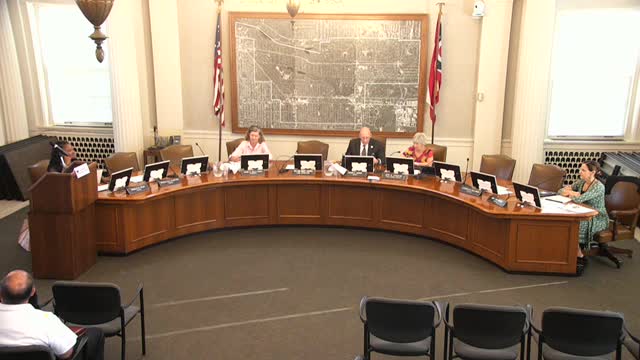
Cleveland Neighborhood Progress (CNP) on July 14 presented a vision plan for Shaker Square to the Shaker Heights City Council, outlining strategies to revive the historic plaza through a mix of retail, new housing, programmed events and infrastructure upgrades while seeking private-sector partners and additional funding.
The plan, described by Tanya Menes, president and CEO of Cleveland Neighborhood Progress, frames the effort as “a new era for a Cleveland Classic,” and breaks the work into three goals—inviting, inspiring and timeless—aimed at improving retail mix, activating upper-floor spaces and preserving the square’s historic green while making it safer and more usable.
Menes told the council the planning process ran about nine months beginning in January 2025 and drew participation from nearby neighborhoods including Shaker Heights, University Circle and portions of the West Side. She said the study shown to council recommends a retail mix oriented toward experiences, food and beverage and daily services, and calls for making better use of second-floor spaces—by installing elevators and enabling makers, wellness providers and nonprofits to occupy upper-floor suites.
Menes said CNP already has one elevator under construction in the quadrant that serves a local crisis center and plans fundraising to add elevators in other quadrants so second floors become usable. She described an RFP launched to recruit businesses that will complement existing tenants such as Cafe Indigo and the movie theater anchors, and said programming—smaller, year-round offerings as well as occasional music and events—will be central to making the square feel active.
On housing and private development, Menes said adding new residential density will be critical to the economics of the square. She described identified sites for new construction behind and alongside existing anchors and said most of those new housing opportunities are in the City of Cleveland, though some adjacent blocks fall inside the Shaker Heights boundary. Menes said the plan envisions a mix of market-rate housing and workforce-affordable units—some using 4% or 9% tax credits for affordable housing—so the district can remain mixed-income.
Funding and capital work already completed, she said, included roughly $5 million raised for infrastructure and building repairs, and that approximately $2 million of that total came from county American Rescue Plan funds. She listed other funders as private foundations and community development finance institutions and said earlier capital work replaced roofs, HVAC, plumbing and electrical systems and added lighting and cameras.
Menes said CNP is coordinating with Destination Cleveland on artistic lighting to be installed this fall in alleys and along the promenade, and that the group plans improved destination signage, landscaping and mid‑block pedestrian crossings to make the square easier to traverse. She also said a conservancy model is under consideration for the green space because the green is valuable to the community but does not by itself generate revenue for a private owner.
Council members asked about specifics. Council Member Kator asked whether labeled sites in the presentation were existing buildings or locations earmarked for new construction; Menes replied the labels indicated opportunities for new construction and that planners are now assessing feasible unit counts and development types. Members asked whether new development would fall inside Shaker Heights or in Cleveland; Menes said most of the square’s parcels are in the City of Cleveland, though some adjacent streets and apartment blocks are in Shaker Heights.
Council members also asked about transit and programming. Menes said CNP has discussed coordination with the Greater Cleveland Regional Transit Authority and that Shaker Square is one of two true transit-oriented districts in the city; she said county and regional programs that support transit-oriented development are important to increasing ridership and connecting shopping districts. She noted she has an RTA official on CNP’s board and said conversations about fare incentives and other connections are ongoing.
On an adjacent redevelopment parcel, Menes said the Landmarks Commission for the City of Cleveland has approved demolition of a decaying building adjacent to the square, permits are in place, and the owner is working to relocate power before demolition can proceed; she said that parcel is well suited for new housing development and that future residential buildings would likely include parking.
Menes emphasized that implementing the long-range vision depends on pairing public improvements with private development. She asked council members to help by visiting and promoting the square, encouraging residents and businesses to participate in programming and considering potential business referrals. She pointed council members to shakersquare.com for the full plan and the RFP for potential tenants.
The presentation drew repeated council support for the project’s cross-jurisdictional importance. Council Member Claytor summarized the sentiment by saying the cities’ fortunes are intertwined: “the city of Shaker Heights does better when the city of Cleveland does better,” and several members thanked Menes and CNP for their stewardship.
No formal council action or vote was taken on the plan during the July 14 work session. Menes and CNP said next steps include continued fundraising for visible improvements (lighting, signage, landscaping and programming), pursuing private partners for larger public‑realm projects, pursuing a conservancy model for the green space and continuing outreach to merchants and transit partners.