
UNHCR: Mass returns from Iran and Pakistan are overwhelming Afghanistan; aid operation 28% funded
Get AI-powered insights, summaries, and transcripts
Subscribe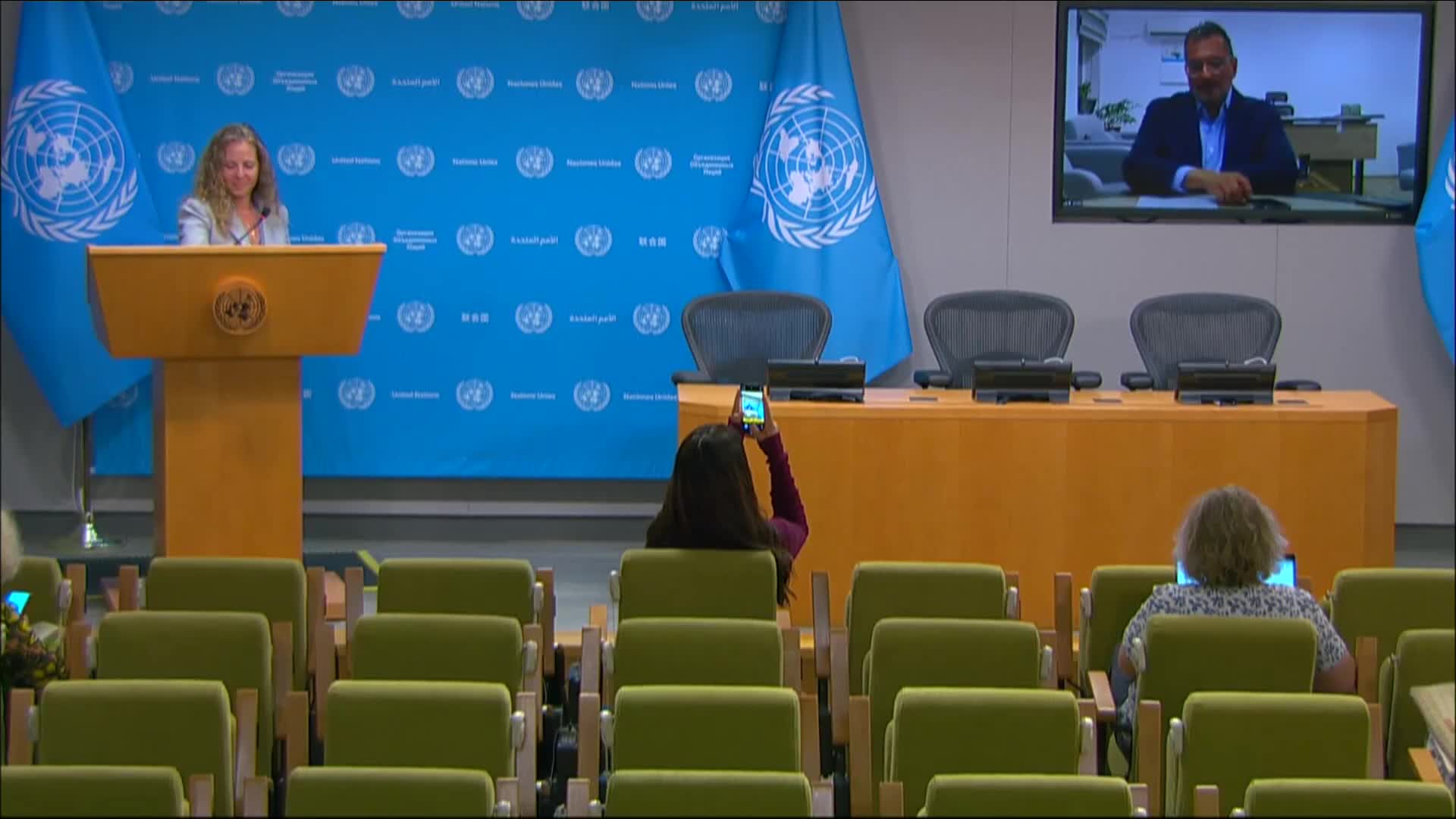
Summary
UNHCR representative Arafat Jamal, briefing virtually from Kabul, told a United Nations press briefing that more than 1,600,000 Afghans have returned to Afghanistan from Iran and Pakistan so far this year, including roughly 1,300,000 from Iran, and that the pace and manner of some returns are creating “enormous pressures” on the country.
UNHCR representative Arafat Jamal, briefing virtually from Kabul, told a United Nations press briefing that more than 1,600,000 Afghans have returned to Afghanistan from Iran and Pakistan so far this year, including roughly 1,300,000 from Iran, and that the pace and manner of some returns are creating “enormous pressures” on the country.
Jamal said border crossings have included sudden, large movements—peaks “of over 40,000 people a day” at the Iran–Afghanistan border and a single-day spike of about 50,000 on July 4—and that many returnees arrive exhausted, dehydrated and “often in despair.” He described scenarios in which people born abroad or with different socioeconomic backgrounds are returning to a country that is “utterly unprepared to receive them.”
The UNHCR official said the agency’s Afghanistan operation is only 28% funded and is diverting resources from elsewhere to meet immediate needs. “Daily, I’m in conversations with my colleagues to say, should we give one blanket instead of four to a family? Should we give one meal instead of three? These are heartbreaking and soul-destroying conversations,” Jamal said.
Why it matters: the rapidly rising numbers and constrained budgets mean UN agencies are reducing planned support such as small-business grants and housing assistance. Jamal said UNHCR had forecast roughly 1,400,000 returns for 2025 but that current trends could raise the total to about 3,000,000 this year, a projection he described as tentative and subject to change.
Protection concerns and children: Jamal said UN agencies are especially worried about women and girls given the country’s rights environment, and that the number of unaccompanied children arriving at borders has risen. He said UNHCR and UNICEF are identifying unaccompanied children, setting up breastfeeding centers for infants, and trying to trace and reunite children, but acknowledged: “we don’t have the full answer.”
Humanitarian response and priorities: Jamal described a three-part approach UNHCR seeks to use where possible—stability interventions (housing, livelihoods, clinics and schools), investment and economic opportunity, and regional cooperation to facilitate trade and jobs. He said roughly 20 provinces have been identified as priority areas of return, and that five provinces receive about 80% of returnees; those figures were presented by Jamal as internal UNHCR planning data.
Regional dynamics and engagement: Jamal praised Pakistan and Iran for past and present generosity while urging restraint and dialogue among regional states. He said the Taliban and other Afghan actors at the border have largely welcomed returnees and are present at border crossings, but that the authorities “don’t always have the resources.” Jamal called for international cooperation “to enable dignified return” and referenced a recent United Nations General Assembly resolution that asks UNHCR and IOM to facilitate voluntary, safe and dignified return.
Operational constraints: amid large flows and extreme heat—Jamal and questioners cited temperatures of about 40 degrees Celsius—UN agencies have prioritized shaded reception areas, air-conditioned warehouses, and immediate assistance for women with infants. He said reception sites are designed to hold people for hours rather than days when possible, and that priority is given to families and vulnerable groups.
Funding outlook: asked whether current cuts were likely to be permanent, Jamal said the scale of cuts is “brutal” and unprecedented in his three decades with the UN, but he expressed hope that funding could increase if the international community responds. He warned that continued cuts limit programs that previously provided startup grants (Jamal said a prior program provided roughly $1,000 per household to start businesses) and other resilience supports.
Quotations in context: Jamal said, “If handled with calm, foresight and compassion, we believe that returns can be a force for stability, economic growth, and regional harmony. But handled haphazardly, [they] lead to unrest and onward movements.” On funding he said, “we are living on borrowed funds,” and described choices about reducing blankets and meals as “heartbreaking and soul-destroying conversations.”
What was not decided: this was a briefing and included no formal UN decisions taken at the session. Jamal repeatedly asked for “restraint, resources, dialogue and international cooperation,” but did not announce new funding pledges or binding agreements.
Questions from reporters addressed projection uncertainty, the rise in unaccompanied children, disinformation in host countries, the role of regional trade initiatives, and whether UN agencies had contact with Taliban authorities. Jamal said UNHCR maintains engagement with counterparts in Tehran and that UN colleagues in Tehran and Islamabad are in contact with local officials.
Looking ahead: Jamal said the situation remains fluid and that UNHCR’s planning assumptions could change, reiterating that sustained donor funding and regional cooperation are needed to avoid deeper humanitarian and protection crises.