Get Full Government Meeting Transcripts, Videos, & Alerts Forever!
Get email alerts on the Cultural Heritage Stewardship Plan topic
No spam. Unsubscribe anytime.
Richmond subcommittee hears split public comment on Cultural Heritage Stewardship Plan amid housing concerns
Summary
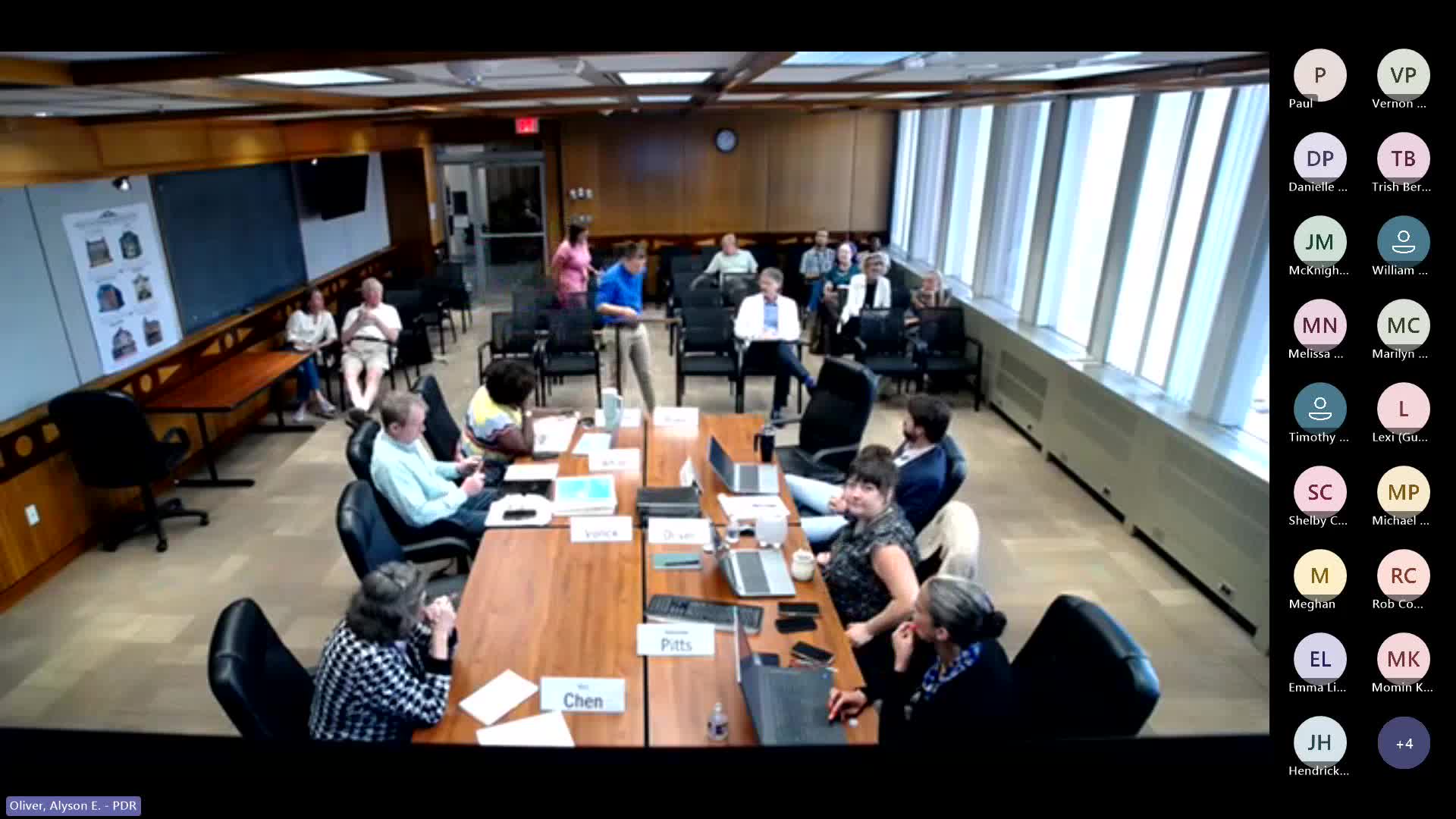
Public comment at a Richmond City subcommittee meeting on the draft Cultural Heritage Stewardship Plan opened with residents and interest groups warning the plan could slow housing development while preservation advocates and planning staff said the draft is primarily policy and incentives, not regulation.
Public comment at a Richmond City subcommittee meeting on the draft Cultural Heritage Stewardship Plan opened with residents and interest groups warning the plan could slow housing development while preservation advocates and planning staff said the draft is primarily policy and incentives, not regulation. Planning staff told the subcommittee the CHSP would inform later ordinance work and that any binding rules would require separate council action.
The debate focused on whether the plan—s preservation tools could be used to block housing or whether they would help keep older, lower-cost housing in place. Joe Galvak, speaking for RVA YIMB, said the plan "poses real risks to housing affordability, equity, and our city's ability to grow inclusively" and urged an equity and housing impact analysis and guardrails to prevent preservation tools from blocking affordable or modest infill housing such as duplexes and accessory dwelling units.
Samantha Kenny, government affairs director at the Richmond Association of Realtors and a member of the CHSP advisory committee, told the subcommittee that moving the plan forward before the zoning code rewrite risks "creating conflict, confusion, or even barriers to housing reforms we desperately need" and asked the group to delay adoption until after zoning reforms are complete.
Historic preservation advocates countered that the plan is a nonregulatory policy document intended to guide later implementation. Sian Crump, executive director of Historic Richmond, said the CHSP "is not regulation that would in any way block the development of new housing. It is a set of ideas, mostly incentives." Crump highlighted provisions intended to help long-term owner-occupants maintain homes and proposals to revise the residential rehabilitation tax abatement to make preservation affordable for existing homeowners.
Other public commenters described mixed local impacts of preservation. Jason Hendricks, a long-time resident of the Spring Hill neighborhood, said that in his experience the historic designation encouraged neighborhood investment and supported affordable housing projects nearby. By contrast, speakers including representatives of organized homeowner groups and developers raised concerns about new overlay districts imposing design controls without clear owner consent.
Planning staff briefed the subcommittee on how the CHSP would interact with the ongoing zoning code rewrite. A planning staff member said the city—s immediate priority is to adopt base zoning districts first; any overlaysincluding design overlays, demolition-delay overlays, or a locally created cultural-district designationwould be considered later and should be "neighborhood-driven and property-owner driven." The staff member also advised that passage of the CHSP as a master-plan amendment would make it part of the policy context used in discretionary reviews such as rezonings, conditional-use permits and locational "character and extent" determinations, but would not change ministerial reviews like building permits or site-plan approvals, which are reviewed only against the code.
Committee members and the public repeatedly sought clarity about what the plan would and would not do. Several commenters requested explicit language in the CHSP confirming that new historic or cultural-district designations would be opt-in or require property-owner consent; planning staff said the existing local process for City Old and Historic Districts historically has required ballots by property parcel and extensive neighborhood outreach, and that any new district type requiring state enabling legislation would still have to be enacted by City Council.
The group also debated demolition protections and an anti-demolition overlay. Speakers pressed whether the city could administratively designate individual properties historic; staff and the city attorney—s office were reported to have said that local historic designations and civil penalties for demolition would apply only to officially designated City Old and Historic Districts or individually designated properties after the formal public process, not by unilateral administrative declaration.
Archaeology was another contested topic. The CHSP recommends a city-funded assessment to map areas with a higher likelihood of archaeological resources before any regulatory step. Planning staff and several commenters said the first step should be an educational, city-funded "heat map" identifying where archaeological resources might exist; that mapping work could take a couple of years and would inform later decisions about whether to require focused reviews in specific zones. Commenters opposed any immediate requirement that property owners pay for city-mandated archaeological assessments without first completing a citywide mapping and policy process.
On historic-incentive tools, speakers discussed prior local experience with a residential rehabilitation tax abatement program that required owners to demonstrate a 25% increase in assessed value to qualify; critics said the prior program had been used mainly by flippers and not targeted effectively to long-term, lower-income homeowners.
The subcommittee agreed to pursue one immediate implementation step from the CHSP: a city-funded archaeological-survey effort to identify priority areas (a mapping exercise), and to return with clearer, opt-in language for any proposed district types. The meeting closed with the subcommittee tentatively scheduling its next meeting for Monday, August 20, at 10 a.m. (subject to public notice).