Get Full Government Meeting Transcripts, Videos, & Alerts Forever!
Get email alerts on the Jail Conditions topic
No spam. Unsubscribe anytime.
Oversight board members report crowded cells, staffing and technology problems after jail visits
Summary
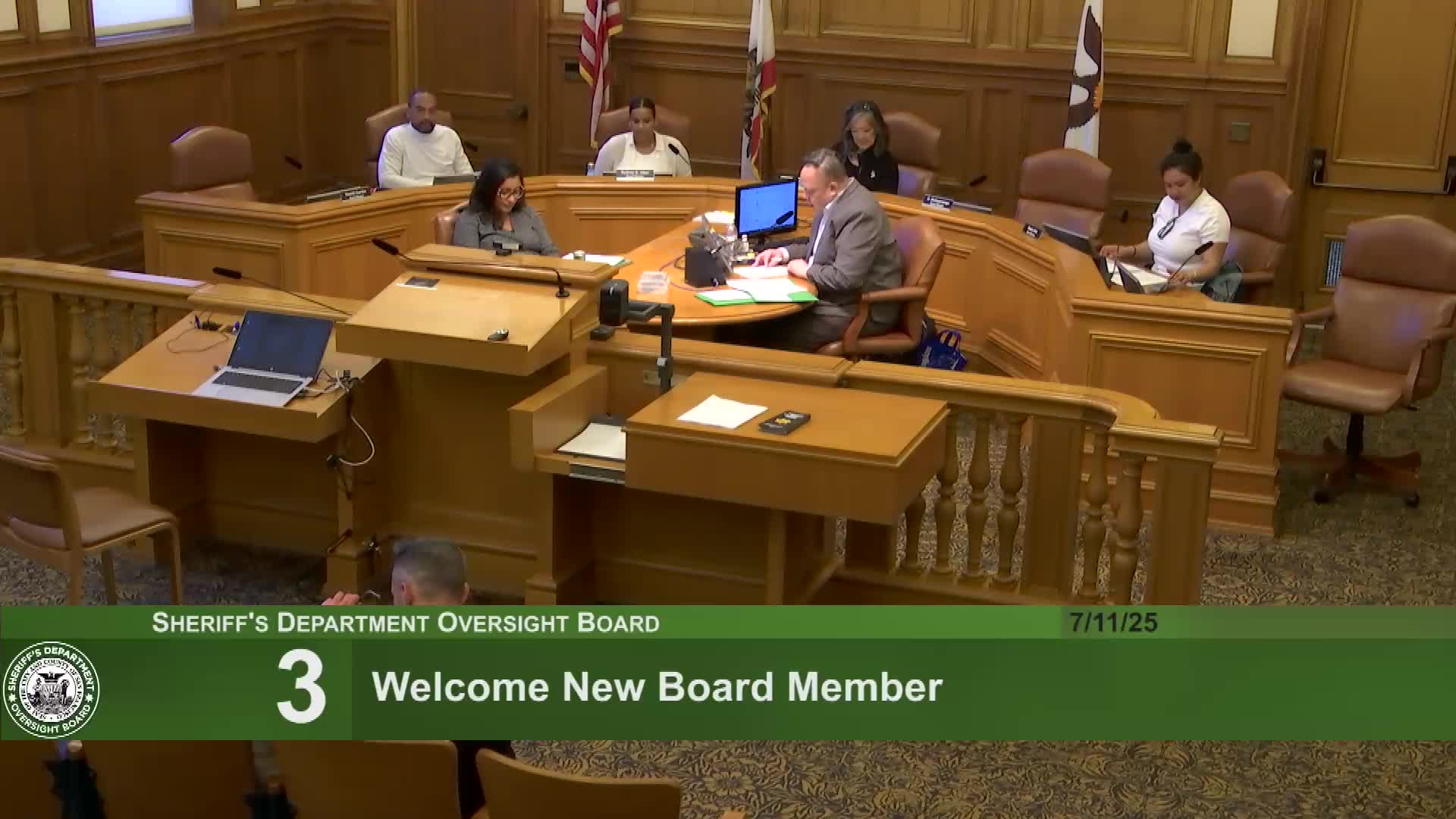
Members of the San Francisco Sheriff's Department Oversight Board reported overcrowding in some intake units, staffing shortages as deputies are reassigned to street patrol, and persistent technology gaps that slow processing and complaints during a July 11 meeting.
Members of the San Francisco Sheriff's Department Oversight Board reported on July 11 that jail visits in mid-May and later revealed overcrowded cells in some intake areas, staff shortfalls and outdated technology that can delay inmate processing and handling of complaints.
Board member Juan Ortiz told colleagues her first jail visit showed a mix of conditions: some single-occupancy holding cells and at least one tank the board member described as “overly crowded,” with people sleeping on the floor. Ortiz said she heard that an increase in arrests for loitering and the reallocation of some sheriff’s staff to street patrols had contributed to the pressure on intake and housing.
The board’s president, Hsu, and other members described repeated concerns about the sheriff’s department’s technology. Hsu said the department had reverted to paper when electronic complaint and scheduling systems went down, creating backlogs. She and other board members said such outages can cascade into longer detention processing times and make it hard for the board to get consolidated reports because different units hold key data separately.
Board members also highlighted health services changes at the jails. Hsu noted the sheriff’s office has expanded pharmacy services and that the Department of Public Health’s efforts had brought Medicaid dollars to cover some jail health costs. She said the city has secured $17,000,000 in Medicaid funding to reduce reliance on the general fund. The board discussed maternal-health access improvements and said women’s health services are located closer to where women are housed.
Language access and services for monolingual Spanish speakers were raised by Ortiz and others as an ongoing concern. Ortiz and fellow members suggested surveys and listening sessions inside the jails to gather incarcerated people’s priorities and to better align any improvements with residents’ needs.
Board members repeatedly said they want an incremental approach—pilots and small-scale technology investments that can be scaled—rather than large, costly procurements that risk being outdated before they are fully implemented. Several members urged training and user-centered design so staff and incarcerated people can use any new systems reliably.
The board also noted improvements on some fronts, including repairs and repainting in intake areas and suggested continued collaboration with the sheriff’s command staff to identify funding and practical upgrades. The board asked staff to collect specific follow-up items from members so the sheriff’s office can respond with targeted information.
The board’s discussion of jail conditions and data gaps was part of a broader meeting that included presentations on data systems and an investigative report from the Department of Police Accountability.