
Region 4 Area Agency on Aging presents FY26 implementation plan, highlights grants and dementia services
Get AI-powered insights, summaries, and transcripts
Subscribe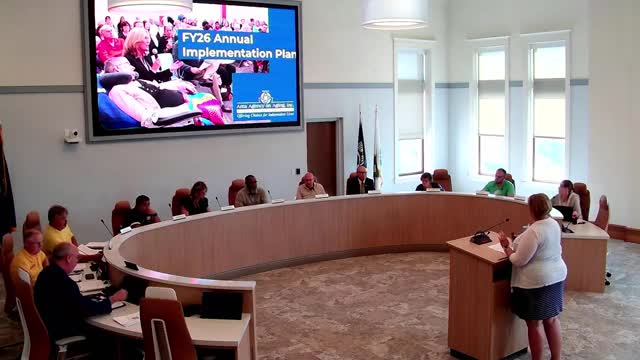
Summary
Amanda Drew, planning and community development manager at Region 4 Area Agency on Aging, presented the agency’s fiscal year 2026 annual implementation plan to the Cass County Board of Commissioners, saying the plan takes effect Oct. 1, 2025.
Amanda Drew, planning and community development manager at Region 4 Area Agency on Aging, presented the agency’s fiscal year 2026 annual implementation plan to the Cass County Board of Commissioners, saying the plan takes effect Oct. 1, 2025.
Drew told commissioners that Region 4 — which serves Berrien, Cass and Van Buren counties — is preparing to expand services to meet a growing older‑adult population and to implement recently awarded grants and programs. “Currently, 28.6 percent of the Tri County population, more than 80,000 individuals, are over the age of 60. Thirty‑one percent of those are here in Cass County,” Drew said, citing the agency’s regional demographic figures.
Region 4 highlighted several recent accomplishments and program launches that the presentation said will shape FY26. The agency said it secured multiple grants, won a national Aging Innovations Award for an Arts and Aging partnership, and that CEO Christine VanLandingham received a national leadership award. The presentation also noted CMS approval to deliver a specialized dementia care model described in the meeting as a “guiding and improved dementia experience or guide,” intended to coordinate dementia assessment, care planning and supports across home‑ and community‑based providers.
Drew described the agency’s service mix as information and access (including care management and transportation), in‑home services (personal care, chore services and assisted devices), community programs (disease prevention, elder abuse prevention and ombudsman services), nutrition services and caregiver supports (case management, respite and support groups). “We will be implementing a new service line called caregiver case management, which will provide in‑home services directly to caregivers,” she said.
During questions, commissioners and staff asked how Region 4’s veteran connector status operates. Drew said the agency’s information and access team screens callers and asks whether a caller has served. Teresa Urich, the agency’s chief operating officer, added that asking “have you served?” instead of “are you a veteran?” increases response rates and that Region 4 provides warm handoffs to veteran service officers for benefits and clinical needs. “Anyone who contacts our information and access team gets that assistance and warm handoffs to the veteran service officers,” Urich said.
The presentation also covered equity and accessibility goals the agency is pursuing, citing a state mandate to target services to people with the greatest social and economic need. Drew described trainings, expanded online resources (Relias and the caregiver education platform Tualta), bimonthly partner meetings and partnerships with local organizations — including Cass County Council on Aging, Cass County Transportation Authority, Cass County DHHS, Pokagon Health Center and local adult foster care and nursing homes — to reach underserved populations.
On grants, Drew confirmed Region 4 received a $1 million award from HUD’s Older Adult Home Modification Program and said the funding will be used for accessibility modifications such as grab bars and other accessibility devices — not for major home repairs like roof replacement. “That will be for home modifications, not home repairs,” she said, adding staff training and program rollout are expected in the coming months.
Drew and Urich outlined workforce challenges and risks to service capacity, noting Medicaid waiver and other payment rates have not kept pace with rising costs and that shortages in direct care, social work and nursing staff create recruitment and retention pressures for providers. They said the agency will continue to seek grants, expand caregiver supports and develop a multi‑year plan this fall, asking for Cass County resident participation in community surveys and conversations.
The presentation concluded with a request for questions and praise from the board. Commissioners thanked the agency for the HUD award and the dementia focus.
Looking ahead, Region 4 said its FY26 priorities include implementing awarded grants, launching caregiver case management, expanding dementia‑friendly sector training and continuing outreach to veterans and underserved communities.