Get Full Government Meeting Transcripts, Videos, & Alerts Forever!
Get email alerts on the Latino Economic Opportunity topic
No spam. Unsubscribe anytime.
Senate committee hears data showing Latinos drive California growth but face steep wealth and capital gaps
Summary
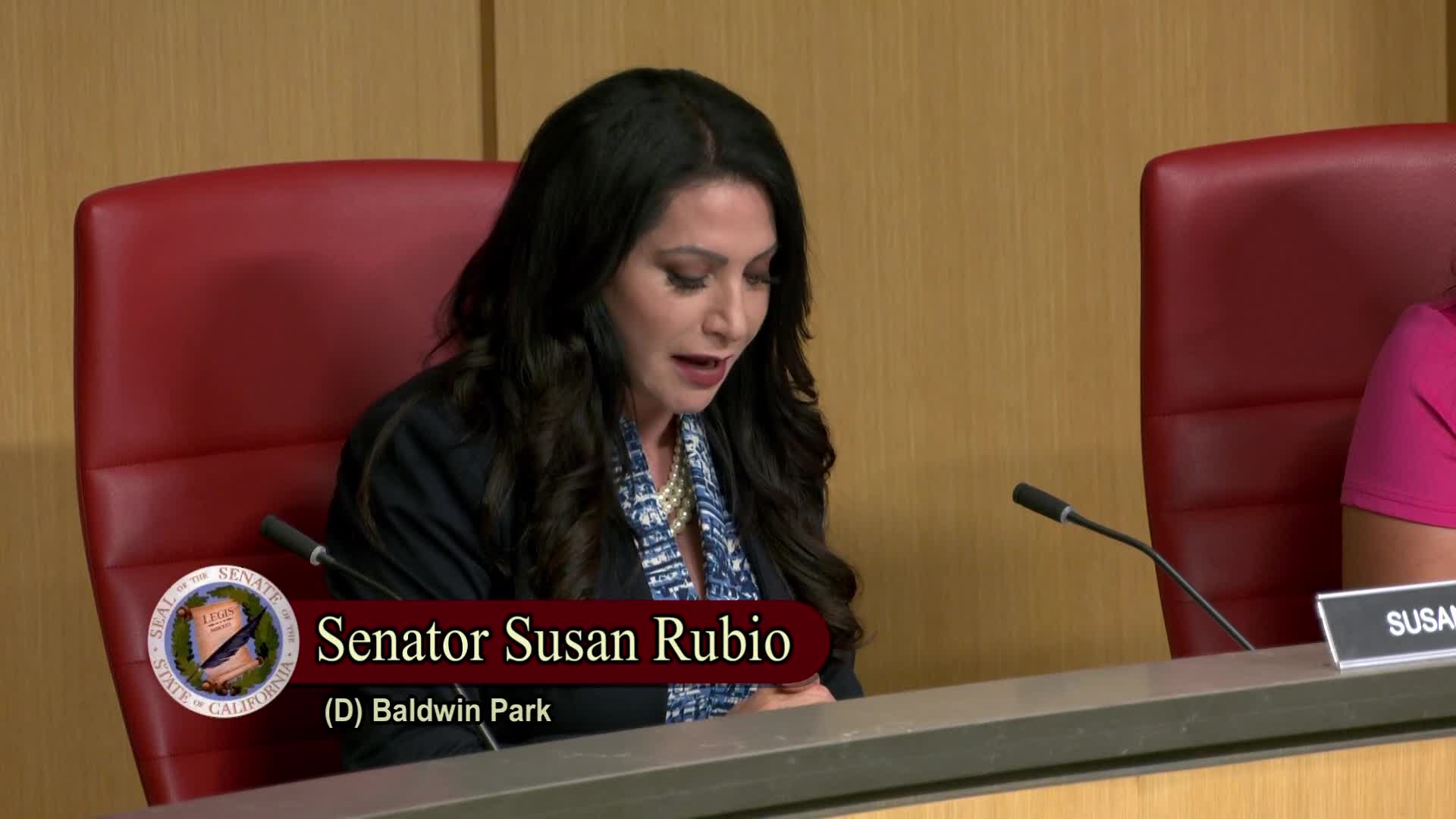
State Senator Susan Rubio, chair of the California State Senate Select Committee on Minority Economic Development, convened a hearing in Room 2100 to examine economic opportunity for Latino Californians; researchers told the committee Latinos now generate more than $1 trillion in direct economic activity in California but face a wide racial wealth gap, lower homeownership and constrained access to capital for businesses.
State Senator Susan Rubio, chair of the California State Senate Select Committee on Minority Economic Development, convened a hearing in Room 2100 to examine economic opportunity for Latino Californians. Researchers and advocates told the committee that Latinos now account for more than $1 trillion in direct economic activity in California, but face persistent barriers to wealth building and business growth.
The committee heard research from the Latino GDP project and other studies showing Latinos’ outsized contribution to the state economy. Matthew Finup, a researcher with the Latino GDP initiative, said, “Latinos are drivers of growth, a tremendous source of resilience.” Finup and Dr. David Hayes Bautista of UCLA told the committee the Latino component of California’s labor force has grown much faster than the non‑Latino labor force and that Latino economic activity underpins recent gains in the state’s overall GDP.
Why the hearing matters: Committee members framed the testimony as a basis for policy steps to expand homeownership, improve financial inclusion, scale Latino‑owned firms and ensure Latino communities share in large state contracts and future economic opportunities such as the 2028 Olympics. Orson Aguilar, president and CEO of Latino Prosperity, summarized the policy imperative: “Closing the Latino wealth gap will require bold equity standards,” and outlined forthcoming reports with targeted recommendations.
Key findings presented
- Scale of the Latino economy: Finup said the direct economic contribution of Latinos living in California passed $1,000,000,000,000 in 2023 and Latino consumption in the state exceeds $700,000,000,000. The researchers noted that without Latino economic activity California’s ranking among global economies would fall several places.
- Labor and demographics: Panelists said a large share of the Latino labor force is young and U.S.‑born; Dr. Bautista noted immigrants are being succeeded in the labor force by their U.S.‑born children. Finup described this as a long‑term demographic advantage but said housing affordability already appears to be shifting Latino population patterns in some high‑cost counties.
- Wealth gap and homeownership: Orson Aguilar cited upcoming research showing Latino households hold about 11% of the wealth of white households—a roughly 9:1 gap—and said median income and net worth diverge sharply: Aguilar reported median household income figures discussed at the hearing (Latino median approximately $99,000; white median approximately $136,000) and said net worth, not wages, explains most of the disparity. He also told the committee that Latino homeownership rates lag — roughly mid‑40s percent compared with about 66% for white households — and that Latino homeowners are disproportionately exposed to climate and insurance risk in places such as the Central Valley and Inland Empire.
- Small business financing and procurement: Witnesses told the committee Latino‑owned businesses grew rapidly but remain undercapitalized and underbanked. Aguilar said if Latino‑owned firms earned the same average revenue as white‑owned firms, California would have up to an additional $268,000,000,000 in economic activity. Julian Canete of the California Hispanic Chamber stressed persistent barriers to bank lending and venture capital (noting less than 1.5% of first‑half 2023 VC funding went to Latino business founders) and urged stronger technical assistance and state procurement outreach.
- Regulatory and litigation costs: Executives from Morello Enterprises and other firms told the committee that regulatory complexity, rising construction and energy costs, and litigation burdens raise operating costs for small businesses. Luis Armona said litigation and compliance expenses make it difficult for small firms to scale and recommended tailored rules or supports for smaller employers.
Policy discussion and proposals
- Procurement goals and state programs: Committee members and witnesses discussed AB 2019 (as referenced in the hearing), which established a 25% procurement goal for small business spending at state agencies, and called for improved outreach so Latino firms can compete. Witnesses also cited AB 1392 (hospital procurement/supplier diversity) as a potential growth area and described SB 781 as a proposal to encourage local procurement goals. Panelists urged continued and expanded funding for state technical assistance programs (TAP/Cal OSB and related SBDC support) and the state’s capital infusion efforts to help Latino firms become “capital ready.”
- Lending and mortgage disparities: Witnesses said some banking institutions make more mortgages to Latino borrowers than others. Panelists said the committee should press financial institutions to explain gaps, expand down‑payment assistance outreach to Latino communities, and study whether state programs reach Latino applicants at the same rates as other groups.
- Workforce pipeline: Committee members asked what sectors should be prioritized for training and hiring. Panelists emphasized construction and unionized trades, health care, and emerging areas such as clean energy and hydrogen, and recommended partnerships between industry, community colleges and job training programs.
- Litigation reform: Senator Rubio described ongoing legislative interest in curbing what witnesses described as predatory lawsuit practices that disproportionately burden small businesses and mentioned a pending measure (referred to in the hearing as SB 84) to require cure periods before litigation proceeds in some circumstances.
Committee next steps and timeline
Rubio told witnesses the committee will continue hearings across the state. The chair said the next hearing will focus on access to capital and will be held in the Bay Area (scheduled for Aug. 14 in committee materials mentioned during the hearing), followed by a Los Angeles hearing. Committee staff asked witnesses to provide concise top‑line recommendations for deliverables and follow‑up.
What the record does not show
The hearing featured data and policy discussion but no formal votes, motions or regulatory changes. Witnesses offered recommendations and stated intentions for future reports; the committee did not adopt legislation or set binding requirements during the session.
Ending note
The committee concluded after more than two panels of testimony and questions from senators Rubio and Valladares. Rubio closed by thanking witnesses and announcing the committee will produce follow‑up reports and additional hearings to translate testimony into specific policy options.