Get Full Government Meeting Transcripts, Videos, & Alerts Forever!
Get email alerts on the Parks Funding topic
No spam. Unsubscribe anytime.
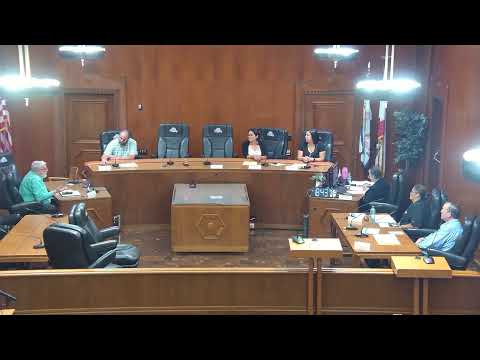
South Gate staff outline Quimby fee options as park funding gap widens
Summary
City community development staff explained how Quimby (parkland dedication) fees would be calculated for South Gate, highlighted the city’s low parkland-per-capita ratio and offered alternatives including park improvement fees, assessment districts and public–private partnerships. Commissioners received the report for filing.
Community development staff outlined options for adopting Quimby (parkland dedication) fees in South Gate and urged commissioners to consider multiple funding tools as the city seeks to expand parkland and pay for park improvements.
The city’s community development director, Gabriel Perez, told the Parks and Recreation Commission the Quimby Act (adopted by the state in 1965) allows cities to require land dedication or fees from residential subdivisions to acquire and develop parkland. Perez said South Gate currently has about 1.65 acres of parkland per 1,000 residents compared with a commonly used goal of 3 acres per 1,000.
“Based on 3 acres per thousand people, and a household size of 3.7 persons, you get a factor of 0.0111,” Perez said. Using a recent sample land sale price of about $2,800,000 per acre as an example, Perez calculated a Quimby fee of roughly $31,500 per unit under that methodology. He emphasized this was an example and that an official fee requires an appraisal and council action to adopt an ordinance.
Perez said Quimby fees may be used for acquisition and development of parkland, including grading, landscaping, utilities and design costs, but are not intended to be a recurring maintenance revenue stream. He described several alternatives or complements to Quimby fees for a built-out city such as South Gate: a citywide park maintenance assessment district, a park-improvement development impact fee assessed on building permits, joint-use agreements with LAUSD and targeted public–private partnerships.
Commissioners asked about mechanics and timing. Perez said the city would need a council-adopted ordinance and an updated appraisal of land values; the appraisal would be used to set the per-unit fee and should be updated periodically. He also noted that Quimby fees apply to new residential units (including multifamily and mixed-use units with residential components) but cannot be charged on pure commercial development.
A public commenter who identified himself as Chingus Chingus Dominguez urged the commission to pursue outside grants and to consider splash-pad projects in South Gate Park. Dominguez pressed that neighboring cities operate splash pads and questioned why South Gate was not pursuing similar amenities.
After the presentation and public comment, commissioners voted to receive and file the report. The community development director said the matter could be studied further as part of an ongoing development impact fee study and that staff would return with more specific cost and implementation details if the commission asked.