Get Full Government Meeting Transcripts, Videos, & Alerts Forever!
Get email alerts on the Solid Waste Bulky Items topic
No spam. Unsubscribe anytime.
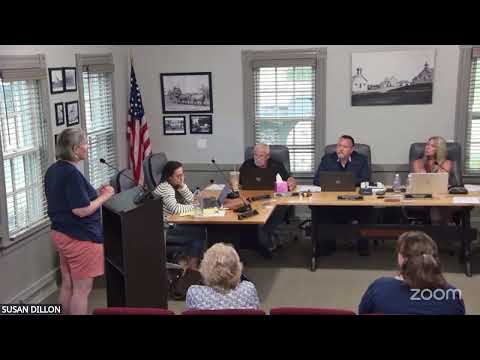
Foster Council advances bulk-waste fee plan, directs ordinance and public hearing
Summary
The Foster Town Council discussed a proposed fee schedule for bulky and nonhousehold waste and directed staff to draft an ordinance and schedule a public hearing after extensive discussion of tonnage, costs and enforcement mechanisms.
The Foster Town Council discussed a proposed fee schedule for large, nonhousehold and bulky items at its July 10 meeting and directed staff to prepare an ordinance and schedule a public hearing to finalize the plan.
Council members and town staff said rising heavy-item tonnage and other nonhousehold materials have driven disposal costs higher and that a modest sticker or charge system could offset overage fees without pushing residents to illegal dumping. "Things that are heavy add to our tonnage," said Gordon Rogers, the town's highway director, describing how items such as couches, mattresses and pallets move the town from a municipal landfill rate of about $63 per ton to a higher overage fee at roughly $115 per ton when thresholds are exceeded.
The discussion focused on three goals: reduce unexpected municipal landfill overage charges, offer a transparent, easy-to-use payment and tagging system (digital or at town hall) and keep fees low enough to avoid encouraging illegal dumping. Rogers described an approach used in other towns: issue a small sticker or ticket for bulky items that the hauler will accept and that can be bought at town hall. He said a sample fee—$35 for a sectional couch—would balance the town's overage cost and remain affordable for residents.
Councilors and staff reviewed implementation details discussed in previous meetings, including whether to require a dumpster for certain businesses, how to account for agricultural plastic wrap and hay twine that audits do not currently capture, and options for elderly residents who could not visit town hall. Rogers noted practical challenges: haulers already sometimes leave items they consider more than normal curbside trash, and some materials (sheetrock, boats, campers) require special handling and costs. He gave examples from town operations: reimbursements for electronics pickups and the rising fees for electronics containers, and a recent boat/trailer disposal that cost about $1,000 in tip and towing fees.
Council members emphasized communication and enforcement. One councilor said residents frequently put out items because "it's always been picked up," and that clear public messaging will be necessary once an ordinance is drafted. The group also discussed the state's bottle bill and opportunistic collection of recyclables from public bins as a complicating factor for meeting required recycling quotas.
Rather than vote on a fee schedule at the meeting, the council agreed to move forward with drafting an ordinance, designing uniquely numbered stickers or tickets and scheduling a public hearing so residents can comment before any fees are adopted. Councilors asked staff to build flexibility into fee language so rates can be adjusted without repeated council action.
The council set no final fees at the July 10 meeting; specific prices for each category were not adopted and remain "not specified." Members asked that proposed fees and an implementation plan be circulated before the public hearing so residents can review the details.