Get Full Government Meeting Transcripts, Videos, & Alerts Forever!
Get email alerts on the Education Funding topic
No spam. Unsubscribe anytime.
Glocester council, school leaders weigh referendum language and timing as union warns of student service cuts
Summary
Town councilors, school leaders and a teachers’ union representative discussed placing a supplemental property tax referendum on the ballot to restore school positions cut from the budget; the council postponed a final decision pending a finalized budget and a joint meeting with the school committee.
Glocester town councilors, school officials and union representatives debated whether to place a supplemental property-tax referendum before voters to restore staff and services cut from the school budget, with participants agreeing to postpone a final vote until the council and school committee can review a finalized budget and meet together.
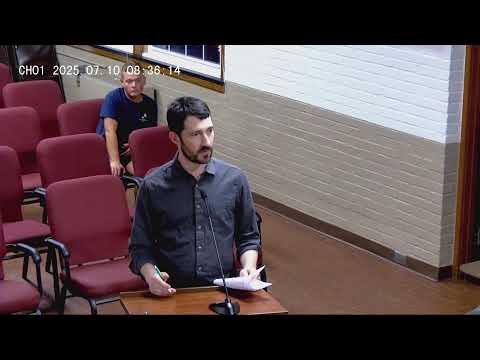
Phil Eden, a union representative who identified himself as working for “NEARY,” told the council the union will not campaign for a ballot question unless voters can see how the additional revenue would be spent. "We are not comfortable going out and asking voters to provide more of their tax payer money if we don't have a commitment for where that money is going," Eden said, adding that teachers and support staff are unwilling to “put our reputation on the line” without clearer assurances.
The superintendent of the regional elementary schools (unnamed in the record) told the council she is focused on opening schools in September and said she cannot promise a legally binding list of positions that would be restored by a referendum. "I don't think legally we can do that," she said, urging collaborative work with the council and the school committee to produce a plan that can be explained to voters.
Council members and the school committee repeatedly raised two practical points: the ballot language required by state statute and the election timeline. Council members said the language must closely follow the statute's phrasing — "Shall the town of Glocester approve a supplemental property tax increase of [blank] percent to fund school department operations and to avoid loss of critical town services for fiscal year 2026" — and that the clerks and canvassing timeline mean a September vote requires numbers very quickly. If the council misses the September deadline, the next feasible date discussed was October.
Participants asked for a short financial model showing the impact of a proposed 1.5% supplemental increase. A resident, Jason Whitford, relayed an estimate that a 1.5% increase would generate roughly $300,000 (approximate), a figure other speakers said should be modeled precisely by town finance staff. A school committee representative told the council the committee can provide an explanation to voters about how money would be used but will not agree to a ballot question that rigidly ties the funds to specific individual hires because budget needs can change.
Councilors, school leaders and staff discussed alternatives other than the referendum: using town or regional fund balances as a one-year bridge, or seeking a different percentage the voters might support. A council member noted the town's reserve is intended for fiscal stability and warned that pulling fund balance can create structural budget risks; another speaker pointed out the regional school district also has a fund balance (an amount cited in the discussion as about $3,400,000) but that transferring those funds poses legal and long-term sustainability questions.
After extended discussion the council voted to continue the ballot-question decision to a future meeting and to schedule a joint working session with the school committee so councilors can review a finalized, post-cut budget and a modeled referendum scenario before approving wording or a date. A second procedural motion to adjourn passed at the end of the night.
The meeting record shows the main outstanding items: (1) town finance staff must finalize the budget with cuts reflected and produce a payroll-adjusted model showing the impact of a proposed supplemental percentage (several speakers suggested a two- to three-week window); (2) council and school committee members should meet in a workshop to agree on an explanatory statement for voters; and (3) the clerk must confirm calendar and canvass deadlines if the council wants a September election rather than October.