Get Full Government Meeting Transcripts, Videos, & Alerts Forever!
Get email alerts on the Water Rates topic
No spam. Unsubscribe anytime.
Las Virgenes water district outlines rate study, says local supply projects will reduce reliance on imported water
Summary
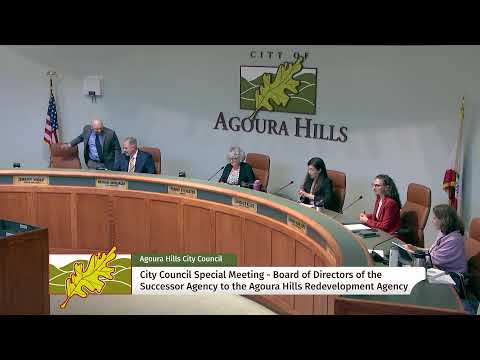
Las Virgenes Municipal Water District officials told the Agoura Hills City Council that the district’s planned investments in local water projects would reduce the agency’s reliance on imported water and that a five‑year rate study proposes phased increases to cover those costs.
Las Virgenes Municipal Water District officials told the Agoura Hills City Council that the district’s planned investments in local water projects would reduce the agency’s reliance on imported water and that a five‑year rate study proposes phased increases to cover those costs.
The presentation on the district’s work was given by Ricky Clark, public affairs associate for Las Virgenes Municipal Water District, and Brian Ritchie, the district’s director of finance and information technology, with LVMWD Board Director Gary Burns in attendance. Clark said LVMWD is “100% reliant on imported water,” and that the district is pursuing supply diversification including the Pure Water Project (about 30% of drinking water locally) and a pilot with OceanWell’s ocean desalination technology that could provide “up to 15%” of supply.
The district emphasized that those projects carry up‑front costs. Clark said the district has launched a five‑year rate study “to ensure that we do remain properly funded” and to pay for proactive investments such as an advanced water purification facility to be built in the service area. The district presented a bill‑impact chart showing a range of outcomes depending on household water budgets and meter sizes, and said the “average residential customer bill is going to increase an average of about $11” over the study period presented during the meeting.
Council members asked how the average was calculated and whether local supply will shield customers from Metropolitan Water District pass‑through costs. Clark and Ritchie said the figure presented was an average across years and customer classes, and noted that localizing supply reduces exposure to rising costs associated with importing water—such as energy to pump water long distances—even though new local facilities also require capital funding. Ritchie said some recent Metropolitan rate increases are already being passed to wholesale customers and that some Metropolitan projects (such as the Sepulveda Pass project discussed during a recent Metropolitan board meeting) are included in pass‑through rates LVMWD pays.
Council members also asked about affordability programs. Clark said the district maintains adjustments and variances for customers with medical needs or other particular circumstances and that customers can contact LVMWD’s customer service line to request assistance or a variance, use the district’s bill calculator on its website, or request help updating household information that affects a customer’s individualized water budget.
Clark noted two public hearings on the rate study are planned in August: an in‑person hearing and a virtual hearing; the district said it will publicize those hearings via local advertising, social media, city channels and in compliance with Proposition 218 guidelines.
Council members and the mayor thanked the presenters and emphasized public education about water quality and conservation. LVMWD emphasized the district’s view that local sources are the most cost‑efficient over time even though initial capital costs are significant.
Ending: The presentation concluded with a reminder about the public hearings and a QR code link to LVMWD’s bill calculator and rate‑study materials on the district’s website.