Get Full Government Meeting Transcripts, Videos, & Alerts Forever!
Get email alerts on the Ada Self Evaluation topic
No spam. Unsubscribe anytime.
Charlton reviews updated ADA self‑evaluation and transition plan, identifies fixes and grant opportunities
Summary
Consultants presented a townwide ADA self-evaluation and transition plan update funded by a $43,470 grant, outlining building- and street‑level accessibility deficits and recommending policy updates and prioritized repairs; the board did not take formal ratification action but was urged to post the plan for comment and pursue capital grants.
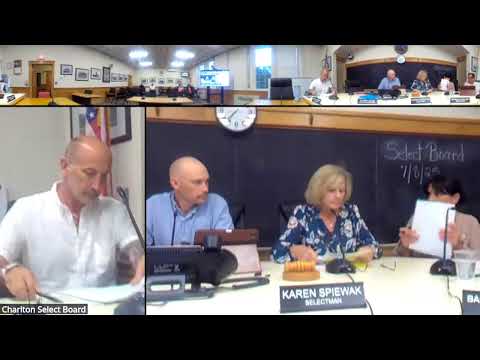
Consultants from the Center for Living and Working and the Central Massachusetts Regional Planning Commission presented an updated Americans with Disabilities Act (ADA) self‑evaluation and transition plan to the Town of Charlton Select Board on July 8, outlining areas of noncompliance across municipal buildings, sidewalks and recreational sites and recommending prioritized fixes and administrative changes.
The review, funded by a $43,470 grant from the Massachusetts Office on Disability, updates Charlton’s previous plan from February 2007 and documents building‑by‑building assessments, policy recommendations and a checklist for implementation. Presenters said the update is intended to guide repairs and help the town pursue future capital grants.
The report identifies recurring deficiencies including excessive door‑operating forces, missing tactile signs, curb ramps with cross slopes or level changes exceeding allowable tolerances, inaccessible portable toilets, and bathroom fixtures and grab bar placements that do not meet the higher of ADA or Massachusetts accessibility standards (521 CMR). It also recommends administrative actions such as adopting a formal ADA grievance procedure, posting the ADA coordinator’s contact information, and publishing a reasonable‑accommodation policy and request form on the town website.
"I'd just like to thank the town and especially Andrew for helping and for you to make this a smooth process," said Connor Robichaud of the Central Massachusetts Regional Planning Commission during the presentation. Mike Kennedy of the Center for Living and Working reviewed the self‑evaluation elements and said the consultants examined not only required items under Title II of the ADA but also additional policy areas to make the plan more usable for everyday town operations.
Consultants described the report structure as a reference guide, a self‑evaluation covering policies and practices, a transition plan with individual facility and site assessments, and appendices with survey forms and a progress checklist. For each barrier they identify a federal and state citation, a recommended corrective action, a priority rating, feasibility notes, a rough cost estimate and a suggested timeframe for remediation. Examples discussed during the meeting included a ramp with an 8.2 percent running slope that would technically require handrails and several curb ramps and sidewalk transitions that lack detectable warning surfaces.
Presenters praised local improvements since 2007, citing Main Street concrete work and upgrades at several municipal buildings. They also noted positive features: the town hall elevator, assistive‑listening availability at the middle school for town meetings and website compatibility with some screen‑reader software. Jeff Sorel, the town’s IT director, confirmed there is wiring that allows headsets to plug into the meeting soundboard.
Consultants recommended steps for next action: post the electronic plan on the town website, make printed copies available in municipal offices, adopt and publicize the ADA grievance procedure and formalize an ADA reasonable‑accommodation policy. They also suggested the town consider establishing a Commission on Disability under Massachusetts law to monitor plan implementation and recommended using the plan to support future capital grant applications, including another Mass Office on Disability capital round that can fund projects up to $250,000.
The Select Board did not take a formal ratification vote at the July 8 meeting. Board members and presenters discussed options — some towns vote to accept a plan formally while others post it for public comment and then ratify after a comment period. Consultants offered to revise the draft to reflect any board comments and to provide printed copies. They also offered technical assistance with future grant applications.
Next steps noted by presenters and staff include posting the draft transition plan for public review, updating any contact names or grievance details before posting, and using the document as the basis for applying for capital grants to remedy high‑priority accessibility barriers.