Get Full Government Meeting Transcripts, Videos, & Alerts Forever!
Get email alerts on the Jail Operations topic
No spam. Unsubscribe anytime.
Commissioners approve overtime for detention officers; discussion highlights jail population and housing costs
Summary
The court authorized overtime hours for uniform officers at the adult detention center and commissioners used the vote to discuss jail population, vacancies, surrounding-county bed costs and potential criminal-justice strategies to reduce pre-indictment custody.
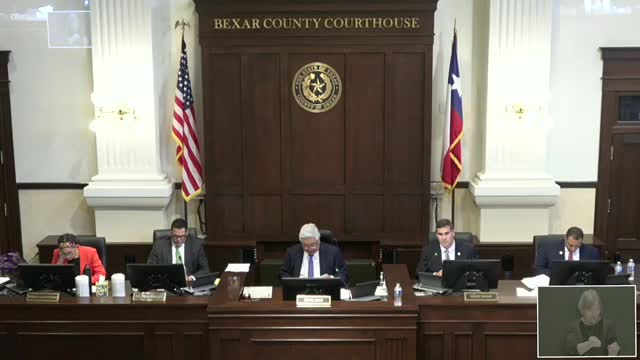
Bexar County Commissioners Court approved on July 8 a request to authorize paid overtime hours for uniform officers working mandatory overtime at the Adult Detention Center (ADC) for the pay period from June 28 through Sept. 30, 2025.
County staff and the budget office reported the overtime request would be the last allocation for the fiscal year and that the jail budget was within approximately $100,000 of projections. Commissioners used the agenda item to discuss underlying drivers: Commissioner Moody and others noted the county had made progress in addressing deputy vacancies (reducing reliance on overtime) but continued jail overpopulation and the need to house inmates in surrounding counties still drive costs. Moody outlined concerns about a backlog of pre-indictment cases (he referenced approximately 1,700 pre-indicted individuals in custody) and said the county should convene the sheriff, the district attorney and court system partners to explore ways to reduce the detained population and the related annual cost (he cited a $7 million annual cost for inmates housed in surrounding counties).
Why it matters: Mandatory overtime maintains security in fully utilized jail housing units but is costly. Commissioners signaled interest in cross-system approaches — including case management, DA coordination and possible diversion strategies — to address population pressures that drive both overtime and outside-housing costs.
The motion to approve the overtime allocation passed by voice vote; commissioners asked staff and the DA’s office for follow-up discussions about the pre-indictment population and jail housing strategy.
Ending: The court authorized the overtime request and directed further interagency meetings to pursue strategies to reduce the detained population and associated fiscal pressures.