Get Full Government Meeting Transcripts, Videos, & Alerts Forever!
Get email alerts on the Infrastructure topic
No spam. Unsubscribe anytime.
EquiFlow program: 400 lead service lines replaced this year; city aims for 1,532 in 2025
Summary
Contractor and program manager updated the Wausau Waterworks Commission on progress: about 400 replacements completed so far in year two, 1,100 registrations, and outreach including an apprenticeship cohort; staff said state funding with high principal forgiveness is expected for 2026.
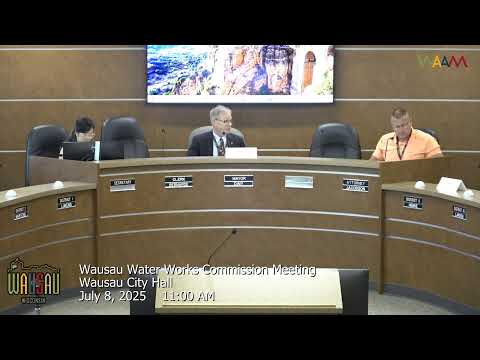
Eric Jones of CIP, the EquiFlow program manager, told the Wausau Waterworks Commission on July 8 that the city has completed about 400 lead service line replacements in 2025 and has registered roughly 1,100 properties toward a 2025 goal of 1,532 replacements.
Jones said the 2025 goal includes about 1,200 full replacements and roughly 300 partial replacements; most work completed so far has been full replacements. He told the commission the program has completed more than 4,000 verifications citywide to date, and in June alone staff completed about 41 verifications and secured about 150 right-of-entry (ROE) agreements.
Jones described outreach steps to raise registration and verification rates: an online photo-submission form, canvassing in northwest Wausau, tabling at community events and a monthly presence at a community partners campus. He also highlighted an apprenticeship initiative run with the local laborers’ union (referred to in the meeting as Liana/LUNA), which completed its first cohort of four participants in June; the cohort received classroom and on-site training in CPR, traffic control and lead service-line work and will be connected to union and local contractors for hiring.
On funding, staff said they had applied for funding for 2026 that would include about 75% principal forgiveness. Staff described an illustrative funding estimate for 2026 of roughly $17 million in total program costs with approximately $12 million in principal forgiveness and the remainder financed as loan proceeds for the city; staff said they will seek a joint finance-commission meeting with the city’s financial advisor Ehlers to review detailed numbers when available.
Jones said survey results from outreach indicate about 70% of residents would not have known they had a lead service line without the program and that more than 60% of registered households are unwilling to pay to replace their line, which underscores the program’s outreach and funding importance.
Ending: Commission members asked about recruitment and apprenticeship goals and encouraged continued canvassing and outreach. No commission action was required at the July meeting; staff expect to return with detailed financing and scheduling information for 2026 funding requests.