Get Full Government Meeting Transcripts, Videos, & Alerts Forever!
Get email alerts on the Gender Based Violence topic
No spam. Unsubscribe anytime.
City Council announces $3 million for culturally specific gender-based violence services
Summary
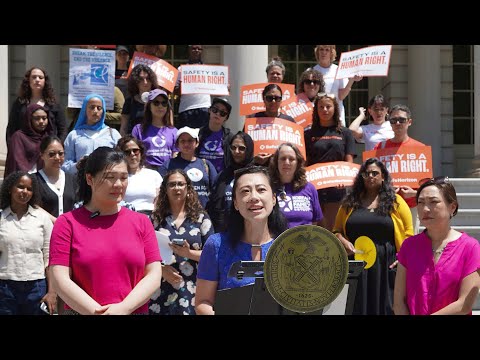
New York City Council members and community advocates announced a $3,000,000 initiative to fund culturally specific, language-accessible services for survivors of domestic and gender-based violence, emphasizing outreach to immigrant communities and organizations that provide services in dozens of languages.
New York City Council members and community advocates announced a $3,000,000 initiative to fund culturally specific services for survivors of domestic and gender-based violence, council members and advocates said during a public event.
Council Member Shekhar Krishnan, representing Jackson Heights and Elmhurst in Queens, said the funding is intended to make services available in survivors’ native languages and to support organizations already working with immigrant communities. "Because what we know is in our city, it is critical that every survivor of gender based violence is seen, is heard, and gets the services they need and deserve," Krishnan said. "But the biggest barrier to those services is that oftentimes it's not in their languages. All New Yorkers must get the support and services they need."
Speakers at the event described language and cultural barriers as reasons many survivors do not get help. An opening speaker said the initiative "will provide $3,000,000 directly to not for profit who's doing this critical work," and recounted a case in which a non-English-speaking caller was understood by family members and arrested instead of receiving help. "Language barriers, cultural barriers is really damaging to women in this situation," that speaker said.
Advocates from community-based organizations described how culturally specific programs operate and welcomed the funding as a stabilizing resource. Sarah Fajardo of the Korean American Family Service Center said her organization provides services in Korean, English, Mandarin and Spanish and structures programs "with Korean cultural traditions and practices to help survivors work through scribe and trauma and heal within their cultural context." Fajardo said meeting survivors "in their language with respect and understanding for their culture has helped thousands of New Yorkers exit and heal from violence."
A representative introduced as Zainab from the Satu Yatu Center for African Women said many immigrant survivors fear seeking services. "Many of us are afraid to go out. Many of us are afraid to go seek services because we don't know what's gonna happen on the street," she said, and thanked council members for "valuing our safety and our security." Another speaker, who identified herself as Zena Biega and said she works with Black diaspora communities, said her group provides services in at least "28 different languages" and called the money "not only just a budget line item, it's a lifeline." Yasmin, introduced from Womankind, thanked council members and described the initiative as "the first of its kind," saying the funding provides critical stability for under-resourced culturally specific groups.
Speakers named several organizations present or participating in the collective of providers, including the Korean American Family Service Center (KFSC), Safe Horizon, Womankind, and other community groups. Event remarks repeatedly framed the announcement as a city budget enhancement intended to support culturally competent and language-accessible services across New York City.
The event did not include a recorded council vote or motion on the initiative during the portion of the transcript provided. Organizers and advocates repeatedly called the funding a necessary step to improve access and trust between survivors and service providers.