Get Full Government Meeting Transcripts, Videos, & Alerts Forever!
Get email alerts on the Homelessness Cooling Station topic
No spam. Unsubscribe anytime.
Gastonia officials confront staff, lead agency after cooling-station plan falters
Summary
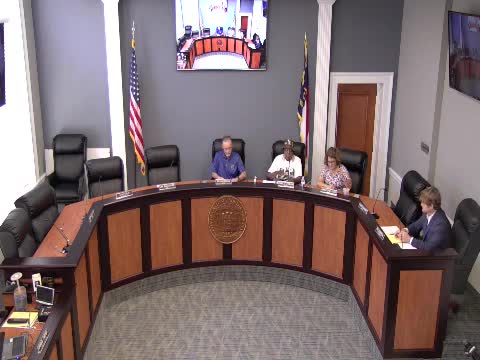
An emergency Gastonia City Council meeting on the opening of a temporary cooling station for people experiencing homelessness turned into a public dispute between the mayor, council members and city staff over who authorized use of a city-owned building and why volunteers were told to stand down.
GASTONIA — Mayor Franks and several Gastonia City Council members on Thursday sharply criticized city staff and the local lead agency for homelessness services after a plan to open a temporary cooling station did not proceed as council members said it had been directed.
The emergency meeting, called by the mayor, followed a series of phone and text exchanges after volunteers and faith groups mobilized to run a cooling site for people experiencing homelessness. Council members said they had reached a consensus earlier in the week to use a city-owned building — identified by council members as a Salvation Army facility — but that the consensus was not implemented by city management or by the lead agency, Health Net Gaston.
Council members said the building had been inspected and cleared by the fire department the previous Friday and that volunteers had already arrived when they were told the site was closed. "The building is safe. We own it," Councilwoman Littlejohn said, citing a fire inspection report and saying she had met with the fire chief.
At the meeting, Mayor Franks said the council had given direction earlier in the week and that the direction had not been followed. "You were given clear instructions as to what needed to be done, but you want to buck and show who is boss," the mayor said, arguing the failure to implement the plan left vulnerable residents without relief during hot weather and said he would press for accountability.
Assistant City Manager Quentin McFadden acknowledged meeting with the mayor and told council members the mayor's consensus had been relayed to the city manager. "I had a consensus. That consensus was relayed to you, and the consensus was relayed to the city manager," McFadden said. He also said the city manager later sought to change the plan.
Council members who spoke described several overlapping problems: unclear lines of responsibility between city and county partners, inconsistent communication among the lead agency (Health Net Gaston), the Continuum of Care, and city staff, and a lack of preexisting procedures and training for running a temporary shelter on short notice. Councilwoman Stepp said the situation appeared to have "fallen in the city's lap" after county planning did not produce an operational plan this year.
Council members repeatedly credited volunteers and local churches for stepping in. Councilwoman Littlejohn said volunteer leaders — including Tasha White and several churches — brought supplies and staffing to the site but were later told not to enter. "They set up their tent outside," she said, describing volunteers who remained on site when city staff relayed that the building could not be used.
Speakers also raised potential conflicts of interest. Mayor Franks said a council member had voted on budget money for an agency that the council member works for and said that person should have recused herself; he did not identify the member by name at the meeting. Several council members said they wanted to avoid placing blame on frontline responders such as the fire department and Jim's (a county partner referenced in the discussion).
No formal motion or vote was taken during the emergency meeting. Council members said they plan to continue pressing city staff and the lead agency for answers, and the mayor said he expected further public disclosure of internal messages and a possible press conference to follow.
The debate highlighted both immediate operational gaps — including whether the city had security, staffing and clear procedures in place to run a short-notice cooling site — and broader questions about which agency should serve as lead for heat-relief and shelter operations going forward.
Council members on different parts of the dais expressed different tones: Littlejohn and the mayor urged a more forceful, accountability-focused response, while Stepp emphasized cooperation, planning and partnership with county and nonprofit partners to prevent similar breakdowns in the future.
The council did not adopt a formal action at the meeting; members said they will revisit the matter and may consider personnel or contracting changes if the city manager's office and partner agencies cannot demonstrate compliance with the council's instructions.