Get Full Government Meeting Transcripts, Videos, & Alerts Forever!
Get email alerts on the Cannabis Policy topic
No spam. Unsubscribe anytime.
California committee hears bill to treat intoxicating hemp like regulated cannabis; debate centers on enforcement and taxes
Summary
Assemblymember Aguiar-Curry urged the Senate Business, Professions and Economic Development Committee to advance AB 8, her bill to ban synthetic cannabinoids, expand enforcement and bring intoxicating hemp products under the state’s cannabis regulatory and tax framework.
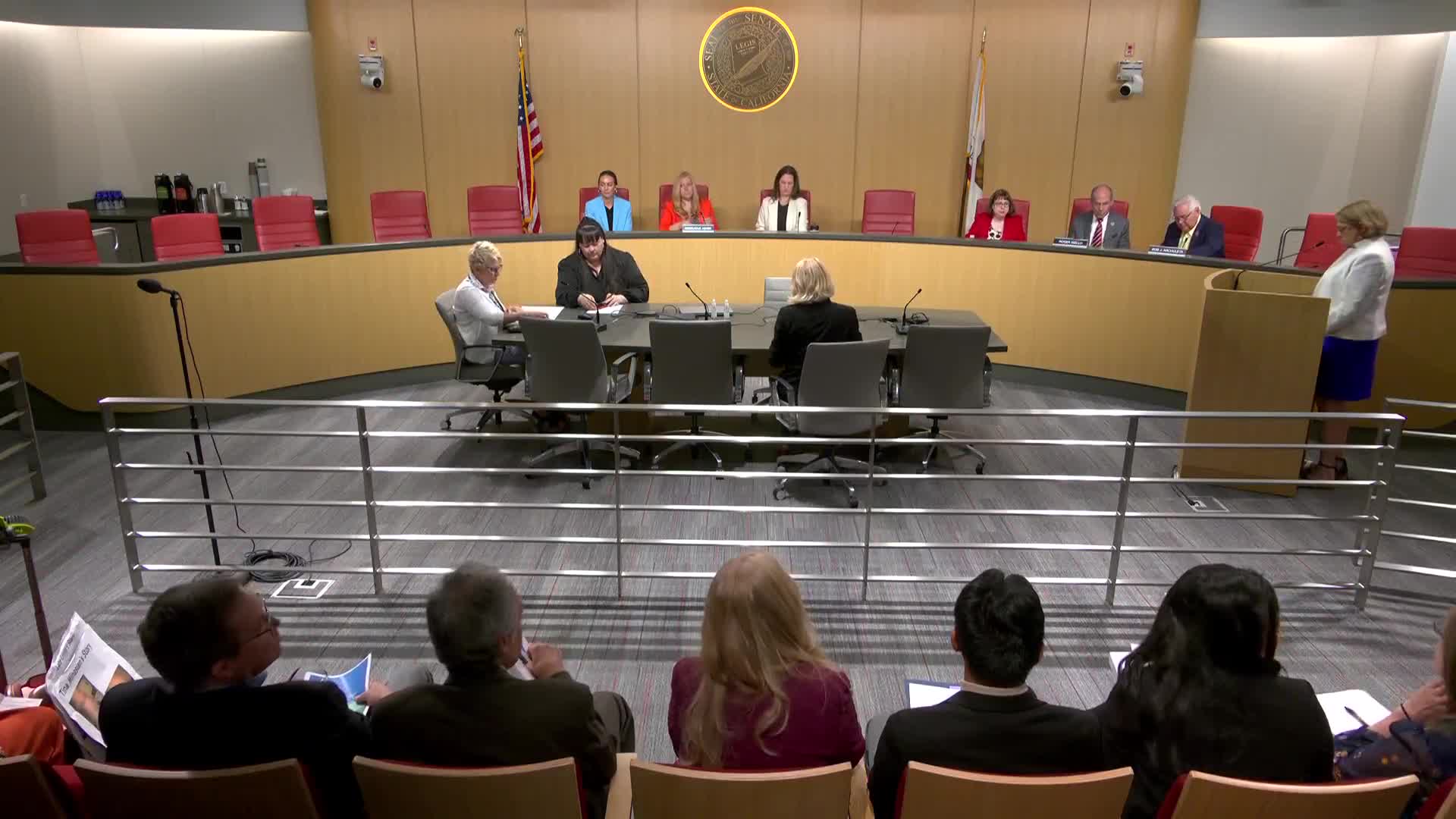
Assemblymember Aguiar-Curry on Monday asked the California State Senate Committee on Business, Professions and Economic Development to move forward with AB 8, landmark legislation she described as intended to fold intoxicating hemp products into the state’s cannabis regulatory and tax framework.
AB 8 would, according to the author, ban synthetic cannabinoids and require intoxicating hemp products to be treated like cannabis ‘‘meaning full registration, regulation, and taxation.’’ Assemblymember Aguiar-Curry told the committee she began working on hemp because of gaps left by the 2018 Farm Bill and previous state law and said the measure focuses on three parts: expanding enforcement, making clear that all synthetic THC is banned, and integrating intoxicating hemp into the legal cannabis supply chain.
The committee heard about public-health risks from industry and law-enforcement witnesses. Amy Jenkins, representing the California Cannabis Operators Association, summarized the association’s testing of products sold online: “’98–95 percent contained prohibited synthetic cannabinoids. Nearly half contained THCP, a compound estimated to be 30 times more intoxicating than THC,’” she said, adding that many products evaded taxes and packaging safeguards. Ryan Sherman of the California Narcotic Officers Association told the committee that “AB 8 will better protect our youth, public safety, and health by requiring intoxicating hemp products to comply with the Medicinal and Adult-Use Cannabis Regulation and Safety Act.”
Supporters said the bill would close a public-health loophole by moving intoxicating hemp products out of unregulated retail channels — gas stations, grocery stores and online sellers — and into state-licensed dispensaries where testing, packaging and age limits apply. Several local governments, law-enforcement groups and cannabis industry associations joined the author’s witnesses in support during the hearing.
Opponents and groups identifying as ‘‘oppose unless amended’’ warned AB 8’s tax language as drafted could reduce funding currently used for programs created under Proposition 64. Jim Keddy of Youth Forward urged changes to the tax provision, saying his organization was in an ‘‘oppose unless amended’’ position because of a projected $180 million funding loss for youth programs if a tax reduction remains in the bill. Other witnesses — including small and craft cultivator representatives and environmental groups — urged parity for small hemp growers and asked that environmental and pesticide rules that apply to cannabis cultivation also apply to hemp intended for intoxicating products.
Committee members pressed the author on tax impacts. Senator Nilo asked whether the bill’s net effect on revenue would be neutral, noting the bill reduces the tax rate but widens the tax base by adding hemp products. The author and witnesses said they expect the cannabis excise tax to continue to support Prop 64 programs and that the bill requires studies to report on tax and market impacts.
The committee did not take a final floor vote on AB 8 at this hearing. A roll-call was started and the chair said the measure would be left on call pending a full attendance; no final passage was recorded in the transcript. The author said she would continue to work with stakeholders, regulators and other committees on implementation questions.
Why it matters: AB 8 would reshape the legal distinction between hemp and cannabis in California for any product that is intoxicating, with implications for public health, enforcement, and the funding streams supported by the cannabis excise tax.