
Senate gaming committee rejects governor's order transferring casino oversight to lottery commission
Get AI-powered insights, summaries, and transcripts
Subscribe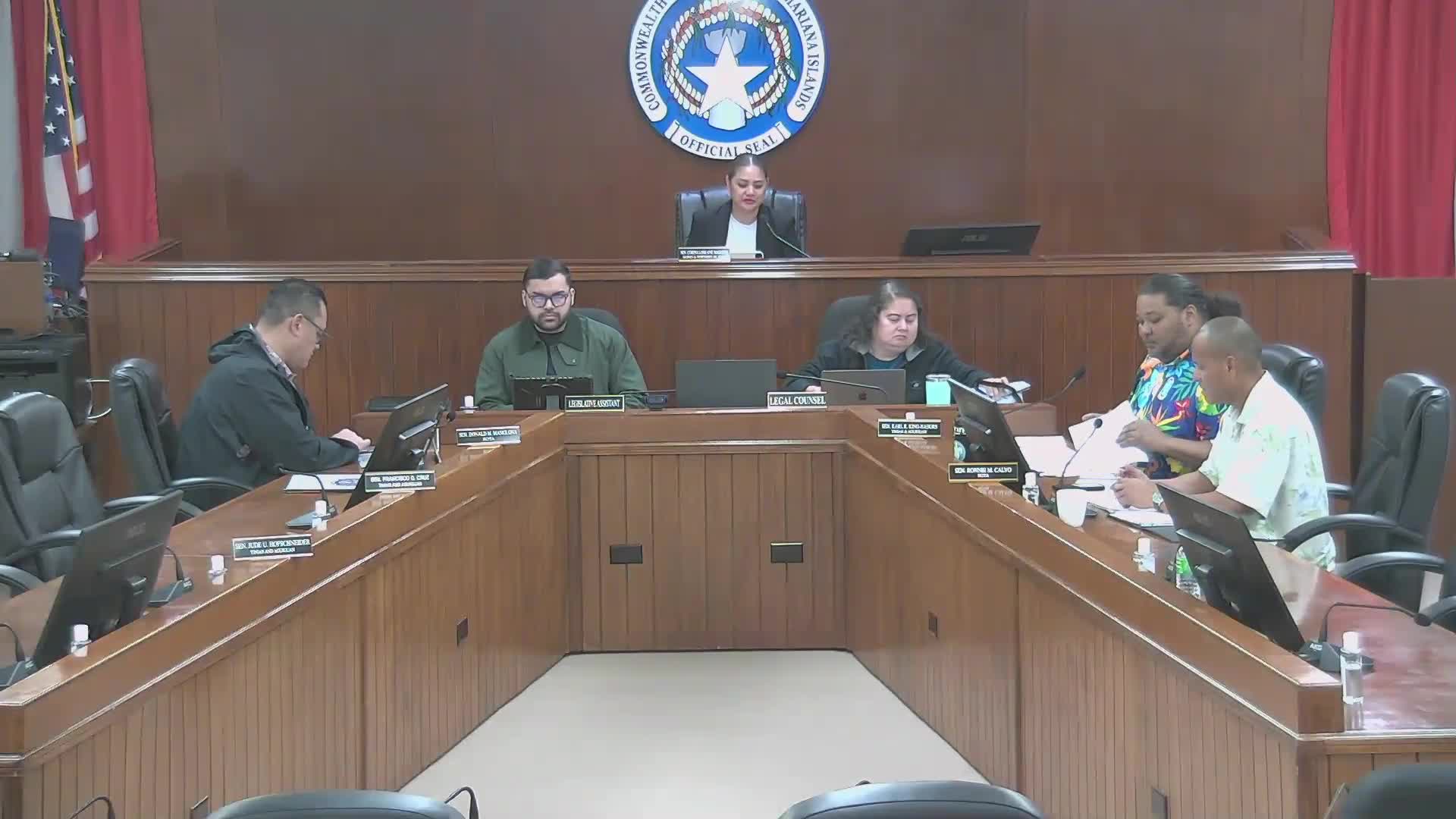
Summary
The Senate Standing Committee on Gaming voted 4-0 to reject Executive Order 2025-02, after legal counsel told members the order likely exceeded the governor's authority by changing statutory duties and agency structure.
The Senate Standing Committee on Gaming voted 4-0 to reject Executive Order 2025-02, which would transfer supervision of casino gaming from the Commonwealth Casino Commission to the Commonwealth Lottery Commission.
The committee approved the rejection after Antoinette Villagomez, legal counsel to the legislature, told members the executive order appears to alter statutory duties and create an administrative framework the governor cannot lawfully establish by executive order. "The governor cannot legislate by executive order," Villagomez said, citing CNMI case law that limits executive reorganization powers.
The committee's action matters because the order would change how casino oversight is organized and how commissioners are appointed and removed. "The order attempts to transfer the duties and responsibilities of the casino commission to the lottery commission," Villagomez told the committee, and in her analysis she identified conflicts with provisions in the CNMI Constitution (Article III, sections 1, 15 and 21) and with 4 CMC § 2313, the casino-commission enabling statute. Villagomez cited Torres v. Commonwealth (2009) and Sonoda v. Cabrera (1997) as precedent showing the courts have found executive orders unconstitutional where they effectively create or substantially alter statutory agencies.
Committee members raised both legal and practical concerns. Senator Carl (who moved the motion) argued the constitution specifies limited grounds for removing regulatory commissioners and said the executive order's effect would conflict with that constitutional protection. Senator Ronnie M. Calvo, Senator Donald M. Manglona and Chairperson Senator Karina L. Magoffna joined the motion; the roll call on the motion was recorded as four yes votes and no dissent. The motion was seconded and passed; the clerk recorded, "With 4 members voting yes, the motion passes."
Members also discussed collateral effects if the order were implemented. Senators said the lottery commission's membership, appointment process and job roles differ from the casino commission's statutory structure — for example, casino commissioners are required by statute to represent specific senatorial districts, hold particular qualifications, and cannot be removed except for cause, while lottery commissioners in statute are tied to executive branch positions. Villagomez noted the executive order also attempts to terminate existing casino commissioners "with cause," which she said conflicts with statutory protections.
Several senators emphasized practical risks, including possible litigation and investor uncertainty. Villagomez and multiple senators noted past litigation over executive reorganizations took years to resolve; Villagomez referenced an instance in which the courts issued a final ruling roughly three years after the initial challenge. Senator Carl and others warned that ongoing legal challenges could affect investor interest and the continuity of regulatory oversight during ongoing license or bankruptcy proceedings involving the casino licensee.
The committee heard that casino commission officials were in the chamber for the meeting; Chairman Edward De Leon Guerrero, Commissioner Mario Titano and Commissioner Ralph de Maupin were acknowledged but did not make substantive remarks recorded in the hearing segment. Members agreed they would prepare a committee report for the full Senate recommending rejection and documenting the committee's legal analysis and findings.
The committee's motion directed production of a committee report to be presented to the full Senate; the committee then adjourned. The public record shows the executive order was signed on May 30, 2025; the committee invoked the legislature's 60-day review window for executive orders and relied on CNMI case law in its analysis.
Less-critical procedural items and a public-comment period were recorded as having no speakers. The committee meeting convened with four members present and adjourned after the vote.