Get Full Government Meeting Transcripts, Videos, & Alerts Forever!
Get email alerts on the State Of The City topic
No spam. Unsubscribe anytime.
Kaysville State of the City highlights public safety, utilities, rec center plans and budget pressures
Summary
City staff presented a State of the City report to the Kaysville City Council, outlining rising public-safety responses, water and power infrastructure needs, recreation center plans and a proposed tax increase tied to personnel costs and capital needs.
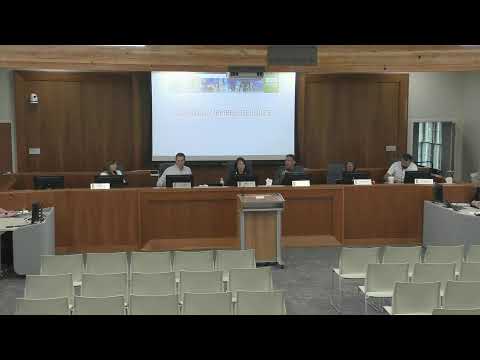
Jason, a city staff member, delivered a State of the City presentation to the Kaysville City Council ahead of the Fourth of July, summarizing public safety trends, utility projects, recreation plans and budget pressures.
The presentation compiled department-level indicators and multi‑year trends to show how calls for service, infrastructure repairs and staffing needs have changed as the city’s population and service expectations grew.
Jason said police calls for service totaled about 11,000 in the last year, with officers responding to roughly 800 calls per officer annually and three detectives handling about 150 investigations each. He told the council that traffic stops have increased while citations have leveled off, and he said the city added a patrol sergeant in the current modified budget to help address congestion and speeding.
"We have a pretty good volume of cases coming through," Jason said, noting 500 vehicle crashes in 2024 of which about 53 were described as fairly serious.
On narcotics enforcement, Jason said the multi‑agency narcotics task force was recognized regionally for seizures he summarized as "500 pounds of meth and 1,400,000 fentanyl pills." He also noted the city was ranked among the state's safest cities in recent years but said methodology can shift a city's ranking depending on commercial activity versus resident population.
Fire and emergency medical services were a focal point: staff described the department's rapid sequence intubation (RSI) program and a heavy rescue program that are being used regionally. Fire staff said the department is on pace for more than 2,300 total calls this year and continues joint training with neighboring departments.
Water and utilities also featured prominently. Jason said the city has seen an increase in water‑line repairs — roughly 130 repairs per year in recent years — and that high‑iron soils are contributing to cast‑iron line failures. To plan for future capital needs, the city has implemented the WaterWorth modeling tool to forecast replacement costs and rate needs. "We're not even covering our, in some cases, our operating costs," Jason said when reviewing the operating and capital cost bars against the city’s rate structure.
Power department staff described a new outage management system that increased the number of recorded outages (from the mid‑30s to about 80 annually) because the system also logs short interruptions. Jason said availability remained steady — "we were providing power, 99.98% of the time," he said — and highlighted recent substation work, a transformer replacement and ongoing upgrades to improve reliability.
Parks and recreation updates included the city's plan to brand the planned facility as the Casel Recreation Center (rather than a gymnasium). Staff said design is hoped to be complete by October, with bid documents prepared this winter and a target opening in 2027. Recreation staff also reported more than 13,000 program participants annually.
Community development staff reported declining permits and single‑family starts, and reminded the council that a small‑area plan and code updates for downtown are in progress. Jason summarized long‑term staffing trends: over 30 years the city's population has roughly doubled (from about 16,000 to 33,000), and full‑time staffing has grown roughly in parallel — a pattern staff said reflects both growth and higher service expectations such as in‑house legal counsel and school resource officers.
On fiscal issues, Jason said 70–80% of the general fund is personnel costs and noted a proposed 31% figure in the current budget discussion. The city will hold a Truth in Taxation hearing on Aug. 7, he said.
IT and operational notes: the city’s IT director, Ryan Judd, was introduced as department head and announced a one‑year, $5,000 pilot of an AI chatbot on the city website, negotiated down from an initial $9,000 quote.
Grants and personnel: staff announced a $139,000 first‑responder mental‑health grant tied to state legislation and noted several upcoming retirements in long‑serving departments, including the finance director.
Council members raised operational concerns during the presentation, including questions about why stops have increased while citations have not and requests for more comparative budget data from neighboring cities. Council members also asked staff to continue work on infrastructure planning, fire station needs, downtown revitalization and connectivity with UDOT corridors.
The presentation concluded with staff saying they will resume strategic‑planning work after the budget cycle and hold work sessions on priorities and funding options in the fall.