Get Full Government Meeting Transcripts, Videos, & Alerts Forever!
Get email alerts on the Utilities Wildfire Mitigation topic
No spam. Unsubscribe anytime.
Rocky Mountain Power details wildfire mitigation steps, warns of possible outages in Idaho
Summary
A Rocky Mountain Power representative briefed Bannock County officials on AI-driven wildfire forecasting, expanded weather monitoring and equipment upgrades the utility is installing across Idaho; the company said some measures can reduce reliability, including planned de-energization during fires.
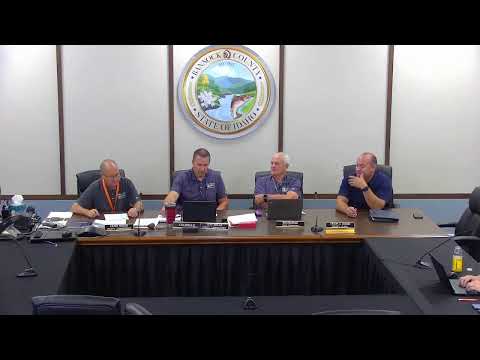
A Rocky Mountain Power representative told Bannock County officials on July 3 that the utility is expanding wildfire mitigation efforts in Idaho, including daily AI-driven forecasting, more weather stations and changes to substation safety settings that can lead to extended outages when conditions require de-energization.
The presentation outlined why county residents could see reduced reliability during wildfire season. "We're basically put that to one shot," the Rocky Mountain Power representative said of the company’s changes to substation breaker settings, meaning a breaker that trips will stay open until crews can patrol the line. The company also described using spotters to decide when to de-energize lines near active fires.
Officials said the measures matter because they may cause longer or more frequent power outages during extreme fire conditions. Rocky Mountain Power highlighted a recent local event in which the utility de-energized a transmission line because a fire moved near the corridor, and noted other industry-wide steps such as public safety power shutoffs in higher-risk conditions.
Rocky Mountain Power said it uses historical weather and vegetation data with modeling tools to forecast wildfire risk across its six-state service territory. The utility said it currently maintains about 10,000 line miles in Idaho and employs roughly 165 people in the state. The presenter said the company has installed many weather stations and plans to add another 38 in Idaho this coming year; the company provides a public weather dashboard at rockmountainpoweredweather.com.
The company characterized some mitigation choices as tradeoffs between safety and day-to-day reliability. "Our reliability is not as good," the representative said, adding that the company prioritized preventing ignitions. The representative also said Rocky Mountain Power has spent more than $200 million in the past two years on system hardening—replacing poles and crossarms, installing insulated or covered wire in select locations, and increasing vegetation clearance.
The utility warned of litigation and financial risk tied to wildfire events in other states. The presenter cited multimillion‑dollar lawsuits in Oregon alleging liability for lines that remained energized and said the company is adjusting operations to avoid ignition risks.
During questions, county staff asked whether Bannock County has enough infrastructure to serve a large industrial load. The company said that near the Downey corridor the transmission capacity is better, but that generation—Idaho’s ability to produce power locally—is the larger constraint. The presenter noted that in Idaho, requests above 30 megawatts generally require system studies and special contracts.
Brett Myers, an emergency manager employed by Rocky Mountain Power, was named as the company’s local point of contact for coordinating with county emergency management. The presenter encouraged local nonprofit groups to apply for corporate foundation grants; he said corporate sponsorships in Idaho totaled about $100,000 last year and the Rocky Mountain Power Foundation has distributed roughly $800,000 in Idaho over the last decade.
County staff and commissioners did not take formal action after the briefing, but the conversation highlighted the potential for planned outages, the company’s expanded monitoring footprint and options for local groups to seek grant funding from the utility.