Get Full Government Meeting Transcripts, Videos, & Alerts Forever!
Get email alerts on the Nuisance Property topic
No spam. Unsubscribe anytime.
Board upholds nuisance designation for 4937 N. 30th St. after hearing on two shootings
Summary
The Milwaukee Ministry of Review Board of Appeals on July 1 denied an appeal by property representatives of a nuisance designation for 4937 North 30th Street, finding two separate shooting incidents cited by the city supported the designation.
The Ministry of Review Board of Appeals denied an appeal of the city's nuisance-property determination for 4937 North 30th Street on July 1, voting to uphold the designation. Alderman Jackson moved to deny the appeal; Commissioner Hammer seconded. The motion passed 4-0.
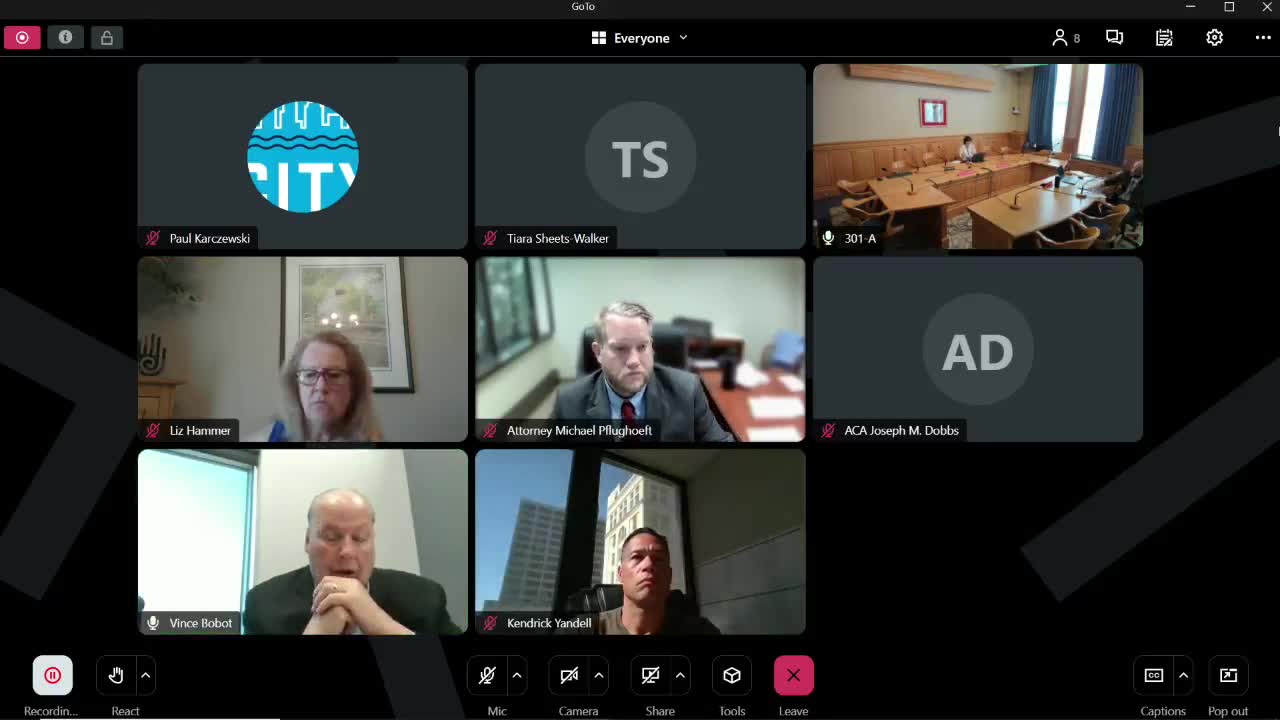
The board's decision followed testimony from Milwaukee Police Department Officer Tierra Sheets Walker, who testified the city relied on two shooting incidents when it labeled the property a nuisance. Walker described an August 19, 2024, shooting that began after occupants observed a black Ford F-150 connected to a dispute over the vehicle; she said armed individuals went into an apartment at the complex and later fired 4'5 rounds, striking a resident identified in reports as Dionne Delaney. Walker also testified about an October 12, 2024, incident that began as a fight inside an apartment, escalated outside and involved gunfire.
Why it matters: The Milwaukee ordinance cited by the city (referred to in the hearing as 80-10) authorizes nuisance designations when specified crimes repeatedly occur and are tied to persons associated with a premises. The city argued the two shootings and associated facts showed the activity stemmed from persons connected to the site; the property's attorney urged the board to require proof that the shooter(s) were "persons associated with the premises" under the code.
In testimony, Officer Sheets Walker said investigators interviewed residents and witnesses who placed armed people at or entering the property during both incidents and that the property's abatement plan was submitted, initially revised and ultimately accepted by the department. The city's attorney argued the events established relationships among the parties and fell within the municipal nuisance definition. Appellant counsel Michael Pluhoff countered that the city did not establish that the people who committed the violent acts were owners, managers, residents, guests or other categories listed in the code.
Board members asked about the abatement plan process and the effect of an accepted plan on later enforcement costs. Walker and city counsel explained the ordinance provides a 45-day period for implementation of an accepted abatement plan and that cost assessment for future enforcement is governed by specified subsections; the board noted those cost questions would arise only if the nuisance determination is affirmed and if further incidents or implementation failures occur.
The board recorded no additional orders other than denying the appeal. The appellant will receive written notification of the decision and information about appellate rights.
The hearing record includes police reports, briefs submitted by the city and by counsel for the appellant, and Officer Sheets Walker's testimony admitted into the record.