Get Full Government Meeting Transcripts, Videos, & Alerts Forever!
Get email alerts on the Street Maintenance topic
No spam. Unsubscribe anytime.
Oxnard staff disputes grand jury finding on street maintenance, asks council to authorize response
Summary
Public Works Director Michael Wolf told the Oxnard City Council staff disagrees with a Ventura County grand jury finding that the city fails to use best practices for street maintenance, outlined the city's existing pavement goals and budgets, and recommended the council authorize the mayor to sign the city's formal response.
Michael Wolf, the City of Oxnard director of Public Works, told the City Council on July 15 that staff disagrees with a key finding in the 2024'2025 Ventura County grand jury report on street maintenance and recommended the council authorize the mayor to sign the city's formal response.
The grand jury report concluded the city does not maintain streets according to best practices, which it said increases deferred maintenance costs and vehicle wear for residents. "The grand jury's opinion for finding number 1 is that the city does not maintain streets in a best practice condition," Wolf said, reading from the report. He told council that staff "disagree" with that finding while agreeing with a separate finding that dedicated, knowledgeable staff would make effective use of funds allocated for street maintenance.
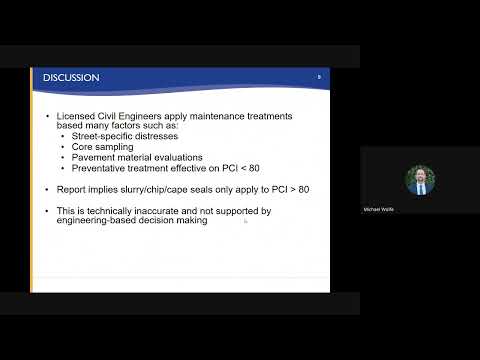
Wolf summarized the staff response to the grand jury's recommendations, saying the city already set a pavement goal in an April 2024 staff report: a pavement condition index (PCI) goal of at least 70. He said the city's strategy is not based on a single PCI threshold and stressed that PCI is "one of" several tools used in pavement management. "We as experienced and licensed civil engineers, we use and select and apply maintenance treatments based on several factors," Wolf said, listing distress types and subsurface tests the city uses to select treatments.
Wolf disputed a central assertion in the grand jury report that a PCI above 80 is the sole metric of best practice. "We disagree that a PCI greater than 80 is a sole metric as best practice," he said, and noted that preventative treatments such as slurry seals, chip seals and thin overlays can be appropriate at various PCI levels depending on the pavement distress and subsurface conditions.
Wolf told the council staff could not replicate some financial figures in the grand jury report and provided the city's own totals for paving funding since fiscal 2021: $96,600,000 in capital projects for paving and $27,500,000 for street maintenance operations through the current fiscal year, which Wolf said includes funds "post Measure E." He added that Oxnard's PCI has improved from 63 in 2018 to 67 in the city's most recent (2024) report.
Wolf said the city's long-term maintenance objective is to shift the mix of work to about 75% preventative maintenance and 25% corrective maintenance for capital projects. He characterized preventative preservation as more cost-effective than corrective repairs, while cautioning against using a single PCI cutoff to dictate treatments.
The staff report presented to council recommends the City Council authorize the mayor to sign Oxnard's formal response to the Ventura County grand jury report. Wolf said there are "no fiscal impacts with the recommended action in this staff report." The presentation noted the city received the grand jury report on June 4 and that a response is due within nine days of that notice.
The presentation included a technical review of the grand jury report and a full written response; Wolf said those materials and additional details are in the staff packet. No council vote or formal action on the recommendation was recorded in the provided transcript excerpt.