Get Full Government Meeting Transcripts, Videos, & Alerts Forever!
Get email alerts on the Housing Element Compliance topic
No spam. Unsubscribe anytime.
Committee considers AB 610 to limit local governments adding new housing constraints after HCD certification
Summary
AB 610 would require cities and counties to disclose planned new constraints in their housing elements and bar adding new requirements for three years after HCD certifies a housing element unless previously disclosed. League of Cities and counties raised concerns about binding future councils and fee limitations.
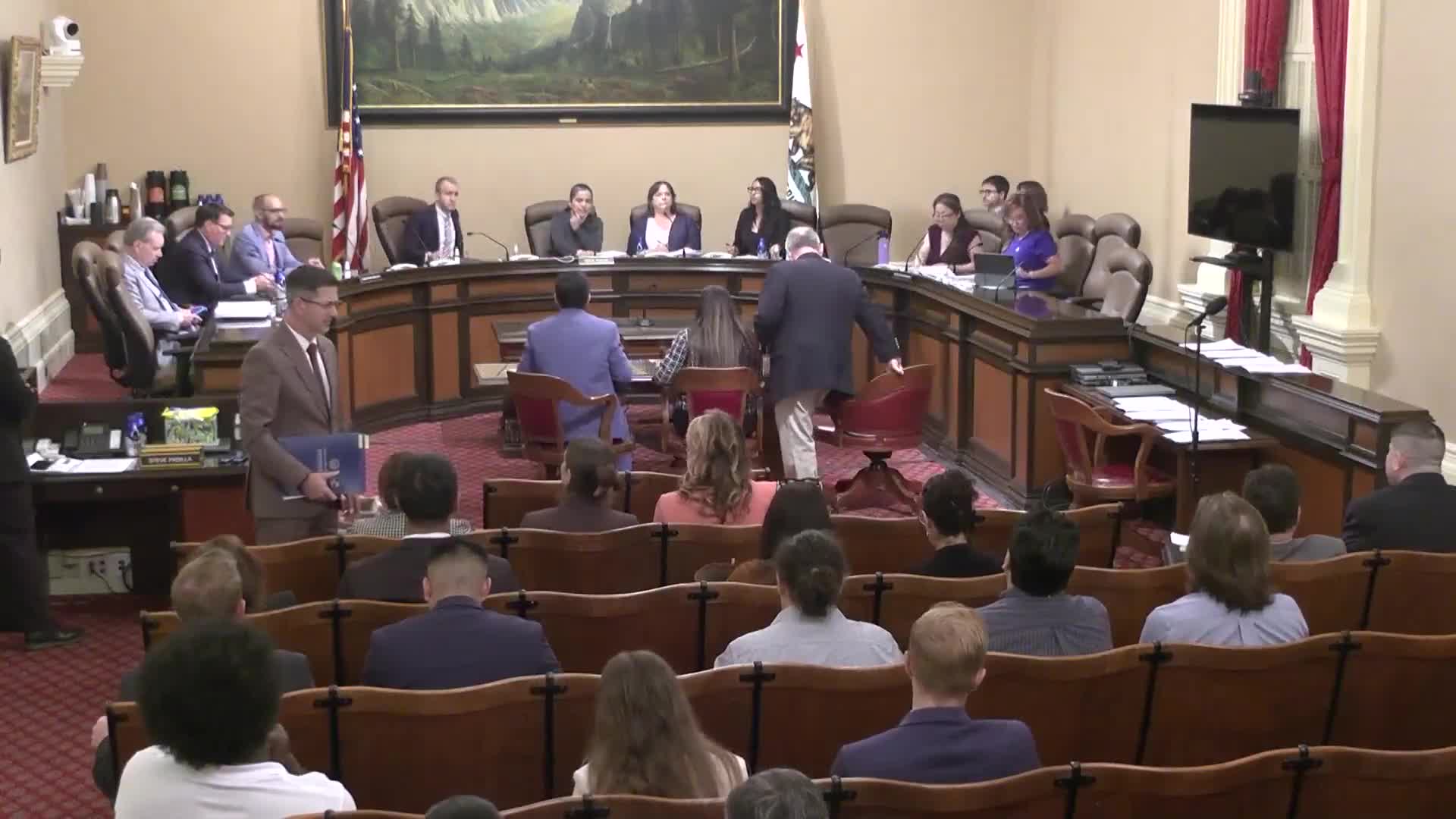
Assemblymember Alvarez presented AB 610 in Senate Housing, saying the bill aims to strengthen compliance with housing element law by requiring jurisdictions to disclose any planned or potential new constraints during the housing element process and prohibiting adoption of new constraints for three years after certification unless they were previously disclosed. Alvarez said the pause is intended to give developers more certainty so locals implement the plans approved through HCD rather than add new obstacles mid‑cycle.
Vanessa Chavez of the California Building Industry Association, a cosponsor, told the committee the bill provides clarity that will help housing providers estimate development costs and proceed with projects. The bill’s original language included affordability provisions that were removed by committee amendment; the sponsor confirmed acceptance of the amendments.
Opposition witnesses included Brady Gurnon of the League of California Cities and Chris Lee of the Urban Counties of California, both testifying in an “opposed unless amended” posture. The League and the urban counties expressed two central concerns: (1) the difficulty of predicting future governmental constraints when elected councils and boards change over time, and (2) the bill’s potential to limit local governments’ ability to impose new fees needed to respond to state or federal mandates (for example, for infrastructure or compliance with regional water or air rules). They urged a disclosure‑first approach and flagged HCD’s existing authority to revoke a certification in extreme cases.
Several stakeholders provided support in the me‑too list, including business groups, YIMBY organizations, affordable housing advocates and local housing trusts. Committee members asked for clarifications about how emergencies or new legal requirements would be treated; the author and staff pointed to amended language allowing jurisdictions to adopt required measures to comply with state or federal law if those measures are no more stringent than necessary to comply.
The committee did not take a final vote at that time because the panel had not yet established quorum; the transcript records additional committee debate and recorded votes later in the meeting as the item advanced to the next committee stage. The League and several county and city officials said they remain concerned and plan to continue working with the author on technical fixes.
Outcome: The bill was advanced from the Senate Housing Committee after amendments removing affordability triggers and tightening disclosure language; opponents signaled continued discussions.