Get Full Government Meeting Transcripts, Videos, & Alerts Forever!
Get email alerts on the Housing Missing Middle topic
No spam. Unsubscribe anytime.
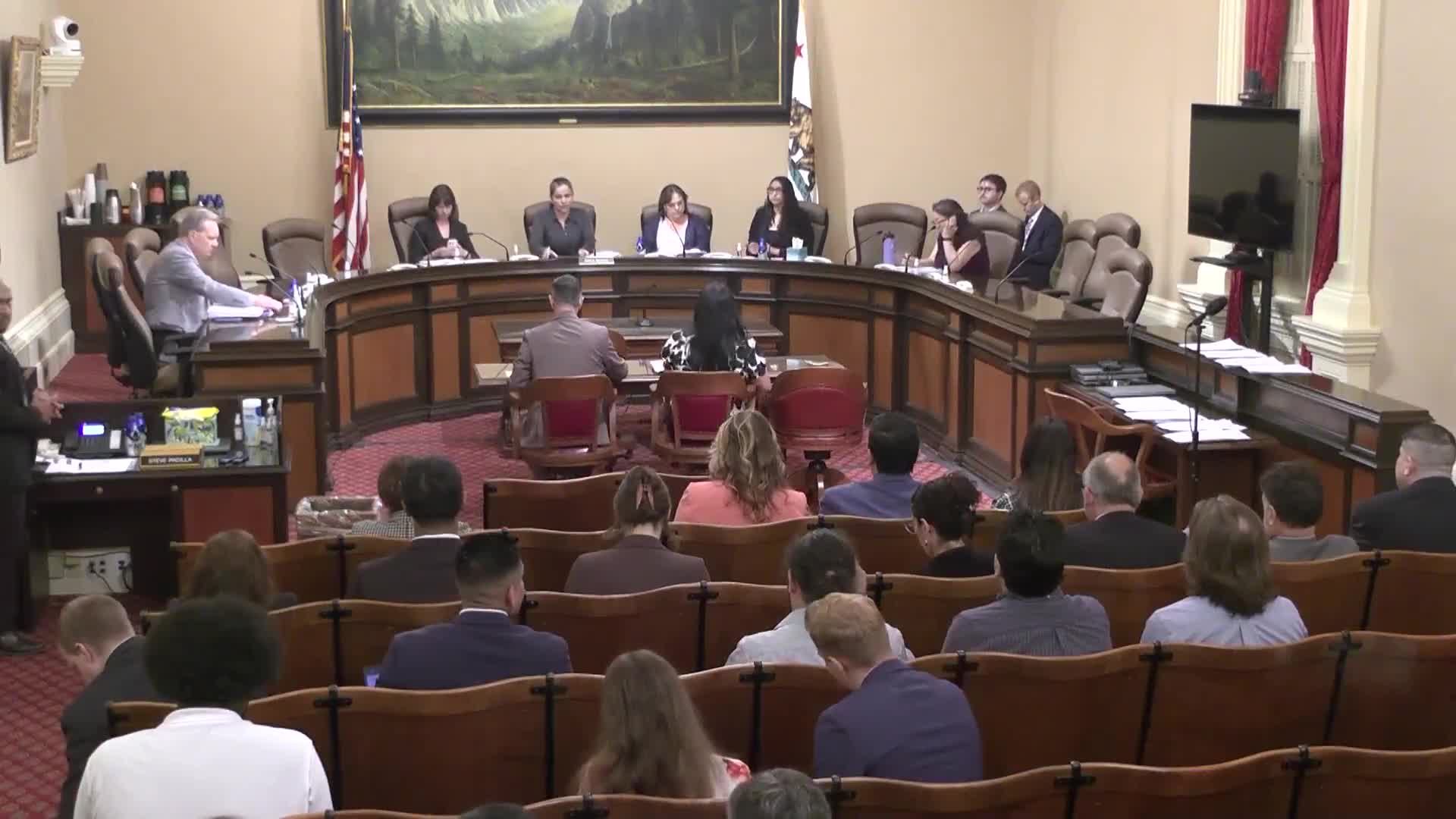
Senate committee hears AB 6 to study shifting 3–10‑unit projects to residential code to cut costs
Summary
AB 6 would direct the California Department of Housing and Community Development to convene a working group to explore allowing three‑to‑10‑unit "missing middle" projects to be built under the California Residential Code instead of the California Building Code—an approach sponsors say can cut construction costs and speed production.
Assemblymember Ward introduced AB 6 in the Senate Housing Committee, saying the bill would direct the California Department of Housing and Community Development (HCD) to convene a working group to study permitting small infill projects (three to ten units) under the California Residential Code rather than the California Building Code. Ward said changing the code for these projects has shown positive results elsewhere in the United States and could reduce construction costs by as much as 30 percent.
Supporting testimony emphasized that the change would legalize and simplify construction of triplexes, fourplexes and other small multifamily homes on infill sites already zoned for housing. Mia Kong, a founding board member of the Council of Infill Builders and an affordable housing developer, told the committee that the current requirement to use the larger commercial‑oriented California Building Code for some small projects creates unnecessary cost and complexity, particularly for modular construction and small builders.
Multiple housing advocates and industry groups logged brief “me too” support at the hearing, including Habitat for Humanity California, Housing California, the California Housing Consortium, the California Council for Affordable Housing and the Construction Employers Association. Senator comments during the preliminary discussion expressed general support for streamlining and cost reductions while noting the need for further vetting before any final regulatory change.
The bill was placed on the committee calendar; the committee later recorded a vote advancing the bill out of Senate Housing. No final technical regulations or code changes would happen under AB 6 itself—the bill creates a working group to study options, safety tradeoffs and code adjustments and report back to HCD and the Legislature.
Supporters said AB 6 seeks modest, targeted reform to reduce costs for small infill development and expand opportunities for mom‑and‑pop builders to produce attainable housing near jobs, transit and schools. Committee members asked questions about firefighter access, life‑safety standards and whether the working group would include building officials and fire safety and accessibility advocates; Ward and supporting witnesses said the working group would include those stakeholders.
Outcome: The committee advanced AB 6; the transcript records it being moved forward in committee business and later recorded on the committee’s calendar as passed out of the committee.