Get Full Government Meeting Transcripts, Videos, & Alerts Forever!
Get email alerts on the Opioid Settlement Funding topic
No spam. Unsubscribe anytime.
Board backs opioid settlement allocations to four local agencies, funding plan covers 17 months
Summary
Gratiot County Board voted unanimously to support the Opioid Advisory Steering Committee's recommendation to award opioid settlement funds to four local agencies for a 17-month period through Dec. 31, 2026, with annual budget guidance.
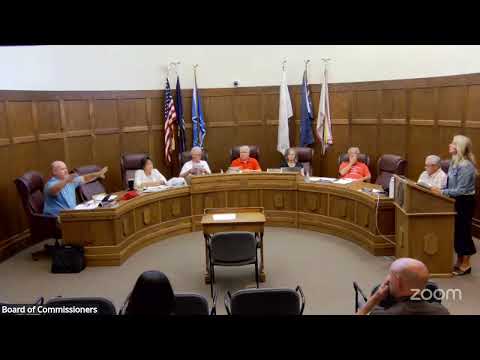
The Gratiot County Board of Commissioners voted unanimously to support recommendations from the Gratiot County Opioid Advisory Steering Committee to allocate opioid settlement funds to local agencies, the committee’s representative told the board during new business.
Liz (representing the county opioid advisory steering committee) told the board the funds available through national opioid settlements will be available to the county for 18 years and that the committee recommended awarding a set of allocations to four local agencies to cover prevention, treatment, recovery, education and harm‑reduction activities. She said the committee’s request covered a 17‑month period through Dec. 31, 2026, as a transitional allocation for 2025–26.
“We agreed that we would be able to spend what was, available per year. So we're now looking at '25 and '26 to give a head start to those who are, being recommended,” Liz said. She added that the committee received five applications and recommended funding four, and that two recommended awards were reduced so the proposals fit the committee’s budget target of about $120,000 per year plus retroactive adjustments for an additional five years for 2025.
A board member moved to support the committee’s recommendations; the motion passed on a voice vote with all members saying “aye” and no recorded nay votes.
The committee said the recommended proposals align with national‑settlement guidance used by Johns Hopkins public‑health advisors and the Michigan Association of Counties. The specific agency names and award amounts were not stated on the public record at the meeting; the committee packet (as referenced by the representative) lists the recommended recipients and dollar figures.
Action taken at the meeting was limited to the board’s support for the committee recommendation; the board did not adopt a separate ordinance or funding resolution at this meeting. The committee said it will proceed with the recommended awards and the timing outlined for the 17‑month allocation period.
The vote occurred during the meeting’s new‑business period and no public comment preceded the motion on this item.