Get Full Government Meeting Transcripts, Videos, & Alerts Forever!
Get email alerts on the Land Use Quasi Judicial Conduct topic
No spam. Unsubscribe anytime.
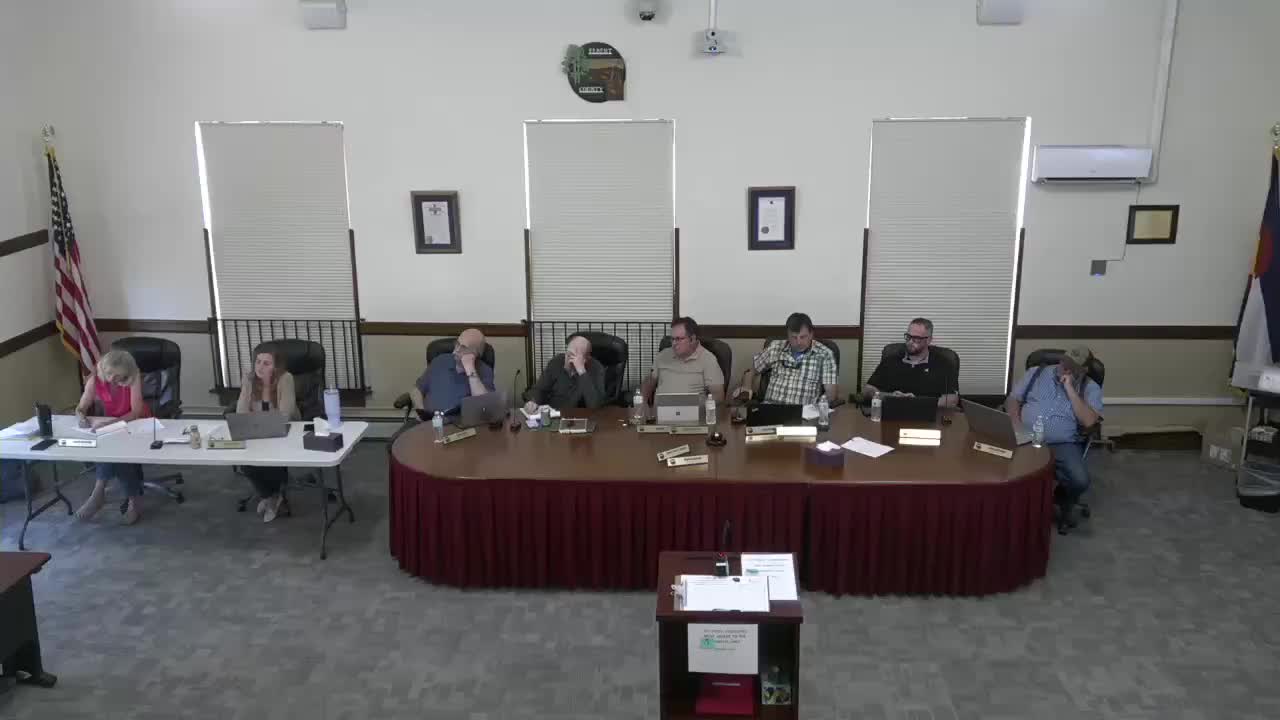
Elbert County attorney briefs planning commissioners on ex parte contacts, recusal and approval criteria
Summary
At a planning commission training in Elbert County, the county attorney explained ex parte communications, recusal, approval-criteria rules and limits on outside investigation, telling commissioners disclosure or recusal prevents invalidating land-use decisions.
Elbert County Attorney Lance told planning commissioners during a training session that ex parte communications — private conversations about a pending application outside the public hearing — can invalidate a quasi‑judicial land‑use process if not disclosed or addressed.
Lance defined ex parte as a communication with a single party that occurs outside the public hearing and therefore outside the record, and said commissioners should either disclose inadvertent contacts on the record or recuse themselves if the contact is significant. “One way and one common way to deal with an ex parte communication is it was inadvertent and it's fully disclosed,” he said.
The briefing explained why disclosure and recusal matter: both applicants and the public are entitled to due process, and information known to only one side can undermine fairness. Lance said the worst ramification of undisclosed ex parte contacts is that “the entire process could be invalidated, whether it's just the recommendation of the planning commission or that recommendation makes it to the board of county commissioners.”
Commissioners were given a practical disclosure formula: at the start of a hearing, put the contact on the record — where you were, what happened and who spoke — and then state whether you believe you can consider the matter fairly. If not, the commissioner should recuse and physically leave the hearing, Lance said. “If you're recusing yourself because you can't be fair and you think it taints the process, physically remove yourself so it doesn't remain a shadow over the process,” he said.
Lance discussed timing and scope. Some jurisdictions draw a bright line at the moment an application is formally filed; he cited Douglas County as an example where the rule begins when an application is on file. He said Elbert County could adopt a similar bright line but acknowledged pre‑application meetings create gray areas and recommended disclosure when prior communications may still affect impartiality.
He also advised commissioners to avoid independent fact‑gathering outside the hearing record. Investigating a site, driving roads to collect evidence, or otherwise developing a private record can have the same legal effect as an ex parte contact. “Don't develop your own record,” Lance advised. “If you need more information… ask the applicant, ask staff. Don't do your own investigation.”
On legal consequences, Lance told commissioners to assume the board’s final written decision remains vulnerable to a Rule 106 appeal for 28 days after the board acts. He urged commissioners to avoid public comment or media interviews about quasi‑judicial matters during that period because remarks can be quoted in court pleadings.
Lance clarified how approval criteria should be applied in quasi‑judicial hearings: the criteria included in the county's code are the binding factors to decide an application. “If it meets all approval criteria, you must vote to approve,” he said. Conversely, he said, failing to meet even one mandatory approval criterion supports a vote to deny.
Commissioners raised concerns about incomplete staff packets and subjective terms such as “harmony” or “compatibility.” Lance said context matters and that commissioners are the fact‑finders; staff recommendations are advisory. He encouraged commissioners to use stipulations to correct relatively minor defects where appropriate, and to ask for additional information when the record is incomplete.
The session closed with staff and commissioners noting plans to continue legal and procedural support at future meetings; Lance said he would attend when able. The commission paused for a brief break before the scheduled hearing on the agenda.