Get Full Government Meeting Transcripts, Videos, & Alerts Forever!
Get email alerts on the Animal Shelter Funding topic
No spam. Unsubscribe anytime.
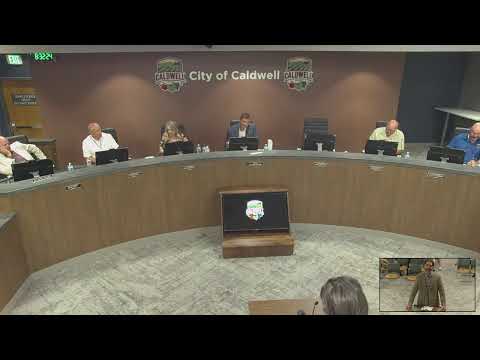
Caldwell residents urge support as West Valley Humane Society seeks $540,000; council weighs options
Summary
At a Caldwell town hall, public commenters, animal-welfare leaders and regional shelter officials urged city funding for West Valley Humane Society while councilors questioned long-term affordability and oversight. Speakers proposed short-term funding, ordinance changes and interjurisdictional cooperation as potential solutions.
Caldwell town-hall attendees urged the City Council on Thursday to fund and stabilize West Valley Humane Society after the nonprofit warned it needs a larger municipal contract to continue basic sheltering services.
Supporters and regional shelter leaders told the council the society’s request — $540,000 for the coming year — is grounded in current operating needs and that a failure to act would worsen animal-welfare and public-safety problems countywide.
Why it matters: The society is the primary sheltering partner for Canyon County and several cities; officials and speakers said closing or significantly reducing services would push animals and costs to other agencies and shelters. Attendees described a complex funding gap created by past management troubles, lost donor support and fixed facility costs.
At the meeting, Chief Smith, speaking on behalf of Middleton, described Middleton’s on-site kennel approach as an example of a lower-cost local solution: “In those 17 months we have taken in 82 dogs, and of those 71 have been rehomed. And of those 71, 67 have gone back to their original owners,” he said, summarizing Middleton’s experience reuniting owners and animals. He told the council his city built small kennels for about $4,500 and that keeping animals locally reduced officer downtime.
Jeff Rosenthal, chief executive officer of Idaho Humane Society, told the council that sheltering carries substantial fixed costs and that economies of scale matter: Idaho Humane Society’s animal-control budget is about $3.4 million and his agency contracts with many municipalities in Ada County. Rosenthal urged Caldwell to seek joint solutions with other Canyon County communities and said West Valley’s short-term financial crisis required outside help last year, including about $80,000 spent by Idaho Humane Society to stabilize operations.
West Valley board president Nick (West Valley board president; Mountain West regional director for Best Friends Animal Society) said Best Friends provided a $450,000 stabilization grant and that West Valley’s current budget proposals were prepared with outside review. “We did provide a grant of $450,000 to stabilize the organization,” he said, and he described steps the new board and management have taken to increase transparency, reinstate some clinic services and publish financial documents online.
Public commenters who volunteer with or donate to West Valley described the local and human impacts of reduced sheltering: volunteers and rescue leaders said the shelter must accept stray and injured cats and dogs and that community-based spay/neuter services and low-cost clinics are in short supply. “There’s no doubt in my mind that the shelter needs the money they’re asking for,” said Tammy Dittenbur, a donor and animal-welfare volunteer, describing how chronic underfunding reduces private donor support.
Councilors asked detailed budget and contract questions. Officials and West Valley representatives said Caldwell has a multiyear contract with West Valley that runs through 2026, while other municipal partners are on annual contracts. Nick said Canyon County’s contract with West Valley is about $300,000 per year, of which about $100,000 is recorded as building maintenance provided by the county; he said the county kept any unused portions of that maintenance allotment at year end. The council asked West Valley to provide monthly invoices and an accounting of intakes by jurisdiction; West Valley said it already invoices monthly through QuickBooks and has published budget and accounting documents on its website.
Council members repeatedly raised affordability and accountability. Some councilors supported limited, short-term funding or a graduated increase so the city and West Valley can jointly monitor results; others emphasized the city’s budget constraints after state tax changes and said a contingency plan must exist if other municipalities do not fund the shelter. “Do we want to fund this for one year and then see where we sit?” asked a resident and repeated the question as a point for council consideration; councilors signaled interest in negotiating a lower initial amount with stronger reporting and oversight.
Speakers proposed a range of policy measures to reduce shelter demand and raise revenue: expanded microchipping and return-to-field programs, clearer local ordinances and fines for repeat violators, a countywide or joint powers approach to sheltering, and increased low-cost spay/neuter capacity. Several commenters said the cat overpopulation problem across Canyon County is acute and that West Valley’s contracted services currently cover only a portion of cat intake because many cat services historically rested with donors and nonprofit programs rather than municipal contracts.
What was not decided: The council took no formal vote at the town hall. Councilors and West Valley officials agreed to continue conversations about a negotiated funding amount, oversight mechanisms, and steps to involve other Canyon County partners. Council staff and West Valley agreed to exchange detailed financial documentation and invoices to let the council assess incremental funding options before the city’s budget decisions.
Looking ahead: West Valley officials said they have opened some low-cost vaccine services and are restarting mission programs as donations and clinic revenue recover; they invited municipal representatives to participate in a strategic planning process planned for August. Councilors asked staff to explore budget options, including one-time use of fund balance for a short-term contribution and ordinance changes to reduce shelter intake. Several commenters urged a fast joint conversation among Caldwell, Nampa and Canyon County to avoid a mid-year service disruption.
Quotations in this story come from the town-hall transcript and were attributed to speakers recorded there.