Get Full Government Meeting Transcripts, Videos, & Alerts Forever!
Get email alerts on the Budget topic
No spam. Unsubscribe anytime.
New York City Council adopts FY26 budget with new investments in childcare, housing and immigrant services
Summary
The New York City Council on June 11 adopted the fiscal year 2026 budget package, baselining several programs and citing expanded investments in early childhood, housing, libraries and immigrant legal services. Most items passed unanimously; one land-use item drew opposition.
The New York City Council adopted the fiscal year 2026 executive expense, capital and contract budgets and the community development program as modified on June 11, 2025. The council announced the general orders calendar was adopted by a roll-call vote of 51 in the affirmative and 0 in the negative for most items; a separate land-use measure (LU 297) drew a different tally and was adopted 36–11–4.
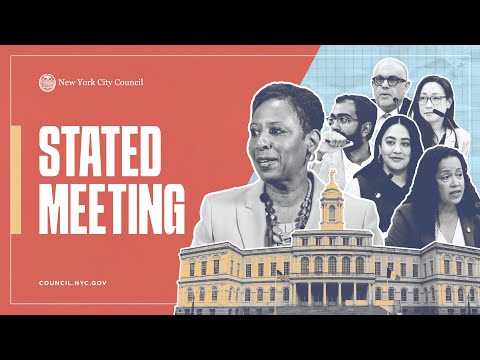
Speaker Adrienne Adams, opening the budget debate, framed the package as a set of investments she said “belong[] to all of us.” Adams and other council leaders highlighted baseline funding wins for early childhood programs, new childcare pilots and housing capital among the priorities secured by the council during negotiations with the administration. Adams said the council secured baseline funding for 3-K and pre-K and new funding to expand childcare for children ages 0–2, and described expanded library service and other program restorations as central accomplishments.
Council members from across the ideological spectrum repeated those themes in their remarks. Several cited large, citywide allocations discussed in the budget debate: increased funding for immigration legal services, new investments in mental-health and crisis-response programs, and capital money for housing preservation and creation. Members also used the debate to disclose personal or family associations with agencies receiving funding, as required by council rules.
Not every vote was unanimous. LU 297, a demapping measure tied to a proposed Coney Island development, passed on the general-orders calendar by a recorded vote of 36 in the affirmative, 11 in the negative and 4 abstentions. Separately, Intro 47-B (vendor decriminalization) was adopted on the resolutions calendar by a vote of 40–8–3.
The clerk announced formal adoption of the executive expense, capital and contract budgets and the community development program for fiscal year 2026 as of 5:59 p.m. on the adoption day. Council members said the budget baselines and new funding represent a shift away from repeated restorations in prior years and toward more sustained support for services they described as essential to New Yorkers’ well-being.
Council leaders said next steps will be implementation and oversight to ensure the funded programs reach intended communities. Several members emphasized the need to monitor the impact of potential federal funding changes on city services and flagged continued work on housing, childcare expansion and oversight of contract administration as priorities going forward.