
U.N. launches expert group's report with 11 recommendations to tackle developing‑country debt crisis
Get AI-powered insights, summaries, and transcripts
Subscribe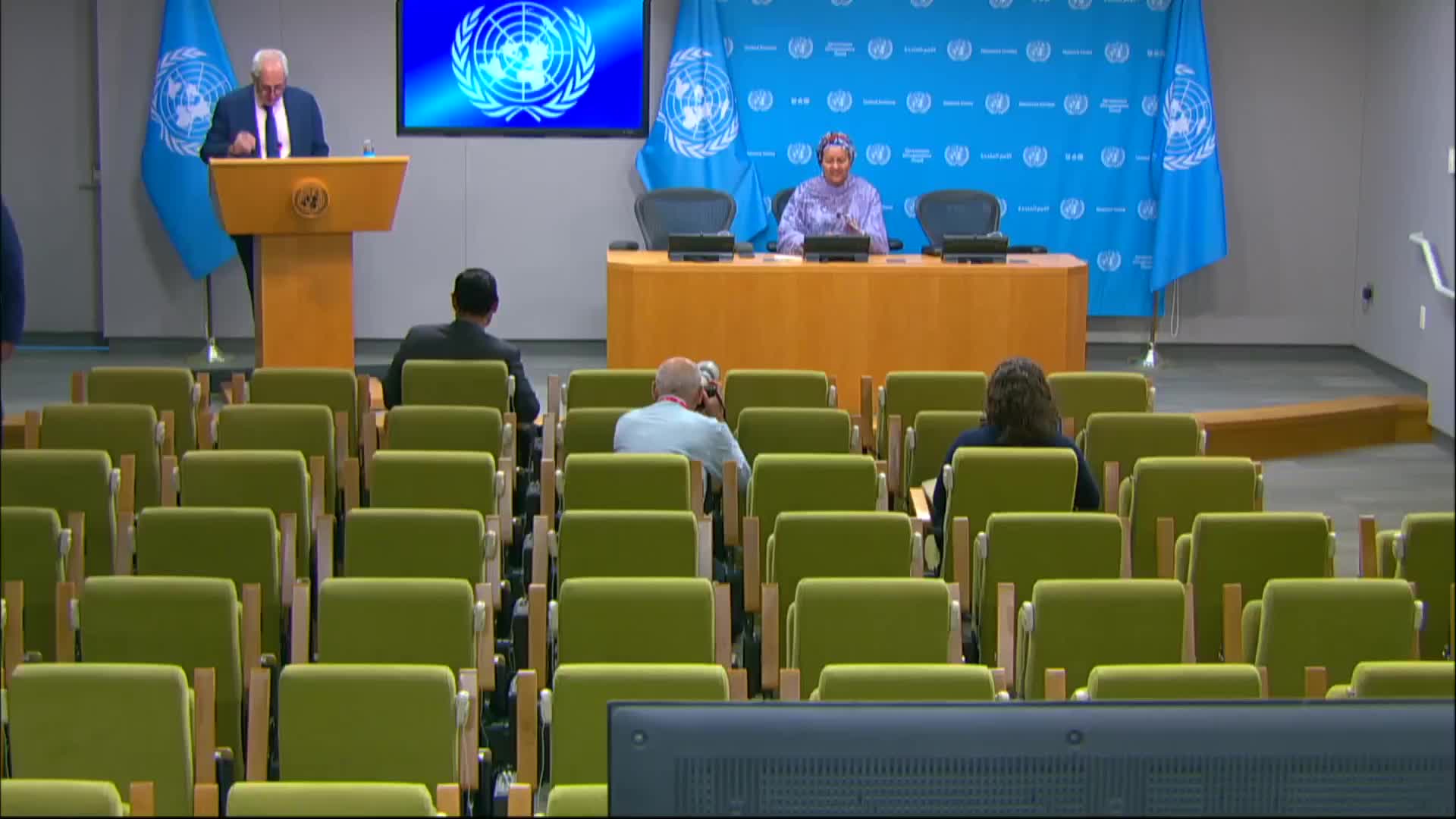
Summary
Deputy Secretary‑General Amina Mohammed and a four‑member expert group presented a report, Confronting the Debt Crisis: 11 Actions to Unlock Sustainable Financing, calling for coordinated reforms including use of SDRs, changes to debt sustainability analysis and faster multilateral support to ease debt service burdens on developing countries.
Deputy Secretary‑General Amina Mohammed launched a report from the U.N. secretary‑general's expert group on debt, Confronting the Debt Crisis: 11 Actions to Unlock Sustainable Financing, at a U.N. briefing that brought together experts and U.N. system agencies to outline steps to relieve mounting debt pressures on developing countries.
The report lays out 11 recommendations intended to provide immediate relief for countries facing high debt‑service costs and to create structural changes that expand access to long‑term, affordable financing. "The crisis doesn't impact the lives or economies of those in advanced economies," Mohammed said, describing the problem as a "silent crisis" that often goes unacknowledged by global policymakers.
The expert group, co‑chaired and led in presentation by Special Envoy Mahmoud Mohieldin, proposed measures grouped around debt relief and prevention. Recommendations cited by panelists include repurposing and replenishing resources at multilateral development banks and the IMF to inject liquidity, expanded and more flexible use of Special Drawing Rights (SDRs), reforms to the debt sustainability analysis used by the IMF and World Bank, operationalizing borrower knowledge‑sharing forums, and technical assistance to strengthen debt management capacity.
Rebeca Grynspan, Secretary‑General of the United Nations Conference on Trade and Development (UNCTAD), summarized the scale of the problem with three figures the panel highlighted: 3.4 billion people now live in countries that spend more on interest payments than on health or education; developing countries paid about $921 billion in debt service this year (up from $847 billion last year); and the annual financing gap to meet the Sustainable Development Goals has exceeded $4 trillion.
Panelists framed the package as a set of technically feasible, politically realistic actions that must be pursued together. "They are a package, and they are a package within the bigger package," Mohieldin said, urging that the proposals be read alongside wider financing‑for‑development reforms. Paolo Gentiloni, a report contributor and former European Union commissioner, stressed the central role of rising debt‑service costs in the worsening situation and said the proposals aim to address that root cause.
Speakers emphasized that the proposals are focused on avoiding defaults and preserving countries' ability to finance essential services. "Absolutely no. Don't default on your debt, if you can help it," Mohammed said in response to a question about whether default should be recommended to leaders under pressure from debt service costs.
Panelists also noted practical changes to make restructuring more orderly: expanding access to the G20 Common Framework tools, introducing automatic debt‑service standstills when appropriate, and ensuring official and private creditors engage in parallel rather than sequential negotiations. The report calls for lowering the transaction costs of innovative instruments such as debt‑for‑climate or debt‑swap arrangements and increasing coordination at regional and multilateral levels.
Speakers acknowledged political and institutional obstacles. Mohieldin said many proposals will require board decisions at multilateral development banks and the IMF rather than action by a single country. The panel also noted that some member states, including the United States, did not participate in the Seville consensus that will be discussed at the upcoming Financing for Development conference, and urged continued engagement with those institutions and capitals.
The briefing did not include any formal decisions or votes; the group presented the report for consideration and urged member states and international financial institutions to take the package forward at the Seville conference and in subsequent governance forums.
The U.N. will continue to work with the expert group and U.N. system agencies, including UNCTAD, to support implementation discussions and follow‑up. Panelists said many recommendations could be operationalized quickly if boards and member states agree to mobilize existing resources and modify institutional practices.