Get Full Government Meeting Transcripts, Videos, & Alerts Forever!
Get email alerts on the Public Safety Curfew topic
No spam. Unsubscribe anytime.
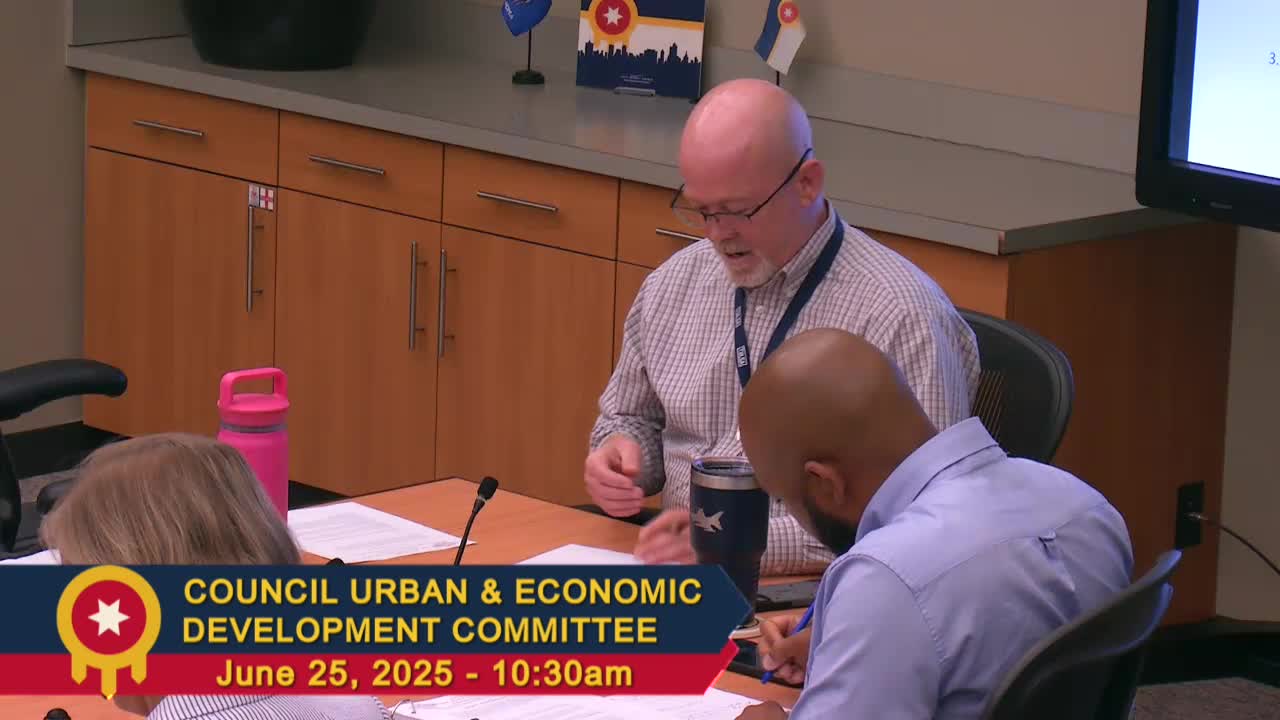
Tulsa council committee debates emergency downtown curfew, equity and enforcement concerns loom
Summary
The Urban and Economic Development Committee on Wednesday considered an ordinance to add 9 p.m. curfew hours for juveniles inside the Central Business District, with TPD and downtown business leaders urging immediate action while several councilors pressed for data, shorter sunsets and safeguards against disparate enforcement.
The Urban and Economic Development Committee heard extensive debate Wednesday on an ordinance to add downtown curfew hours that would make 9 p.m. the curfew for juveniles within the Central Business District (IDL) and run under the proposed dates of June 26, 2025, through March 31, 2026, with an emergency clause and first-reading adoption requested.
Committee members were presented a working-group proposal developed with Tulsa Police Department officials, downtown business leaders and youth-service partners after a string of violent incidents including a Juneteenth shooting. Brian Kurtz, CEO of the Downtown Tulsa Partnership, said downtown business owners and property owners urged the change. "When my children find themselves in dangerous situations, my first reaction is to remove them from that situation," Kurtz said, adding that the ordinance is intended to remove young people from environments where illegal weapons, alcohol and other hazards are concentrated.
Deputy Chief Mark Womershauser of the Tulsa Police Department described the ordinance as a crowd-management tool. "If you're willing to shoot someone, 25 feet away from law enforcement, an additional ordinance is not going to scare you away," he said, but added that moving the curfew earlier gives officers a chance to disperse groups before situations escalate. Womershauser told the committee TPD has recovered "a 125 to a 150 guns" inside the IDL over the last three years and said the department seized several hundred firearms citywide last year.
The committee heard repeated calls for accountability and transparent enforcement. "We will ensure that there is accountability and transparency, with application of this," said Laurel Roberts, commissioner in the Mayor's Office, who said the mayor's office intends to work with TPD on data, body-camera review and community trust initiatives.
Other councilors pressed for additional data and narrower timelines. Councilor Hall Harper said she supports action but warned that "a lot of officer discretion is involved in implementing or enforcing the ordinance" and expressed concern that discretion could lead to unequal treatment of youth. Several members asked staff to provide regular updates and data if the ordinance is adopted — proposals included weekly reports on citations and demographics, and tighter sunset dates; councilors suggested alternatives including a 90-day review or earlier October sunset dates instead of the March 2026 date listed in the agenda.
Members of the mayor's office and community partners said the curfew proposal is only one part of a broader strategy that also includes a federally funded community-violence-intervention grant, partnerships with youth-service groups (including Youth Services of Tulsa, My Brother's Keeper and Impact Tulsa), and outreach to short-term rental operators. Kurtz and other proponents pointed to Oklahoma City's Bricktown ordinance, adopted last year, as a local example officials said had measurable benefits for crowd control.
Procedural questions surfaced over the emergency clause and adoption on first reading. Supporters argued urgent enforcement was needed because summer crowds concentrate downtown and delay would reduce the ordinance's immediate effectiveness. Opponents urged more data and stakeholder input before accelerating passage. No final vote appears in the committee record and sponsors said amendments and sunset timing could be considered before the council floor vote.
The committee discussion also covered operational details: how officers would confirm age (ID or questioning), the municipal court process for juveniles, transport and processing at the Community Intervention Center (CIC), and how citations or alternative dispositions (deferred sentences, community service) are handled. Deputy Chief Womershauser and other TPD speakers described customary field practice as education-first, with officers exercising discretion to disperse groups; where detention is necessary, juveniles may be transported to CIC and parents contacted.
Councilors who represent districts outside the Central Business District repeatedly cautioned that downtown-focused enforcement could displace problems to other neighborhoods and asked staff to evaluate impacts citywide. Multiple speakers asked that the city collect and release data showing age, race, residence (whether offenders live in Tulsa), whether firearms were involved, and whether incidents reflect gang activity versus other causes.
Committee members and city staff agreed to continue conversations with youth-service organizations and business stakeholders, and some members said the ordinance could be amended on the motion if the council approves it for first reading. Supporters asked the committee to consider an expedited schedule and weekly reporting if the emergency clause is enacted; opponents asked for a shorter sunset and more data before adoption.
At the end of the meeting, no final committee vote on adoption was recorded in the transcript; sponsors said confirmations of implementation details, reporting metrics and potential wording changes (including clarifying enforcement thresholds and defenses for patrons of establishments) remain under discussion.