Get Full Government Meeting Transcripts, Videos, & Alerts Forever!
Get email alerts on the School Start Times topic
No spam. Unsubscribe anytime.
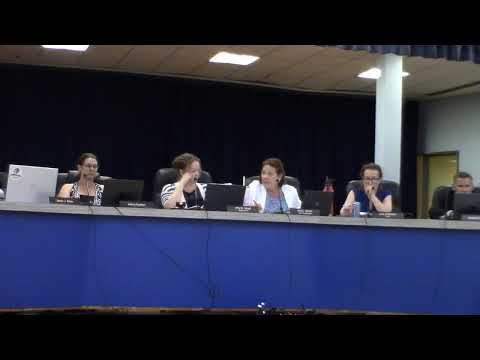
Cumberland committee adopts earlier elementary and middle school start times; budget for extra buses left unresolved
Summary
The Cumberland School Committee voted 5–2 on June 26 to move elementary start times 15 minutes earlier and middle schools 20 minutes earlier (high school unchanged). The committee approved the schedule change but did not authorize the additional budget needed for new buses, leaving an estimated $150,000–$300,000 funding gap to be resolved.
The Cumberland School Committee voted 5–2 on Thursday to adopt “Option B,” which moves elementary start times 15 minutes earlier and middle school start times 20 minutes earlier while leaving high school start times unchanged.
Supporters said the change aims to return younger students to earlier schedules and address concerns about learning loss and staff availability. Opponents cited the district's tight finances and uncertainty about how to fund additional buses and routing changes.
Why it matters: The schedule change affects bus routing, fleet needs and the operating budget. Staff and consultants told the committee the new times would create pickup/drop-off overlaps that require additional buses or route redesign; the district estimates the cost to implement the change could be roughly $150,000 to $300,000 depending on routing and vehicle types.
Superintendent Dr. Thornton, who introduced the Durham routing team, framed the issue as logistical and financial. “In my mind, it does still go back to it's a math problem,” Dr. Thornton said, describing the interplay of bus counts, stop locations and bell times. He also said a reimbursement from Mount Saint Charles could reduce the district's net cost by about $40,000.
Consultants from Durham showed route-simulation graphics and explained why one proposed schedule produced conflicts: the district's middle-school pickup times would sometimes overlap with high-school drop-offs, producing route "red" conflicts on Durham's visualizations and requiring additional vehicles to maintain on-time service.
Financial and operational details discussed at the meeting included: - Estimated implementation cost: committee members and staff repeatedly described a wide range: about $150,000 on the low end to as much as $300,000 in a less favorable scenario. Staff called the figure a best estimate until Durham completes detailed routing. - Vehicle costs: committee discussion referenced a per-bus capital estimate in the $85,000'$95,000 range for large/specialized buses; members used $92,000 per bus in one example. Durham and staff said small/minibus vehicles carry higher per-day operating costs but can be more efficient for some routes. A minibus capacity figure cited in the discussion was about 23 seats. - Student and program counts: administrators said the district has roughly 227 more students than at an earlier planning baseline, 60 more students in specialized special-education programs and five elementary schools that host specialized programs. - Potential reimbursement: Dr. Thornton said Mario Carino identified a possible $40,000 reimbursement from Mount Saint Charles for routes that would not be needed next year if circumstances change.
Committee direction, next steps and implementation risk - The committee approved Option B (motion by Mr. Bacon; second by Mr. Dean). The chair announced the motion passed 5 to 2, with Ms. Goldstein and the chair voting no. - Durham was authorized to develop routing and run detailed models; Durham staff estimated modeling would take roughly six to eight weeks and return recommendations to the committee in August (the committee set an approximate August 22 timeline for updated route information to families). - The committee did not authorize a budget amendment to pay for the additional buses at the June 26 meeting. Members and staff discussed using fund balance as a likely short-term source but expressed concern about longer-term structural deficits. The finance director, Mr. McGrath, and other staff said that using fund balance for the added cost may require town-level approvals and would worsen an already constrained fiscal picture.
Substantive concerns raised in discussion - Several members, including Ms. Goldstein and the chair (who voted no), said they were worried about sustainability given potential reductions in federal title funding and existing structural budget deficits. - Advocates, including Mr. Bacon and other committee members, emphasized student welfare and said earlier start times had educational benefits and might help attract or retain students from charter or private options. - Committee members and staff raised operational concerns about monitors, special-needs routing, depot stops for parochial schools, and the availability of qualified bus monitors.
What the vote did not decide - The vote approved the schedule change only; it did not approve the funding required to add buses or the specific routing plan. Staff emphasized the final dollar figure will depend on Durham's six- to eight-week routing work and could be presented to the committee for a budget decision in August.
Context and background - The district has been studying different start-time models (labeled A and B in committee materials). Model A represented earlier proposals; Model B is the option the committee adopted. - Staff noted the district has been using fund balance in recent years and that additional uses could reduce flexibility in future years. Several members urged pursuing waivers or policy clarifications from the Rhode Island Department of Education (RIDE) about opt-in/opt-out processes for busing, but legal staff said RIDE counsel would need to be consulted.
Looking ahead - Durham will return with detailed routing and estimated costs in roughly six to eight weeks. The committee asked staff to explore: potential reimbursements, the feasibility of depot stops, options for minibus vs. large-bus deployment, and whether town approvals will be required to use additional fund balance to cover start-up costs.
Ending: The committee's approval moves Cumberland back toward earlier start times for elementary and middle grades, but the principal operational and fiscal questions remain to be resolved before the new bell schedule can be fully implemented.