Get Full Government Meeting Transcripts, Videos, & Alerts Forever!
Get email alerts on the Housing Authority Removal topic
No spam. Unsubscribe anytime.
Council rejects parish president’s removals of four housing authority commissioners after contested hearing
Summary
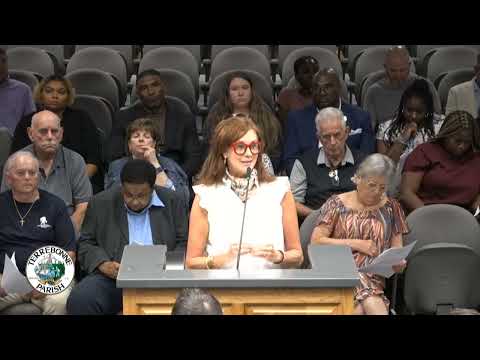
The Terrebonne Parish Council voted 5-4 Wednesday to reject notices from the parish president removing four Houma‑Terrebonne Housing Authority commissioners after a lengthy hearing over governance and recovery decisions.
The Terrebonne Parish Council voted 5-4 Wednesday to reject Parish President's notices removing four Houma‑Terrebonne Housing Authority commissioners, following a contested, quasi‑judicial hearing that lasted several hours.
The hearing was held under Louisiana Revised Statute 40:5:37, which allows a parish president to remove a housing authority commissioner for neglect of duty, misconduct in office or conviction of a felony. The parish attorney read 13 charges into the record, including allegations of inadequate oversight of the authority’s executive director, failure to file required annual reports, a lack of an actionable plan for residents left without housing after Hurricane Ida (the parish president estimated an 800‑unit shortfall), and questions about the authority’s handling of some insurance proceeds and contract terms.
Why it matters: The dispute centers on how the housing authority handled recovery and redevelopment work after Ida and on whether the authority’s governance failures, if any, justify removing unpaid volunteer commissioners. The hearing also involved discussion of federal FEMA and HUD funding and of how long reconstruction and FEMA decisions can take.
What the council heard: Parish President (as recorded in the hearing) summarized the charges and repeatedly told the council he brought the removals because, he said, he “has been trying to work with the commissioners and the housing authority to address what I see and believe is a housing crisis in Terrebonne Parish where we are short 800 housing units.” He read the 13 allegations into the record and said he believed the removals were warranted.
The commissioners asked for a hearing and were represented by attorney Tanner McGee. McGee told the council the commissioners were volunteers who had acted in good faith and that the record did not support the high legal bar for removal. “If you uphold the president’s removal, you are creating more controversy and more legal expenses,” McGee said during his closing remarks.
Witnesses and evidence: The council heard testimony from multiple witnesses called by both sides, including commissioners and agency staff. Commissioner Jerome Boykin told the council he had opposed a pay raise for the executive director in part because, he said, “we don't have anyone at the high rise” and awarding an increase without a clear performance evaluation sent the wrong message while residents remained displaced. Housing authority consultant Jamie McDaniel described the FEMA and HUD approval processes and said the authority recently received an initial FEMA approval for a limited set of work — “about $4,350,000” to address a group of buildings — but that most recovery work remains contingent on federal approvals.
Executive director Nikkita Gilton testified that she had submitted written audit reports to the parish president’s office and that she had not been told she needed to file directly with the parish clerk: “I wasn't aware that I was supposed to file with the clerk's office,” she told the council.
Council decision: After hearing testimony, the council voted 5-4 to reject the parish president’s removals. That vote leaves commissioners Danny Picco, Donald Sherman, Cheryl Chauvin Hebert and Michael Jean Burke in their positions pending any further action.
Next steps and context: The council chair and the parish attorney noted the proceeding was quasi‑judicial and confined to the statutory grounds for removal (neglect of duty, misconduct, felony). Council members and speakers repeatedly tied the dispute to delays and complexities in FEMA and HUD processes, and to the parish’s broader recovery effort: witnesses and several council members emphasized that FEMA approval timing and HUD rules strongly influence what the housing authority can do and how fast damaged units can be replaced or repaired.
The council did not direct additional investigatory action at the meeting. Some council members said they want clearer, recurring reports from the authority and better communication about the status of recovery projects; others said removing volunteer commissioners for governance differences risks discouraging experienced local volunteers from serving.
Ending note: The hearing highlighted the tension between elected executive control and statutory limits on removal, and underscored how federal recovery processes can shape very local disputes over housing policy and governance.