Get Full Government Meeting Transcripts, Videos, & Alerts Forever!
Get email alerts on the School Meals topic
No spam. Unsubscribe anytime.
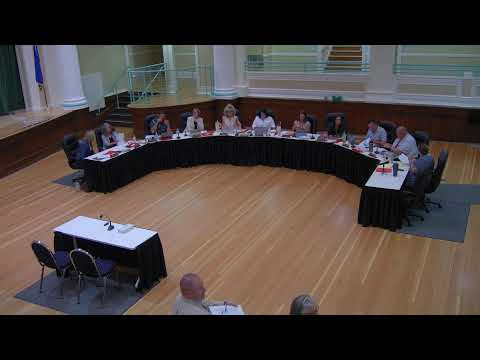
School board ends districtwide free-meal program, will require paid meals with free/reduced applications
Summary
The Churchill County School District board voted 6–1 to remove all schools from the federal Community Eligibility Provision that had provided free meals to students, requiring paid meals next year while offering free and reduced-price applications.
The Churchill County School District Board of Trustees voted 6–1 to remove all district schools from the federal Community Eligibility Provision (CEP), requiring paid meals next school year and reintroducing free and reduced-price meal applications.
The vote followed more than two hours of discussion about changing federal reimbursement rates, possible groupings of schools to preserve CEP at some sites, capital projects tied to food service and the district’s available food-service fund balance. Trustee Whitaker moved to remove all schools from CEP; Trustee McFadden seconded the motion. The motion passed 6–1.
District administrators said the district’s CEP reimbursement rate has fallen from about 90.98% to roughly 65.01% for the coming school year under a Department of Agriculture calculation. Using that new rate, staff estimated the district could need to subsidize food service at roughly $41,799.31 per month under one projection; other grouping scenarios produced lower or higher estimates. Administrators and the district’s food-service contractor, Chartwells, told trustees that moving back to a paid model would require district staff to review meal applications, add collection and billing routines at school sites, and likely require short-term additional staff time as the new system is implemented.
Superintendent Parsons described calculations the district had run with the Department of Agriculture and Chartwells and said the data were still subject to uncertainty: he cautioned that the monthly-cost estimate could be “a little higher, a little bit lower.” Staff also reported the district has money in the food-service fund (a reported ending fund balance and augment of about $800,000 in preliminary figures) that could be used to cover a short-term subsidy. Trustees debated whether to use those funds or capital monies for kitchen remodels and whether that would be a one-year “band-aid” or a longer-term commitment.
Trustees discussed grouping schools for CEP calculations — an option some districts use to raise the reimbursement rate for a subset of sites. Staff reported the best grouping they modeled (EC Best and Northside) would yield a reimbursement of about 79.22% but still require a district supplement of roughly $25,355 per month for the grouped sites; districtwide grouping produced a smaller improvement in the rate (about 70.93%). Trustees said no grouping met the district’s financial threshold to preserve CEP without substantial district subsidy.
Board members also reviewed operational figures: March meal counts used as a representative sample showed an average daily of roughly 715 breakfasts and 1,630 lunches (about 2,345 meals daily). Chartwells’ billed costs per meal cited in the meeting ranged between approximately $4.07 and $4.24 depending on the source quoted during discussion; trustees asked staff to firm up that number as part of implementation planning.
Several trustees voiced concern about the immediate impact on families and students. Trustee McFadden and others urged giving families advance notice, providing targeted support to students with food insecurity and monitoring actual costs after the change so the board can revisit the policy for the following year. Other trustees urged fiscal caution given the district’s budget pressures and said they could not commit recurring general-fund dollars to cover projected CEP shortfalls.
Administrators noted a hard federal deadline: the Department of Agriculture required districts to decide and notify by June 30 whether they would maintain CEP for the coming school year. That deadline limited the window for the board to gather further data before deciding.
Implementation steps and follow-up assigned or discussed included: reactivating the free/reduced application process; configuring Infinite Campus payment and meal accounts; assigning two district employees to review applications (a federal/contractual requirement described by staff); and notifying families immediately if the board’s decision is adopted. Trustees directed staff to provide updated meal-cost and participation data during the coming school year so the board can make an informed decision about CEP for the next school year.
The board’s formal motion to remove CEP said: “to approve removing all schools from the CEP eligibility and requiring pay for food and offering free and reduced meal applications.” The motion carried 6–1.
The decision will take effect for the next school year and cannot be changed midyear, staff said.