Get Full Government Meeting Transcripts, Videos, & Alerts Forever!
Get email alerts on the Housing Element topic
No spam. Unsubscribe anytime.
Council reviews Olympia 2045 housing element and displacement analysis; manufactured-home preservation highlighted
Summary
City planners and consultants presented the Olympia 2045 housing element and a regional displacement analysis that projects a need for roughly 14,000 new units by 2045, flags risks to low-income homeownership and rental availability, and recommends tenant protections, manufactured-home preservation and policy revisions for equity.
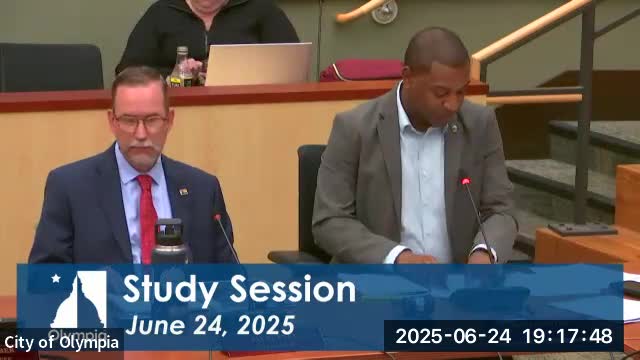
City planners briefed the Olympia City Council on June 24 on the draft Olympia 2045 housing element and on a newly completed housing displacement and racially disparate impacts analysis prepared for a regional consortium by Uncommon Bridges.
"The city does not control the housing market," said Casey Shoffler, associate planner, explaining the chapter's role: "we can influence it through policy and regulations, investments and partnerships, and legislative advocacy." The study session covered mandated changes under state law and local findings about displacement risk.
Why it matters: Washington—s HB 1220 (2021) requires jurisdictions to plan by income brackets and to accommodate a range of housing types. The draft housing chapter incorporates a housing land capacity analysis and a housing needs assessment that, together with Thurston Regional Planning Council forecasts, estimate Olympia and its urban growth area will require approximately 14,000 new housing units by 2045. Planners said that projected capacity relies heavily on redevelopment in downtown and other higher-density areas.
Key findings from the displacement analysis, which Olympia led regionally with Lacey, Tumwater and Yelm, include: the city faces an increased risk of physical displacement (eviction, acquisition, redevelopment or expiration of affordability covenants); a loss of low-income homeownership; and a significant decrease in rental units affordable to very low-income households (30—% of area median income). Uncommon Bridges— outreach included four affinity-group conversations (manufactured-housing residents, low-wage-worker communities, military families, and ADU stakeholders) and review of thousands of pages of documents.
Policy recommendations and next steps: the consultant and staff emphasized measures to protect and preserve manufactured-home communities, retain existing affordable housing, expand tenant protections and streamline tenant-improvement allowances so upgrades do not trigger lengthy land-use reviews. Shoffler said the draft will be revised to address policies identified as "challenging" under Department of Commerce racially disparate-impact guidance; one policy the displacement analysis flagged is already proposed for removal from the draft chapter.
Planners also outlined a review and public-engagement schedule: the city published an initial draft May 9, received the displacement analysis June 6, plans to provide a revised draft for the Land Use and Environment Committee on July 10, brief the Planning Commission and hold a public hearing by Aug. 4, return to the Land Use Committee Aug. 28, and bring the chapter to the council study session Sept. 16.
Manufactured-home communities: councilmembers pressed for more detail on manufactured-home preservation. Councilmember Gilman noted approximately 650 manufactured-home units countywide cited in earlier analyses and asked whether septic ties or sewer conversions threaten park viability; planners said many parks predate modern zoning and that existing MHP (manufactured-home park) zoning largely covers existing parks rather than enabling new parks under current code.
Data limitations and council guidance: staff and the consultant acknowledged gaps and lags in some census and market data and noted the 2020 census had limitations that complicated recent trend analysis. Councilmembers asked staff to pursue clearer, disaggregated measures of homeownership, foreclosure and renter-to-owner transitions so the city can track homeowner-to-renter shifts and better target preservation and anti-displacement policies.
Ending: staff asked for direction on whether the chapter and the displacement recommendations are on the right path. Councilmembers generally supported stronger anti-displacement language, called for measurable goals that could include an explicit Black homeownership goal, and asked staff to return with revised policy language and implementation options.