Sedona updates transit rollout: 1 million Trailhead shuttle boardings, microtransit expansion and operations facility design under way
Loading...
Summary
City staff told the Sedona City Council on June 25 that the Trailhead Shuttle hit a milestone of 1 million boardings in March, the on-demand Connect service has delivered more than 13,000 trips since launch, and design work has begun on a consolidated maintenance and operations facility as staff pursue federal and state grants.
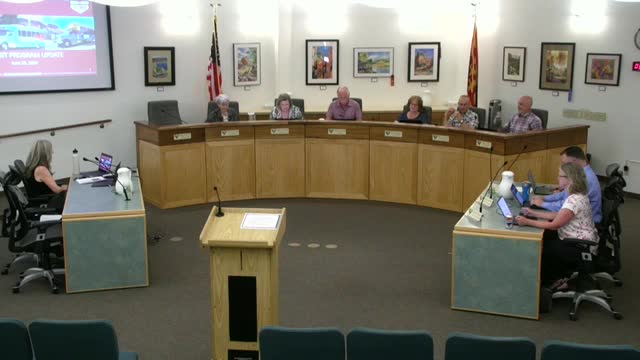
Sedona City Council heard an update on June 25 on the city’s transit programs, including progress on the Trailhead Shuttle, the Connect on‑demand microtransit service, a newly kicked-off study of an uptown circulator, and the start of design work for a transit maintenance and operations center.
Transit Administrator Amber Wagner told council members the Trailhead Shuttle — launched early as part of the Sedona Transit Implementation Plan (STIP) and Sedona in Motion (SIM) strategy — reached a major milestone this spring when the system recorded 1 million boardings in March. Wagner said year‑to‑date system data (through May) show roughly 324,516 boardings and that the system has helped eliminate more than 129,000 vehicle trips year‑to‑date and, since launching the Trailhead Shuttle, roughly 274,347 vehicle trips from Sedona neighborhoods and roadways.
The update placed those operational figures in the context of the city’s planning documents. Wagner said SIM (Sedona in Motion), the STIP (adopted in 2020), the 2021 Climate Action Plan and the 2024 Sedona Community Plan together provided a 10‑year roadmap that prioritized core fixed routes, trailhead shuttles, ADA demand‑response service and regional connectors.
Why it matters
City officials described transit expansion as a tool to reduce congestion at trailheads, improve mobility for residents and workers, and reduce greenhouse gas emissions. Wagner told the council that calendars and ridership patterns show seasonal variation but that the services are beginning to change travel behavior. “Each ride taken is a step towards less congestion, safer streets, and a healthier environment,” she said.
Key program details
- Trailhead Shuttle: Launched in 2022 in partnership with the U.S. Forest Service, the Trailhead Shuttle runs four routes out of three park‑and‑ride lots and provides access to five trailheads. Wagner said Cathedral Rock and Little Horse lead utilization and that the Trailhead service has been the most visible success of the rollout.
- Connect (microtransit): Sedona’s on‑demand microtransit service, branded “Connect,” launched in August (prior year) after procurement delays. Wagner reported Connect has provided more than 13,305 trips since launch and has an on‑time performance of about 85 percent. Peak month to date for Connect was March (about 3,382 trips). City staff said Connect serves a mix of frequent local riders (roughly 50–55 unique individuals who account for 25–30 percent of monthly trips) and many infrequent users (likely visitors) who use the service while in town.
- Origins and destinations: Council discussion and staff slides ranked top trip generators for Connect as the 179 park‑and‑ride, apartment complexes, Uptown stops, the Tlaquepaque arts village and grocery/shopping centers. Staff noted some riders use Connect to access park‑and‑ride lots and then transfer to Trailhead Shuttle service.
Uptown circulator study and fixed routes
The council was told the city has kicked off a federally funded planning study to assess a fixed‑route uptown circulator to link Uptown, Tlaquepaque, Hillside and future consolidated parking areas. Wagner said the study will examine three alignments, operating and capital needs, estimated costs, stops and schedules; a draft report is expected around December–January. Staff said the study work will coordinate with the ongoing consolidated parking and parking‑garage planning.
Maintenance and operations facility
Design work for a consolidated maintenance and operations center began in January, Wagner said, after the city met certain pre‑award design and NEPA requirements. The proposed facility would consolidate administration, dispatch, vehicle maintenance and storage (current functions are split across temporary and vendor arrangements). Wagner described design features under study: three maintenance bays, a fueling station, staff space, room to expand to zero‑emission vehicles and a potential adjacent park‑and‑ride site. Staff said the design phase has partial federal grant funding and that construction will require a dedicated grant and multi‑year funding strategy.
Funding, eligibility and timing
Wagner reviewed federal and state funding pathways: Sedona is not large enough to be a direct federal FTA grant recipient (a direct‑recipient threshold cited in the presentation is a metropolitan statistical area population of 200,000), so the city applies for formula and discretionary funds through the Arizona Department of Transportation (ADOT). Staff cited ADOT’s rural transit formula funding (an ADOT allocation the city monitors) and the FTA bus and bus‑facilities program (section 5339). Wagner said ADOT’s recent allocation cycle included about $17 million in rural transit formula funds and about $4 million in 5339 funds for the state, and staff are preparing competitive applications this fall.
Staff also warned of constraints: bus procurement lead times have improved but still can be roughly 12–15 months; vehicle replacement and maintenance costs will grow as the fleet ages; and the city’s current temporary facilities limit operational flexibility.
Business analysis and partnerships
Wagner said the city has begun a business analysis to evaluate capital needs and revenue strategies for the operations facility. The analysis will examine options such as pay‑to‑park at park‑and‑ride lots, trailhead fares and fee‑for‑service maintenance partnerships. Wagner gave a preliminary estimate that parking and fare options could generate on the order of $270,000–$350,000 annually (a back‑of‑the‑envelope figure subject to refinement in the business plan). The presentation also identified potential partners, including Verde Valley caregiving organizations and Cottonwood Area Transit, and noted interest among local agencies in shared maintenance services.
Council questions and staff direction
Councilors pressed staff on service metrics, neighborhood coverage and outreach. Staff said Connect zones will be optimized based on utilization and that they plan scheduled zone adjustments once or twice a year. Council members urged targeted outreach to lodging concierges, hotels, community centers, visitor gateways (including the Red Rock Ranger District visitor center), and faith communities to build local awareness. Staff described past outreach events for concierge and hotel staff and a short free‑ride coupon campaign that produced immediate coupon redemptions.
Several council members asked for clearer near‑term prioritization in future updates (which staff agreed to provide), and for staff to return with costed, time‑phased options for capital and service expansions during the FY27 budget cycle. Staff said procurement timing argues for early planning — orders for vehicles can be placed before the budget year when necessary but transactions generally occur when equipment is received — and that the city will continue to pursue federal and state grant opportunities.
What’s next
Staff said next steps include continuing outreach, completing the uptown circulator study, finishing the maintenance facility business analysis and preparing ADOT/FTA grant applications this fall. Wagner told the council she expects to return with more detailed cost and timeline information during upcoming budget planning and future SIM updates.
Ending
Council members thanked staff for the presentation and asked for follow‑up briefings with prioritized, cost‑informed options. Wagner closed by noting the system’s early milestones and the need for continued local support and grants to sustain planned expansion.