Get Full Government Meeting Transcripts, Videos, & Alerts Forever!
Get email alerts on the Roads And Infrastructure topic
No spam. Unsubscribe anytime.
Commissioners weigh converting worn county "wrap" roads to caliche, debate keeping or selling milling machine
Summary
Roads and Bridge staff presented a multi-year plan to convert heavily maintained wrap/paved roads back to caliche, prioritize engineering for big projects and consider selling or leasing a costly milling/reclaimer machine.
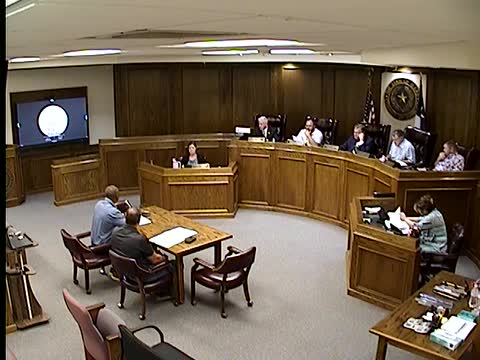
Roads and Bridge staff told Commissioners Court on June 25 they can address a list of high-cost wrap and pavement roads over a two-year window but sought direction on funding sources and whether to keep expensive milling equipment.
The department presented a prioritized list of problem road segments and material-cost estimates totaling about $1,600,000 for the items shown in the worksheet provided to commissioners. Staff recommended converting many wrap roads to caliche — a lower-maintenance surface — while reserving engineering-level work for larger, drainage- or interstate-adjacent projects.
Commissioners and county staff discussed one high-cost, recurring maintenance stretch (precinct example given as roughly a mile with recurring patching costs). Staff said converting that section back to caliche would substantially reduce ongoing maintenance, calling the current approach “putting out fires” rather than executing sustainable maintenance.
A major point of debate: the county’s milling/reclaimer machine. Staff described the machine as expensive to maintain and said it slows on certain patched areas; possibilities discussed included keeping, overhauling at substantial cost, leasing, renting as needed, or selling the machine outright. Commissioners noted an option to use part of park contingency funds to tackle multiple roads in one effort and thereby remove the need to own milling equipment.
Staff said they could likely complete two targeted wrap-road projects this fiscal year (weather permitting) and that a two-year timeline is a realistic estimate for the full list shown. They also said some roads already have tentative dates in the work plan. On the larger Woodrow Road project, staff said phase 1 is scheduled for completion in fiscal 2026 and that phase 2 would be a county-led project put out to bid; they hope to have phase 2 awarded by October.
Commissioners asked about equipment rental costs and how machine age affects maintenance; staff estimated reclamer monthly rental or maintenance equivalence in the tens of thousands and said heavy hot-mix patches are particularly hard on teeth and components. The court discussed funding tradeoffs: park funds, capital vs. maintenance lines, or spreading projects over two fiscal years.
No final appropriation was made during the session. Commissioners asked staff to return with refined cost estimates and a proposed funding plan within approximately five weeks for budget planning ahead of the August budget deadline.
Clarifying details: staff said converting several wrap roads to caliche would reduce recurring patching costs and that milling throughput can vary (an estimate given: roughly 0.3 mile per day under some conditions). A list presented to commissioners included multiple segments flagged for conversion or engineered study; the staff estimated current program costs at scale would move from roughly $1.2 million this year toward a request of about $2.6 million in next year27s draft to reach the department27s mile targets for sealing and resurfacing programs.
What’s next: commissioners instructed staff to return with clearer prioritization and funding options so the court can decide whether to fund conversions, sell or keep the milling machine, or reallocate contingency funds.