Get Full Government Meeting Transcripts, Videos, & Alerts Forever!
Get email alerts on the Responsibility To Protect topic
No spam. Unsubscribe anytime.
United Nations address marks 20th anniversary of "responsibility to protect," urges stronger prevention and collective action
Summary
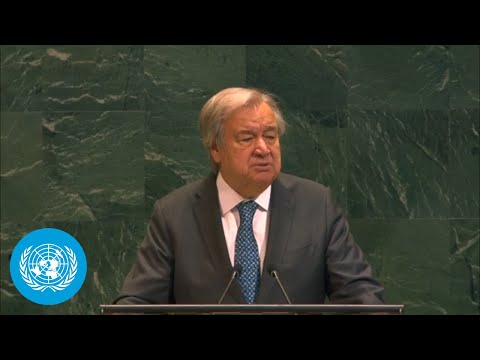
An unnamed speaker at the United Nations General Assembly marked the 20th anniversary of the “responsibility to protect,” shared the seventeenth Secretary‑General report on the topic, warned of rising armed conflict and urged strengthened prevention, early warning and coordinated international response.
An unnamed speaker addressing the United Nations General Assembly marked the 20th anniversary of the responsibility to protect and shared the seventeenth report of the Secretary‑General on the subject, warning that civilians are paying a high price amid rising, interconnected conflicts worldwide.
The speaker said the 2005 World Summit committed member states to protect populations from genocide, war crimes, ethnic cleansing and crimes against humanity and noted the summit’s wording that sovereignty carries responsibilities as well as rights. “We are witnessing the highest number of armed conflicts since the end of the Second World War,” the speaker said, adding that conflicts are “marked by rising identity based violence, widespread violations of international humanitarian law and human rights law, and deepening impunity.”
The report the speaker presented, identified in the address as the seventeenth Secretary‑General report on the responsibility to protect, draws on two decades of experience and a preparatory survey, the speaker said. The speaker summarized findings that the principle retains strong support among member states and that communities affected by violence view it as offering “a ray of hope,” while also calling for better implementation at national, regional and multilateral levels.
The address identified specific elements the report recommends or highlights: strengthening national prevention mechanisms; integrating atrocity prevention across United Nations activities including humanitarian action, peacekeeping and human rights; improving early warning and early diplomacy; and encouraging regional organizations such as the African Union, the Association of Southeast Asian Nations (ASEAN), the Organization for Security and Co‑operation in Europe (OSCE) and the Organization of American States to play prevention roles. The speaker also referenced multilateral initiatives including the “Group of Friends of R2P,” a code of conduct, and calls for veto restraint in the face of mass atrocities.
“Early warnings go unheeded, and alleged evidence of crimes committed by states and non‑state actors are met with denial, indifference, or repression,” the speaker said, arguing that responses are “often too little, too late, inconsistent, or undermined by double standards.” The address highlighted emerging threats, including the weaponization of new technologies and the proliferation of advanced weaponry, and said those developments require constant adaptation of prevention and response efforts.
The speaker framed atrocity prevention as a shared responsibility: prevention must “begin at home with leadership that protects rights, embraces diversity, and upholds the rule of law,” and must also be supported by multilateral cooperation, principled diplomacy and “early and decisive action,” the speaker said. The address called for mainstreaming atrocity prevention in the broader agendas of sustaining peace, human rights and the 2030 Agenda for Sustainable Development.
The speech ended with a call to strengthen cooperation and to make atrocity prevention a “permanent and universal practice.” The speaker closed, “Let us deepen our commitment. Let us strengthen our cooperation and ensure that atrocity prevention and protecting populations becomes a permanent and universal practice. Let us forge ahead with resolve, unity, and the courage to act.”