Get Full Government Meeting Transcripts, Videos, & Alerts Forever!
Get email alerts on the Elder Abuse Awareness topic
No spam. Unsubscribe anytime.
Utah aging leaders mark World Elder Abuse Awareness Day, push to connect older adults to local services
Summary
State aging agencies and partner organizations used the June 15 World Elder Abuse Awareness Day event to highlight gaps in service awareness and to promote resource navigation across Utah, stressing outreach to rural populations and multilingual needs.
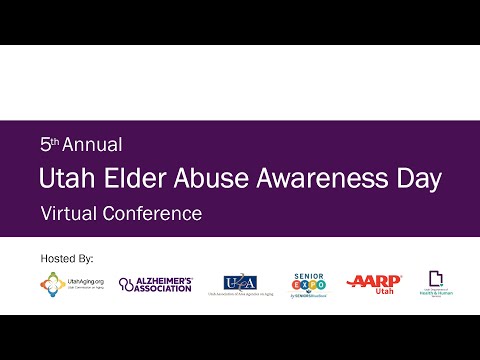
More than a dozen state and local aging organizations convened online June 15 for a World Elder Abuse Awareness Day event focused on connecting older Utahns to community resources and services.
The event, organized by the Utah Division of Aging and Adult Services with support from the Utah Commission on Aging, AARP Utah, local Area Agencies on Aging (AAAs), the Alzheimer’s Association, Senior Blue Book and 2-1-1, centered on preventing abuse, neglect and financial exploitation by improving awareness and access to help.
The conference opening laid out the scale of the issue. “The National Center on Elder Abuse reports that approximately 1 in 6 older adults are affected by elder abuse every year,” said the event moderator, Tracy, noting that last year’s statewide needs assessment found many vulnerable adults and service professionals were unaware of available services. Presenters identified common service barriers including lack of guidance and information, long wait lists, limited availability in rural areas, gaps in internet access and transportation, and language barriers.
Speakers then described how the state’s network of providers and new digital navigation efforts aim to reduce those barriers. Division of Aging and Adult Services Director Nels Holmgren described the state’s role in adult protective services, the office of public guardian, and the Division’s online landing pages that list AAA locations and senior centers. “We put front and center the opportunity to report abuse, neglect, exploitation, financial exploitation,” Holmgren said, pointing participants to daas.utah.gov for reporting and program information.
Local AAA directors detailed the core services available in their regions — caregiver support, respite care, Meals on Wheels, senior centers, transportation coordination, legal help, and the long-term care ombudsman program — while noting that some specialized programs (for example certain Medicaid waivers and veteran-directed care) vary by county because they depend on contracts or funding at the local level.
Representatives from the Alzheimer’s Association, AARP Utah, Seniors Blue Book and 2-1-1 explained how their organizations supplement the state system. The Alzheimer’s Association emphasized its 24/7 helpline and caregiver education offerings; AARP highlighted fraud-prevention tools, driver-safety classes and tax-assistance volunteers; Seniors Blue Book described its printed and online resource guides and local Senior Expo events; and 2-1-1 outlined a service-navigation approach that includes warm transfers, follow-up calls and limited transportation funding partnerships.
Organizers repeatedly urged attendees to use the “no wrong door” approach: when an older adult or caregiver reaches any one agency, staff will help direct them to other specialists. Presenters also encouraged use of state portals — including daas.utah.gov and utahaging.org — and local AAA contact pages or printed handouts for those who prefer paper resources.
The session closed with a question-and-answer segment that covered service availability, digital training for seniors, rural service gaps and how to be listed in local resource guides. Presenters said recordings and the presentations will be posted to utahaging.org, and printed resource guides such as the Seniors Blue Book remain available by request.
For people who need immediate help with suspected abuse, presenters reiterated the Division of Aging and Adult Services reporting links and phone lines on daas.utah.gov.
The event underscored that while many Utah organizations offer assistance, the persistent challenge is making that help visible and reachable to older adults and caregivers across diverse communities.